1. Introduction: North Korea’s Nuclear-Powered Submarine Program
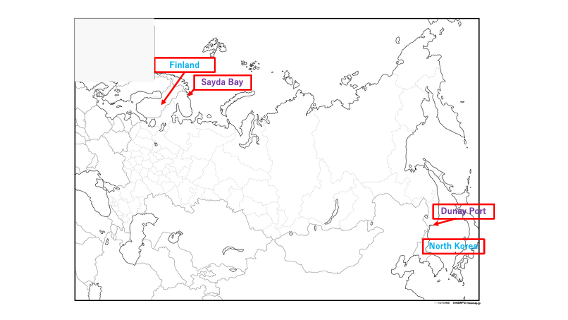
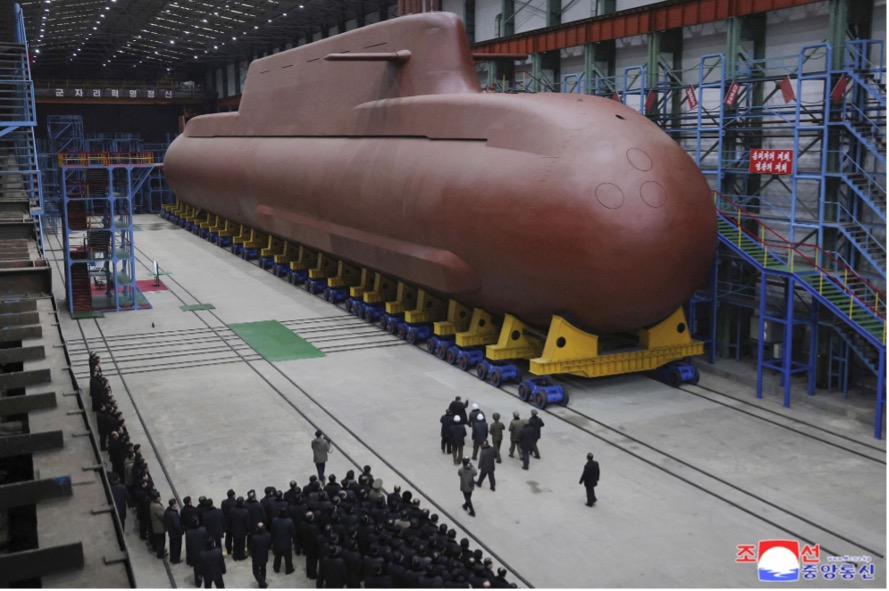
Developments surrounding North Korea’s nuclear-powered submarine (SSN) program have accelerated in recent years. At the end of 2025, Spanish investigators reported that a Russian cargo vessel carrying reactor components from a decommissioned Russian nuclear submarine to North Korea had sunk in the Mediterranean Sea while en route to its destination.[1] In the same year, South Korea’s Minister of National Defense also suggested before the National Assembly that Russia may be providing assistance to North Korea’s nuclear-powered submarine development efforts. Furthermore, at the end of that year, the Korean Central News Agency (KCNA) reported that General Secretary Kim Jong Un had inspected a nuclear-powered submarine reportedly under construction.[2] Kim implied that the vessel was a strategic nuclear submarine capable of carrying submarine-launched ballistic missiles (SLBMs) equipped with nuclear warheads. Although photographs of the submarine were released, questions have emerged regarding whether it could become operational in the near future and whether a reactor has actually been installed, as the images provided no indication of when they were taken.
Unlike conventionally powered submarines, which rely on diesel engines and batteries and must surface periodically to replenish their power supply, nuclear-powered submarines utilize nuclear fission in much the same way as commercial nuclear reactors and can remain submerged for extended periods once fueled. Nuclear-powered submarines are generally classified into two categories: strategic ballistic missile submarines (SSBNs), whose primary mission is to ensure a retaliatory nuclear strike capability following an enemy nuclear attack, and attack submarines (SSNs), which are designed to engage enemy surface vessels and submarines. If the submarine recently publicized by North Korea is indeed a strategic nuclear submarine, Pyongyang’s objective is likely to strengthen its deterrence posture against the United States.
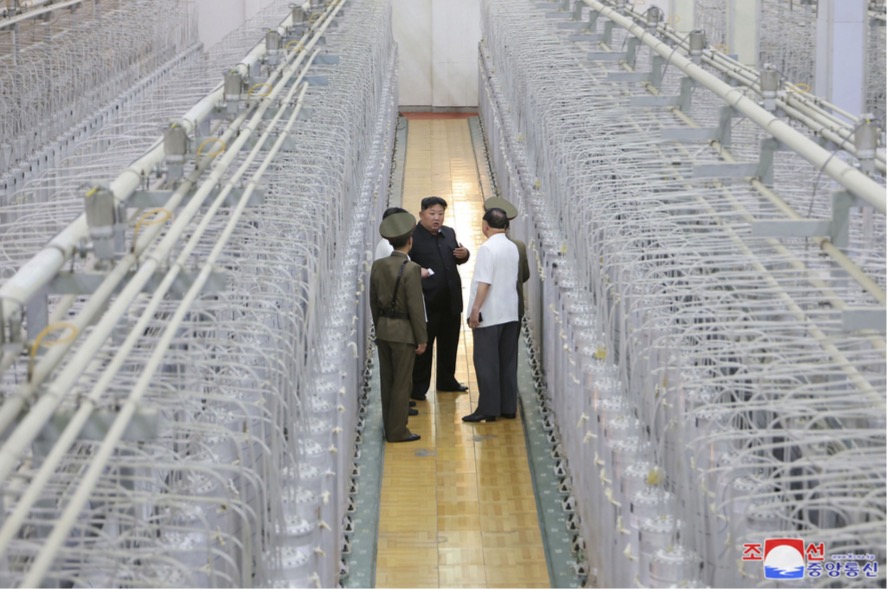
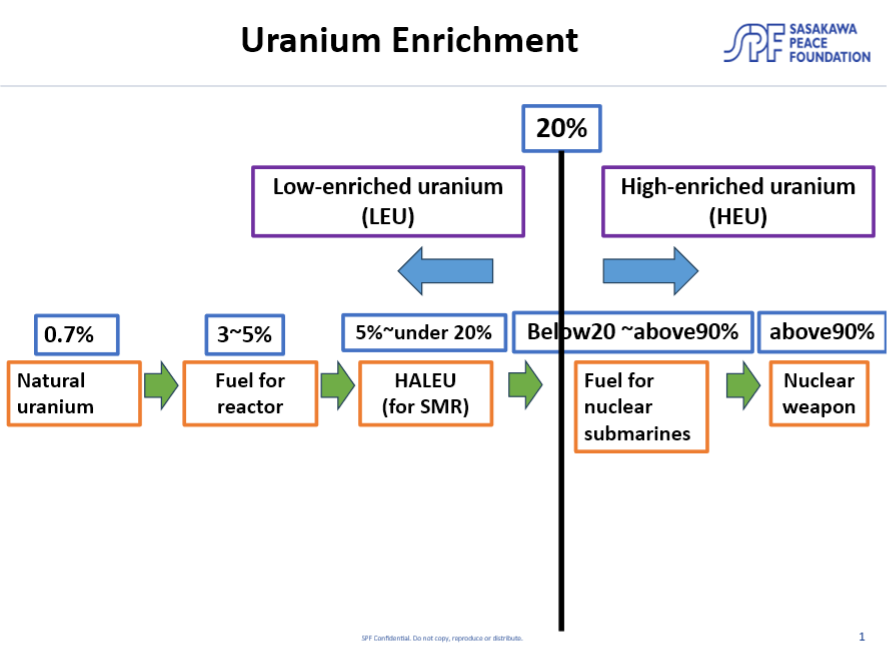
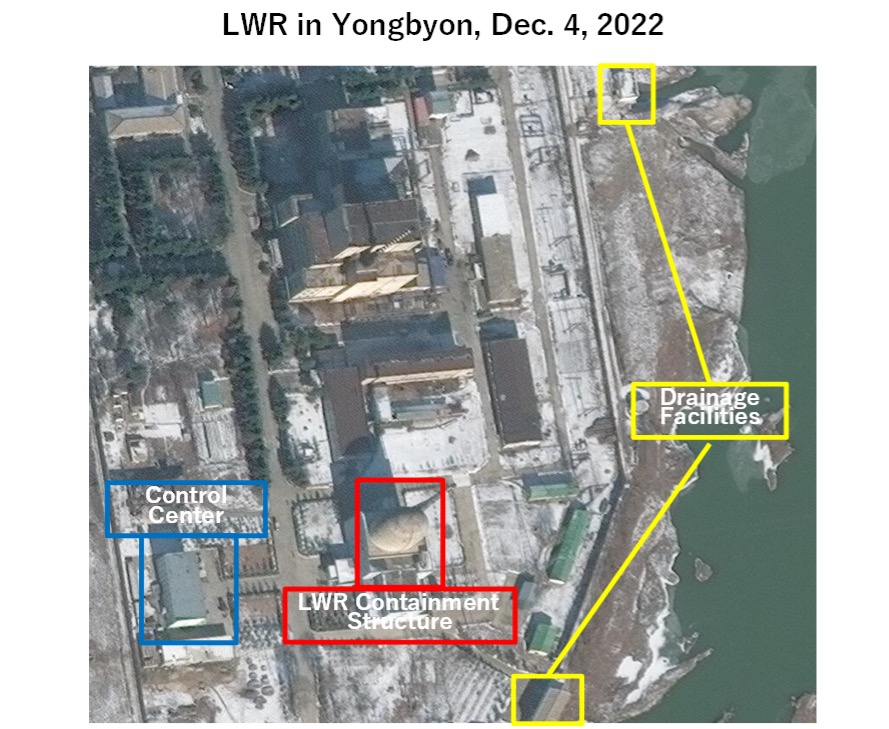
Additional developments potentially related to the nuclear-powered submarine program have also been observed. In August 2025, a new building believed to house a uranium enrichment facility was constructed at Yongbyon in northwestern North Korea. The facility could be intended not only for the production of highly enriched uranium for nuclear weapons but also for the manufacture of fuel for naval reactors. Around the same time, a reactor at Yongbyon entered operational status. According to the International Atomic Energy Agency (IAEA), this reactor is a light-water reactor (LWR),[3] the same type commonly employed in naval propulsion systems. In addition to electricity generation, the facility may serve as a training platform for personnel expected to operate nuclear-powered submarines in the future.
Nevertheless, possessing the capability to develop and operate commercial nuclear reactors does not automatically translate into the ability to design reactors suitable for submarine propulsion. A naval reactor must be sufficiently compact and lightweight to fit within a submarine while still maintaining adequate power output. Operational requirements also differ considerably. Whereas a commercial power reactor typically operates at a stable output level close to full capacity once it has entered routine service, a submarine reactor must frequently adjust its power level in response to changing operational conditions. For North Korea, which only recently began operating a domestic light-water reactor, developing a naval reactor and acquiring the necessary operational expertise independently would be a formidable challenge. Russian technical assistance is therefore likely to be indispensable.
Should North Korea succeed in deploying nuclear-powered submarines capable of carrying nuclear warheads, the implications for the security environment in Northeast Asia would be profound. As a result, careful analysis of the country’s submarine development efforts has become increasingly important. This paper examines the status of North Korea’s nuclear-powered submarine program, its light-water reactor, and uranium enrichment facilities through satellite imagery and other open-source evidence, while incorporating expert assessments to evaluate the program’s progress and strategic significance.