Provides analysis of China's politics, economy, society, diplomacy, and security

SPF China Observer

Satellite Imagery Analysis 2026/07/06

Satellite Image Analysis: China’s Nuclear Fuel Reprocessing Facility Begins Operation — Progress Toward Establishing a Nuclear Fuel Cycle

Yuki Kobayashi (Senior Research Fellow, Sasakawa Peace Foundation)

1. Introduction

Satellite imagery has confirmed that the first plant of a nuclear fuel reprocessing facility under construction in inland Gansu Province, China, has likely commenced operation. Since January 2026, periodic emissions of steam have been observed from steam-generating equipment adjacent to the plant.[1] A reprocessing facility chemically treats spent nuclear fuel used in reactors, separating and recovering plutonium and uranium for reuse as nuclear fuel. Because heat is required in this process, systems such as boilers operate to generate thermal energy, resulting in regular steam emissions. The start of operations at this reprocessing facility indicates that China has taken a step forward toward establishing a nuclear fuel cycle.

The first plant is designed to reprocess fuel used in light water reactors (LWRs),[2]a reactor type widely adopted in countries around the world, including Japan. However, as discussed below, reliance solely on the LWR cycle does not allow for the efficient utilization of natural uranium resources. To complete a nuclear fuel cycle and improve uranium use efficiency, it is necessary to operate fast breeder reactors (FBRs), which can recover more fissile material than they consume, and to establish facilities capable of reprocessing the spent fuel generated by such reactors. Although no country has yet established a commercial-scale nuclear fuel cycle incorporating FBR cycle, Russia and China are at the forefront of development. In the case of China, as previously discussed in this series, including the author’s earlier article titled “Water Drainage Observed at China’s Fast Breeder Reactor Full-Scale Operation Likely in Near Future,” China has been constructing FBRs in coastal Fujian Province, which entered trial operation in the summer of 2023. It is anticipated that China will, in the future, develop facilities to reprocess spent fuel from its FBRs, thereby aiming to complete its nuclear fuel cycle.

If the FBR cycle is established, the implications extend beyond the civilian use of nuclear technology. Concerns arise regarding the potential diversion of reprocessed plutonium for military purposes, as well as the possibility of a corresponding nuclear arms buildup. While plutonium derived from LWRs is not necessarily suitable for military use, spent fuel from FBRs, when reprocessed, can yield weapons-grade plutonium of extremely high purity, making it highly suitable for nuclear weapons. Although China emphasizes the civilian nature of its FBR in Fujian Province, the U.S. Department of Defense has pointed out the possibility that China could use this FBR as a source of plutonium for nuclear weapons development in pursuit of strategic parity with the United States.[3]

This paper analyzes the latest status of China’s newly operational reprocessing facility based on newly obtained satellite imagery and various datasets. It further examines the prospective pathway toward the establishment of a nuclear fuel cycle in China and considers the risks associated with the potential military diversion of nuclear materials.

2. Background and Status of Reprocessing Facility Development

Since commencing operation of its first commercial nuclear power plant in 1994, China has steadily expanded its use of nuclear energy for power generation. The country has its intention to achieve carbon neutrality—effectively reducing CO₂ emissions to net zero—by 2060,[4] positioning nuclear power, which does not emit CO₂ during electricity generation, as one of the key means to achieve this goal. Over the ten-year period from 2014 to 2023, China brought a total of 38 reactors into operation,[5] and as of May 2026, it operates 60 reactors—primarily light LWRs—equivalent to approximately four times the number operating in Japan.[6]

At the same time, China has sought to establish a nuclear fuel cycle in anticipation of potential future shortages in the supply of natural uranium, the primary resource for nuclear fuel. This involves separating plutonium from spent fuel and reusing it in the form of mixed oxide (MOX) fuel, which combines plutonium with uranium. To this end, China first proceeded with the construction of a pilot reprocessing plant in Gansu Province for fuel used in LWRs, which is believed to have begun operation around 2010. However, due to a series of technical difficulties, it is estimated that the facility did not reach stable operation until approximately 2019.[7]

Since 2015, construction of a new reprocessing plant has been initiated in the vicinity of this pilot facility. While the Chinese government and the operating entity, China National Nuclear Corporation (CNNC), have not disclosed detailed information, analysis of satellite imagery indicates that the first plant completed its civil engineering phase and entered the equipment installation phase by February 2020. Although no official announcement has been made, construction of a second plant is believed to have commenced around 2020. According to an investment plan released by Gansu Province in 2021, the total investment for the development of the reprocessing complex, including the first and second plants, amounts to 300 billion yuan (approximately 6 trillion yen).[8]

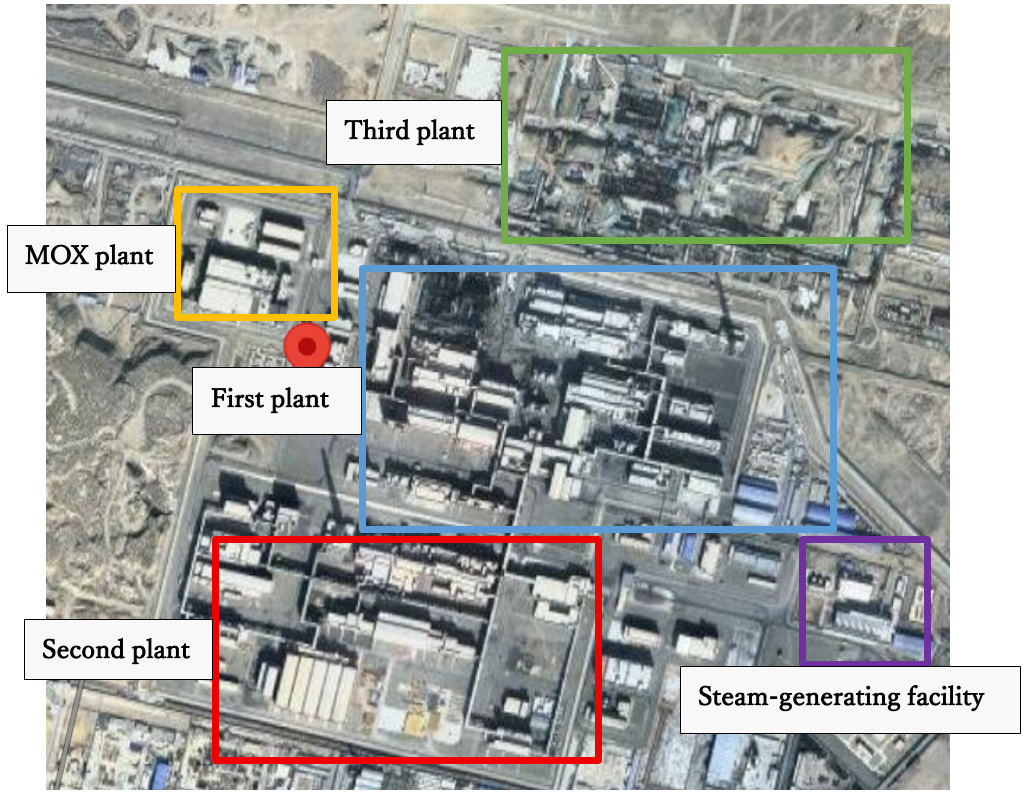
As shown in Satellite Image 1, the first plant (outlined in blue) reached a state of physical completion in 2024, and the timing of its operational start attracted considerable attention. The facility has a capacity to reprocess 200 tons of uranium per year.[9] Given that the reprocessing plant in Rokkasho, Aomori Prefecture, Japan, has an annual capacity of 800 tons, the first plant can be characterized as a relatively small-scale facility. Construction of the second plant (outlined in red) is also progressing and is likely to enable operation by the early 2030s. In contrast, the site believed to correspond to the third plant (outlined in green) still includes many structures without roofing, suggesting that completion will require additional time.

Satellite Image 1:Reprocessing plants in Gansu Province

Source: Google Earth

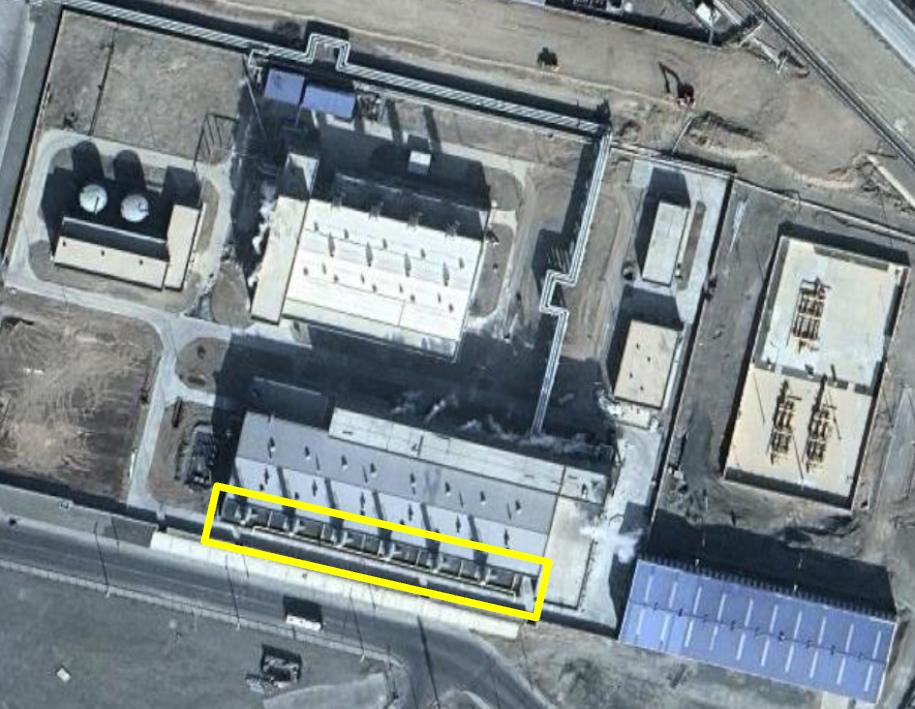
Satellite Image 2:Steam-generating facility

Source: Google Earth

Satellite Image 2 focuses on the steam-generating facility located in the lower-right section of the site shown in Satellite Image 1, adjacent to the first plant. The stack (tower) releasing steam is indicated by the yellow outline. Due to image usage restrictions, images displaying actual steam emissions cannot be presented; however, since January of this year, steam has been observed to be emitted on a regular basis.

What does this emission of steam signify? The reprocessing of spent nuclear fuel involves the following four stages:

  • - Shearing and dissolution: The spent fuel is cut into small pieces and immersed in nitric acid.
  • - Separation: Uranium, plutonium, and other fission products dissolved in the nitric acid are separated.
  • - Purification: Trace by-products contained in uranium and plutonium are removed, and the concentrations of uranium and plutonium in the nitric acid solution are increased.
  • - Conversion to product form: Uranium and plutonium are converted into their respective oxides for subsequent fuel fabrication.

In the initial stage, “shearing and dissolution,” it is necessary to heat the nitric acid to approximately 90°C, which requires the operation of multiple boilers. This process results in the generation of steam. As for the MOX fuel fabrication plant (outlined in orange in Satellite Image 1), which follows these processes, the building itself appears to be structurally complete; however, it is not possible to determine from imagery alone whether it is currently in operation.

3. Toward the Establishment of a Nuclear Fuel Cycle

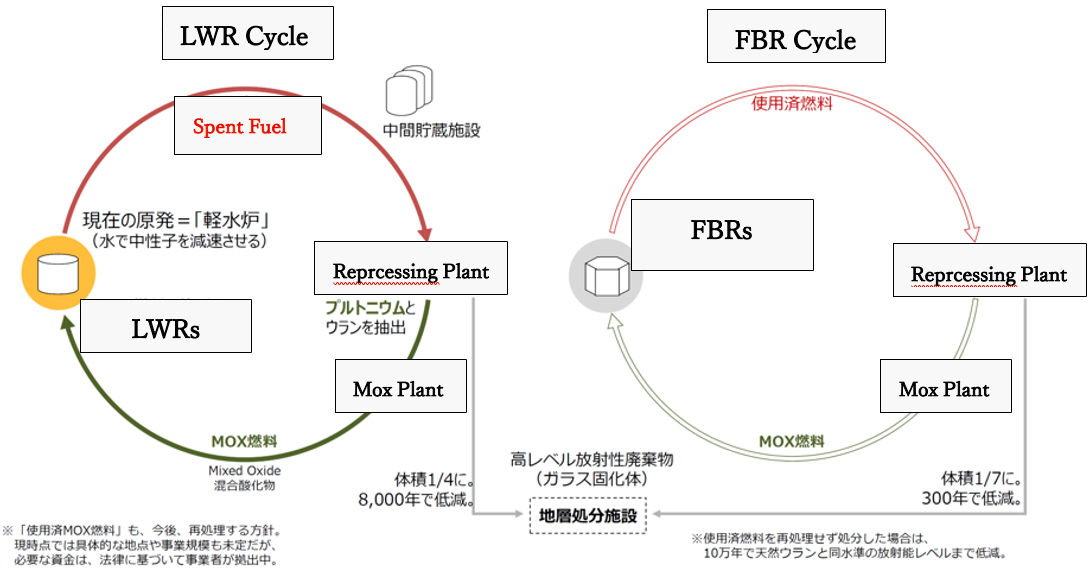
The first plant operates within what is known as the LWR cycle. In this process, still-usable uranium and newly generated plutonium are extracted from spent fuel from LWRs and reused either as low-enriched uranium or as MOX fuel, which combines plutonium and uranium. The commencement of operations at the first plant indicates that China is making progress toward establishing this cycle. In contrast, FBRs produce more fissile material than they consume through nuclear reactions within the core, whereby uranium that would otherwise not serve as fuel—referred to as blanket material—is converted into plutonium. As a result, the total amount of fuel generated exceeds the amount initially loaded. In other words, if MOX fuel produced from spent LWR fuel is subsequently used in FBRs, the quantity of nuclear fuel increases over time, theoretically enabling nuclear power generation to be sustained for several thousand years (see Figure 1).

For these reasons, FBRs have long been referred to as “dream reactors.”[10] However, significant technical challenges remain, including the difficulty of managing sodium used as a coolant. The United States terminated its FBR development program in the 1980s, while the United Kingdom and France did so in the 1990s;[11] Japan also decided in 2018 to decommission its FBR known as Monju. At present, only a limited number of countries—including China, Russia, and India—operate FBRs.

Reprocessing spent fuel from FBRs also presents technical challenges, such as differences in the shearing and dissolution processes compared to those used for LWR fuel. A review of China’s experience in developing reprocessing facilities for spent LWR fuel indicates that it took nearly 15 years from the start of operations at the pilot plant to achieve stable operation. Although some of the technologies acquired during this process may be applicable, it is expected that considerable time will still be required before facilities for reprocessing spent fuel from FBRs become operational.

Figure 1:Conceptual diagram of the nuclear fuel cycle

Source: Agency for Natural Resources and Energy

4. Concerns Regarding Military Diversion

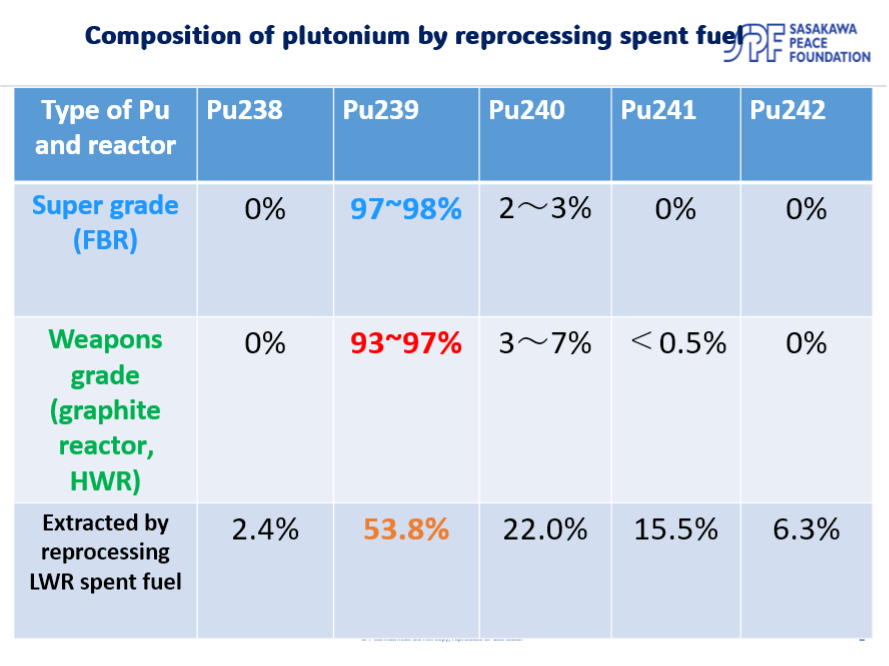
If China succeeds in overcoming these technical challenges and ultimately establishes a nuclear fuel cycle that includes the reprocessing of spent fuel from FBRs, concerns may arise regarding the potential diversion of plutonium for military purposes. As illustrated in Figure 2, the properties of plutonium extracted from nuclear fuel derived from natural uranium vary depending on the rate of nuclear reactions within the reactor and the duration for which the fuel remains in the core.

In LWRs, the reaction rate is relatively moderate and the fuel remains in the reactor for an extended period, resulting in the production of a variety of plutonium isotopes. Among these, plutonium-239, which is highly efficient in energy release, accounts for only approximately 50 percent, while plutonium-238, which generates significant heat through spontaneous decay, is also present. As a result, plutonium derived from LWRs is not necessarily well suited for military applications, as the heat generated can damage not only detonation systems but also critical components of nuclear warheads.

In contrast, plutonium derived from FBRs contains negligible amounts of plutonium-238 and consists of more than 97 percent plutonium-239.

Figure 2:Composition of plutonium extracted from different reactor types

Source: Created by the author

The U.S. Department of Defense’s concern that the FBR in Fujian Province could become a center for the production of military-grade plutonium stems from these considerations. In this regard, China also bears part of the responsibility. Under the Treaty on the Non-Proliferation of Nuclear Weapons (NPT), the five recognized nuclear-weapon states (the United States, the United Kingdom, Russia, France, and China) are not obligated to accept inspections of their nuclear-related facilities by the International Atomic Energy Agency (IAEA).

However, under the Guidelines for the Management of Plutonium (INFCIRC/549), they are required to report annually their holdings of civilian plutonium. Accordingly, as long as the plutonium produced is intended for civilian use, there should be no impedment to China providing such reports. Nevertheless, since 2017, China has suspended its reporting under INFCIRC/549 without clearly stating the reasons, becoming the only one among the five nuclear-weapon states to do so.

Looking ahead, it is therefore highly likely that China will continue to refrain from disclosing detailed information regarding developments in its FBRs and reprocessing facilities, including the quantity of plutonium extracted.

5. Conclusion: Ensuring Greater Transparency in the Use of Nuclear Materials

In light of the concerns regarding the potential military diversion of nuclear materials, how should the international community, and Japan in particular, respond? It is essential to focus efforts on advocating for greater transparency in the use of nuclear materials.

If China intends to limit the use of its reprocessing facilities in Gansu Province and its FBRs to civilian purposes, this is not, in principle, a matter for external interference. However, if a state that has been granted the exceptional status of a nuclear-weapon state under the NPT continues to take actions that blur the distinction between civilian and military uses—such as unilaterally suspending its reporting to the IAEA—it risks undermining the international nuclear non-proliferation regime built upon the treaty. This concern is all the more pressing at a time when the risk of nuclear proliferation is increasing, as exemplified by developments such as Iran’s production of highly enriched uranium.

Japan has already raised this issue in forums such as the NPT Review Conference, calling on China to resume its reporting to the IAEA, and such efforts should be sustained. As an initial step, it is important to clearly present to the international community that China’s lack of transparency in IAEA reporting constitutes a matter that could adversely affect the global non-proliferation regime. Efforts to enhance transparency in the use of nuclear materials, aimed at preventing military diversion, are difficult even for nuclear-weapon states to oppose. Japan should call not only on other nuclear-weapon states and Western countries, but also on countries in the Global South that are expected to introduce nuclear power in the future, to align their efforts toward improving transparency.

In addition, dialogue between Japan and China is also necessary. Although the current situation of bilateral relations makes the realization of direct governmental dialogue challenging, the nuclear regulatory authorities of both countries continue to maintain communication through frameworks such as the “Top Regulators’ Meeting on Nuclear Safety among Japan, China, and Korea (TRM).”[12] This platform could be utilized to exchange views on enhancing transparency in the use of nuclear materials. Furthermore, Japan and South Korea could cooperate at the regulatory level to urge China to recognize the importance of its reporting obligations and to address the distrust arising from a lack of transparency.

It is likely to take time for China to establish a complete fast reactor fuel cycle. During this period, if transparency in the use of nuclear materials can be further strengthened and international norms can be established to prevent the diversion of civilian technologies for military purposes, this would also contribute to improving Japan’s security environment.

1 Hui Zhang, “China has started operation of its demonstration reprocessing plant,” International Panel on Fissile Materials (IPFM), May 13, 2026.[https://fissilematerials.org/blog/2026/05/china_has_started_operati.html]

2 The designation of nuclear reactors varies depending on the type of moderator used to slow down neutrons and facilitate efficient fission reactions in nuclear fuel. A light water reactor (LWR) is a type of reactor that uses ordinary water—referred to as “light water” to distinguish it from heavy water with higher density—to fill the core, into which uranium fuel is inserted. The water serves as a moderator while also generating large amounts of steam through heating, which drives turbines to produce electricity. Currently, more than 80% of the world’s nuclear reactors are LWRs, and all reactors in operation in Japan are of this type. See, for example, Federation of Electric Power Companies, “Mechanism of Light Water Reactors.”[https://www.fepc.or.jp/supply/hatsuden/nuclear/shikumi/keisuiro/]

3 Department of Defense “MILITARY AND SECURITY DEVELOPMENTS INVOLVING THE PEOPLE’S REPUBLIC OF CHINA 2024” December 2024, p. 101.[https://media.defense.gov/2024/Dec/18/2003615520/-1/-1/0/MILITARY-AND-SECURITY-DEVELOPMENTS-INVOLVING-THE-PEOPLES-REPUBLIC-OF-CHINA-2024.PDF]

4 Agency for Natural Resources and Energy, “Section 2: Trends in Decarbonization in Foreign Countries,” in Energy White Paper 2021.[https://www.enecho.meti.go.jp/about/whitepaper/2021/html/1-2-2.html]

5 Japan Atomic Industrial Forum (JAIF), “China: 30 Years Since the Start of Commercial Nuclear Power Generation—Nuclear Capacity Has Expanded Significantly Over the Past Decade,” June 2024.[https://www.jaif.or.jp/information/china2024]

6 IAEA “Power Reactor Information System: China,”.[https://pris.iaea.org/PRIS/CountryStatistics/CountryDetails.aspx?current=CN]

7 Hui Zhang, “China’s Plutonium Recycling Program: Current Status and Issues” (in Japanese: 「中国のプルトニウム・リサイクル計画-現状と問題点」), New Diplomacy Initiative, Vol. 15, 2022, p. 1.[https://pris.iaea.org/PRIS/CountryStatistics/CountryDetails.aspx?current=CN]

8 Hajime Matsukubo, “China’s Nuclear Fuel Cycle Facilities: A Cause for Concern” (in Japanese: 「憂慮される中国の核燃料サイクル施設」), CNIC Newsletter, No. 614, August 2025, pp. 12–13.

9 Hui Zhang, “Pinpointing China’s new plutonium reprocessing plant,” Bulletin of the Atomic Scientists, May 5, 2020[https://thebulletin.org/2020/05/pinpointing-chinas-new-plutonium-reprocessing-plant/]

10 “The ‘Dream Reactor’: Following the Demise of Monju, a New Research Reactor Planned at the Site—Local Response Remains Divided” (in Japanese), Mainichi Shimbun, April 30, 2022 (subscriber-only article).

11 Japan Atomic Energy Agency (JAEA), “Decommissioning of Fast Reactors Worldwide.”[https://www.jaea.go.jp/04/monju/world_decommissioning/]

12 Nuclear Regulation Authority (Japan), “Summary of the 15th Japan–China–Korea Top Regulators’ Meeting on Nuclear Safety (TRM),” July 30, 2025.[https://www.da.nra.go.jp/view/NRA100011973?contents=NRA100011973-004-009#pdf=NRA100011973-004-009]
  • Facebook
  • X
  • LINE
  • はてな

ページトップ