As discussed earlier, both graphite-moderated reactors and light water reactors have had major accidents. It has been pointed out, however, that graphite-moderated reactors are more laden with safety vulnerabilities, including weakness to external shocks, than light water reactors. Currently, Russia is the only country where RBMKs are still in operation.[6]
In the case of light water reactors, each reactor is covered with a steel containment vessel, which is enclosed in a reinforced concrete building. Even in the event of a reactor abnormality, such as a nuclear fuel meltdown leading to radioactive leakage from the reactor, the containment vessel contains the leakage. On the contrary, graphite-moderated reactors usually do not have such containment vessels and thus their function to contain radioactive materials in the event of a reactor abnormality is weaker.
In the Chernobyl nuclear power plant accident, one graphite-moderated reactor melted down. In contrast, the Fukushima Daiichi nuclear power plant accident involved the meltdown of three light water reactors, and a massive amount of hydrogen gas by melting nuclear fuel formed in two of them leaked out, caught fire, and exploded, blowing off the roofs and outer walls of the buildings enclosing the reactors and containment vessels. In addition, another hydrogen explosion occurred in a separate building where spent fuels are stored in a pool of water. As such, the Fukushima Daiichi accident was seemingly more serious than the one at Chernobyl. However, a comparison of figures shows otherwise, i.e., the area contaminated and the maximum distance reached by cesium-137, a radioactive material, emitted in the Fukushima Daiichi accident are respectively some 6% and one tenth of those in the Chernobyl accident.[7] From this, we can see that, despite the hydrogen explosions, the containment vessels at Fukushima Daiichi remained sound, fulfilling their function of containing radioactive materials, at least to an extent. In contrast, the accident at the Chernobyl NPP, which had no containment vessels and was weak in its containment function, resulted in the spread of radioactive contaminants across extensive areas of Europe.
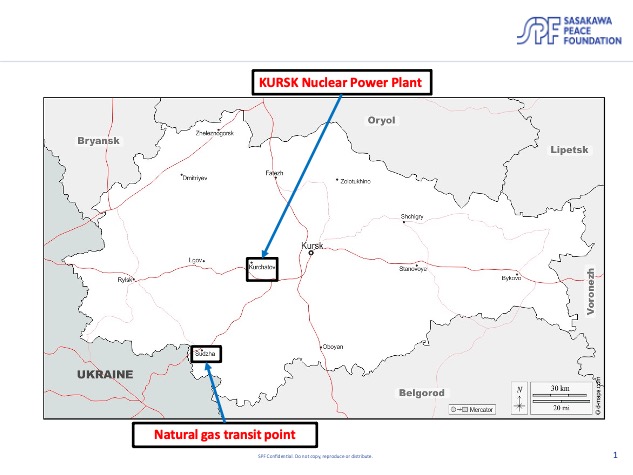
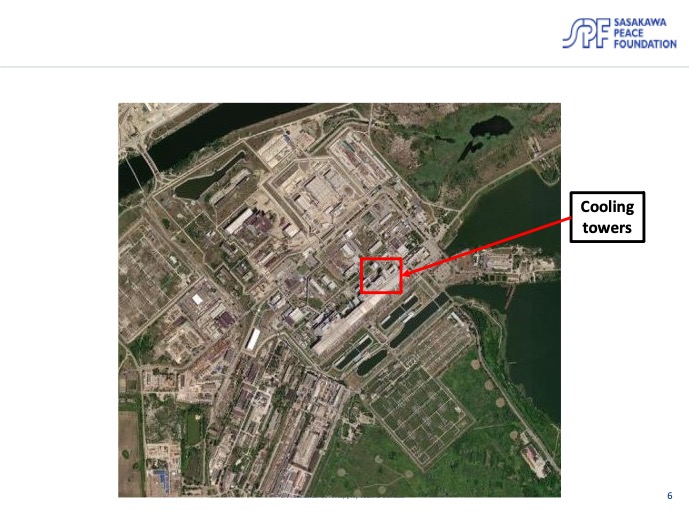
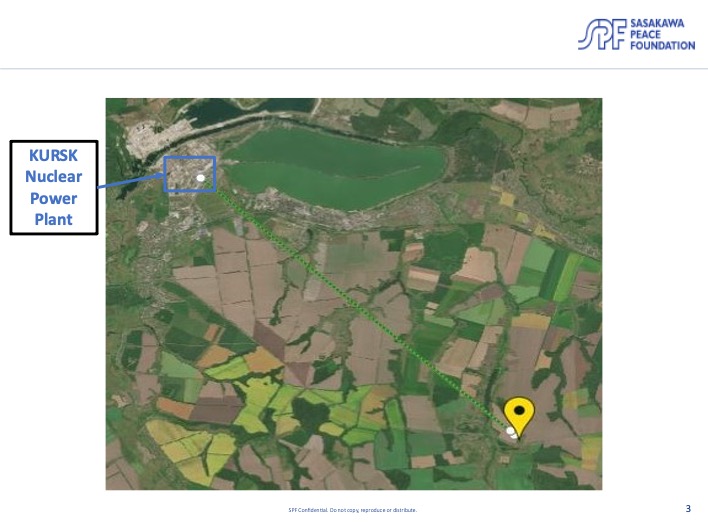
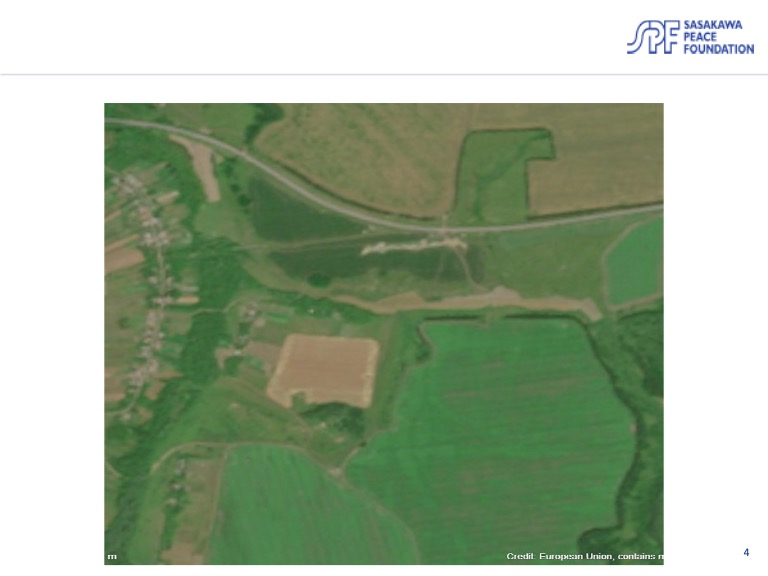
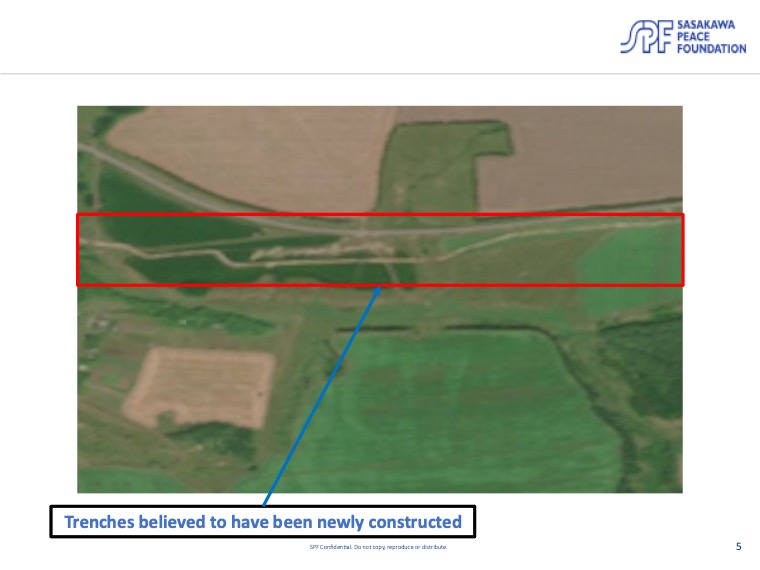
Regarding those weaknesses of graphite-moderated reactors, IAEA Director General Grossi has been voicing concern. “The fact that the plant is operating makes it even more serious,” Grossi said, during his visit to the Kursk NPP on August 26. Describing the site as “exposed and fragile,” he said, “A nuclear power plant of this type so close to the military front is an extremely serious fact.”[8] It seems that Russia, too, has recognized the vulnerabilities, as satellite images of an area near the Kursk NPP show that significant changes have occurred over a period of one month. Look at the three images shown below.
Satellite Image 2: Spot under observation (bottom right) near the Kursk NPP