[1] Office of the Secretary of Defense, “MILITARY AND SECURITY DEVELOPMENTS INVOLVING THE PEOPLE'S REPUBLIC OF CHINA 2020” [https://media.defense.gov/2020/Sep/01/2002488689/-1/-1/1/2020-DOD-CHINA-MILITARY-POWER-REPORT-FINAL.PDF]
[2] Office of the Secretary of Defense, “MILITARY AND SECURITY DEVELOPMENTS INVOLVING THE PEOPLE'S REPUBLIC OF CHINA 2021”[https://media.defense.gov/2021/Nov/03/2002885874/-1/-1/0/2021-CMPR-FINAL.PDF]
[3] Office of the Secretary of Defense, “MILITARY AND SECURITY DEVELOPMENTS INVOLVING THE PEOPLE'S REPUBLIC OF CHINA 2022” [https://s3.documentcloud.org/documents/23321290/2022-military-and-security-developments-involving-the-peoples-republic-of-china.pdf]
[4] The Comprehensive Nuclear-Test-Ban Treaty (CTBT) bans nuclear weapon test explosions in all spaces, including outer space, in the atmosphere, under water, and underground. The Comprehensive Nuclear-Test-Ban Treaty Organization (CTBTO) was set up to verify compliance with the treaty, and verification methods were also stipulated to detect nuclear test explosions. However, tests without explosions (subcritical nuclear tests, etc.) are not covered by the CTBT ban, and this is regarded as a loophole for sophisticating nuclear arms and developing new weapons. See “Comprehensive Nuclear-Test-Ban Treaty (CTBT),” (in Japanese) Research Center for Nuclear Weapons Abolition (RECNA), Nagasaki University. [https://www.recna.nagasaki-u.ac.jp/recna/database/condensation/nucleartest]
[5] Jonathan Landay, “U.S. says China may have conducted low-level nuclear test blasts,” Reuters, April 16, 2020. [https://www.reuters.com/article/us-usa-china-nuclear-idUSKCN21X386]
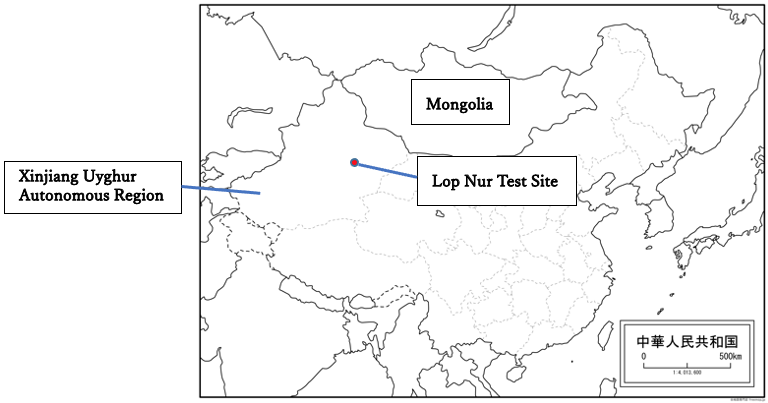
[6] This paragraph is mostly based on “Nuclear Tests Conducted in East Turkestan,” (in Japanese) Japan Uyghur Association, May 13, 2015. [https://uyghur-j.org/japan/2013/05/%E6%9D%B1%E3%83%88%E3%83%AB%E3%82%AD%E3%82%B9%E3%82%BF%E3%83%B3%E3%81%A7%E8%A1%8C%E3%82%8F%E3%82%8C%E3%81%9F%E6%A0%B8%E5%AE%9F%E9%A8%93%E3%81%AB%E3%81%A4%E3%81%84%E3%81%A6/]
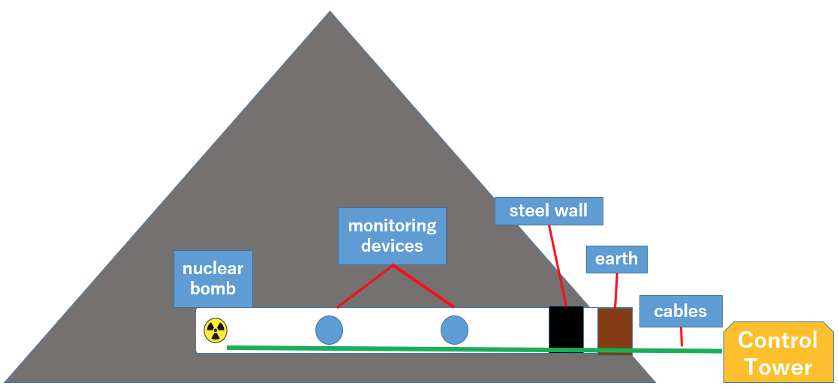
[7] Explanation on subcritical nuclear tests and criticality based on author's interview with Tomonori Iwamoto (Feb. 15, 2023) and Disarmament Dictionary (Gunshuku jiten), (in Japanese) Shinzansha, 2015.
[8] Based on author's interview with Iwamoto (Feb. 15, 2023)
[9] Nobumasa Akiyama, Sugio Takahashi, End of Oblivion of Nuclear Arms: The Age of Reempowerment of Nuclear Weapons (Kaku no bokyaku no owari – Kakuheiki fukken no jidai), (in Japanese), Keiso Shobo, 2019, p. 244.
[10] Brad Roberts, The Case for U.S. Nuclear Weapons in the 21st Century (Japanese translation by Masashi Murano) Keiso Shobo, 2022 (Original work published in 2015), p. 329.
[11] The New Strategic Arms Reduction Treaty (New START), which came into force in February 2011, was signed by the U.S. and Russia in April 2010 to replace the Strategic Arms Reduction Treaty (START I) after its expiration in December 2009. New START stipulates that the two countries reduce the number of deployed strategic nuclear warheads to below 1,550 and the number of missiles, bombers, and other delivery vehicles to below 800 (the number of actually deployed below 700) by 2018. This treaty expired in February 2021, but the two countries agreed to an extension of five years. See Disarmament Dictionary, etc.
[12] Non-nuclear countries deploying and jointly operating nuclear weapons of nuclear powers on their territory. NATO members Germany, Italy, the Netherlands, Belgium, and Turkey deploy U.S. nuclear arms under the nuclear sharing policy. See Disarmament Dictionary, etc.
[13] Based on author's interview with Iwamoto (Feb. 15, 2023).