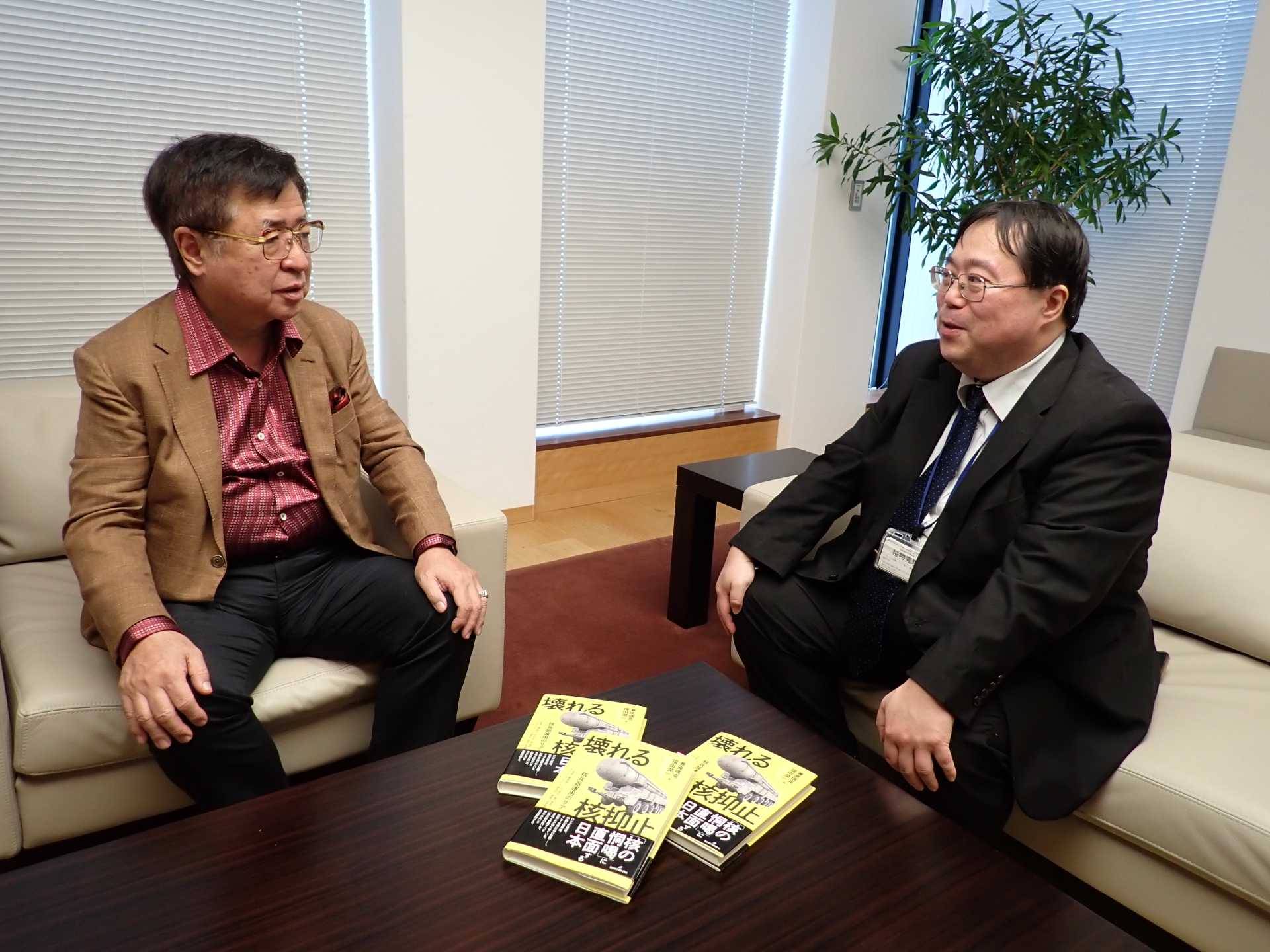
Mr. Fukuda: The international environment on nuclear weapons is drastically changing. Competition among major powers is intensifying, nuclear arms races are advancing, and Russia is engaging in nuclear intimidation in the context of the battlefield in Ukraine. The possibility of nuclear use has started to become a reality. For example, Russia has deployed tactical nuclear weapons in its ally, Belarus, and is frequently conducting exercises in the surrounding area.
In addition, arms control mechanisms are failing. No successor treaty to the U.S.-Russia New START Treaty (Measures for the Further Reduction and Limitation of Strategic Offensive Arms) has been established, and efforts by the United States and other countries to involve China in such a successor treaty have also failed. There have also been three consecutive failures to adopt a final document at the Review Conference of the Parties to the NPT (Treaty on the Non-Proliferation of Nuclear Weapons), and trends toward nuclear proliferation are evident, such as Iran’s nuclear development.
Against this backdrop, we have been forced to consider the real possibility that deterrence through nuclear weapons could collapse. Conventionally, the prevailing view was simply that nuclear weapons must never be used. However, I believe we are now in an era where there is a real concern that nuclear weapons might actually be used, and in order to deter such use, we must consider under what circumstances adversaries might use them and what operational policies we must prepare. Given the grim reality of stagnation in global arms control, it is fair to say that we are at the juncture where the premises of nuclear deterrence could be undermined.