News
News
Mainstreams Ocean-Climate Nexus and Cryosphere-Ocean Links at UNFCCC SB64 in Bonn
2026.06.16
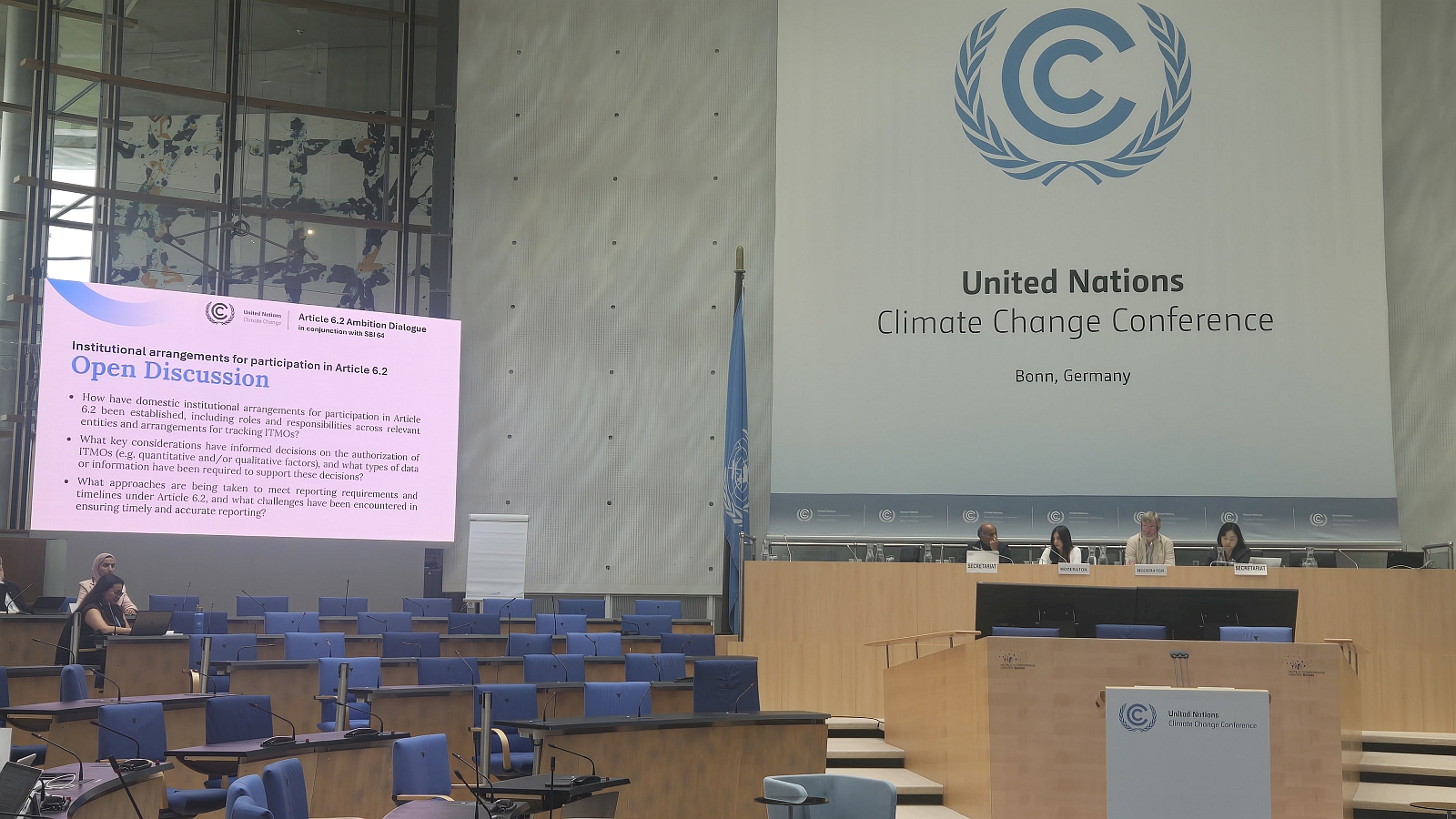
BONN, Germany — The Sasakawa Peace Foundation (SPF) is playing an active role in mainstreaming the ocean agenda and bridging cryosphere-ocean policies at the ongoing Bonn Climate Change Conference (SB64), running from June 8 to 18, 2026. Represented by Project Lead and Research Fellow Dr. Santosh Kumar Rauniyar, SPF is participating in high-level sessions, mandated dialogues, and bilateral meetings to elevate marine nature-based solutions and high-altitude conservation into the core global climate negotiation tracks.
SPF joined the momentum of the mandated Annual Ocean and Climate Change Dialogue (June 10–11) to advocate for the widespread adoption of "Blue NDCs." Highlighting Japanese Ministry of the Environment presentations led by Director Hiratsuka Jiro on blue carbon NbS and J-Blue Credits, SPF emphasized the transition from dialogue to concrete project pipelines. The foundation also backed the policy frameworks preparing Mombasa, Kenya, to host the upcoming 11th Our Ocean Conference, aligning ocean priorities with the path to COP31 in Antalya.
SPF joined the momentum of the mandated Annual Ocean and Climate Change Dialogue (June 10–11) to advocate for the widespread adoption of "Blue NDCs." Highlighting Japanese Ministry of the Environment presentations led by Director Hiratsuka Jiro on blue carbon NbS and J-Blue Credits, SPF emphasized the transition from dialogue to concrete project pipelines. The foundation also backed the policy frameworks preparing Mombasa, Kenya, to host the upcoming 11th Our Ocean Conference, aligning ocean priorities with the path to COP31 in Antalya.
Dr. Santosh K. Rauniyar, Project Lead and Research Fellow, remarked: "Ambition without implementation is an illusion. Mainstreaming the ocean agenda requires moving from recognition to resolve, and ultimately to action. SPF is committed to ensuring that local coastal adaptation and high-altitude science are integrated into the core of global climate finance and national pledges."
Commentary of Dr. Santosh is available from here.
Commentary of Dr. Santosh is available from here.
Connecting Summit to Shoreline: Cryosphere and Ocean Downstream Synergies
A central focus of SPF's presence at SB64 is advocating for cryosphere-ocean downstream synergies. Highlighting outcomes from the Mountains and Climate Change Dialogue (June 12), SPF emphasized that high-altitude glacier conservation is a direct prerequisite for coastal delta survival, as upstream melt dictates delta sediment levels, coastal erosion, and estuary salinity.
SPF is actively translating these scientific connections into ground-level action through two key initiatives:
SPF is actively translating these scientific connections into ground-level action through two key initiatives:
- The "Glacier to Ocean" Project: Serves as a peace-bridging connector linking upstream mountain communities in the Hindu Kush Himalaya (HKH) region with downstream marine coastal communities to build localized climate resilience.
- The "Third Pole Project": Focuses on integrating hydrological and climate modeling to improve data sharing and policy coherence, bridging silos between mountain-focused and ocean-focused climate strategies.
Bilateral Collaborations and Global Alliances
At the negotiation level, SPF held key bilateral discussions. A strategic meeting was conducted with UNESCO's Dr. Anil Mishra to discuss facilitating the upcoming UN Decade of Action for Cryosphere (Decade of Glacier Preservation) and planning a joint side event alongside AMAP, ICIMOD, and the Nepal government. SPF also joined discussions with the Japanese delegation, Fiji, Palau, and Australia to explore Marine Carbon Dioxide Removal (mCDR) and coastal climate finance to support SIDS and developing nations.