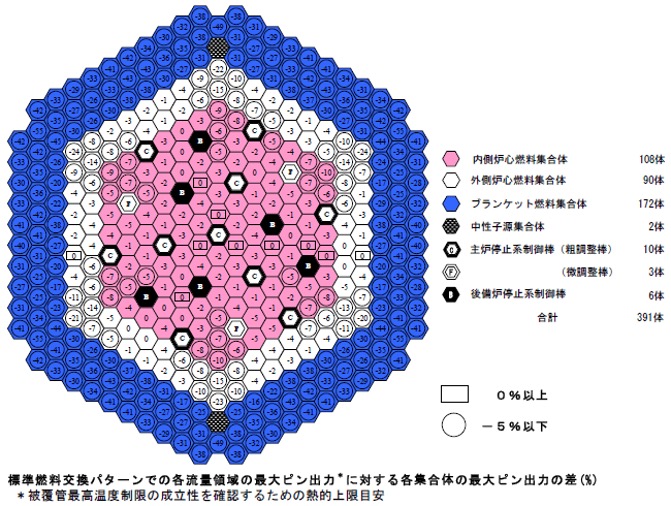
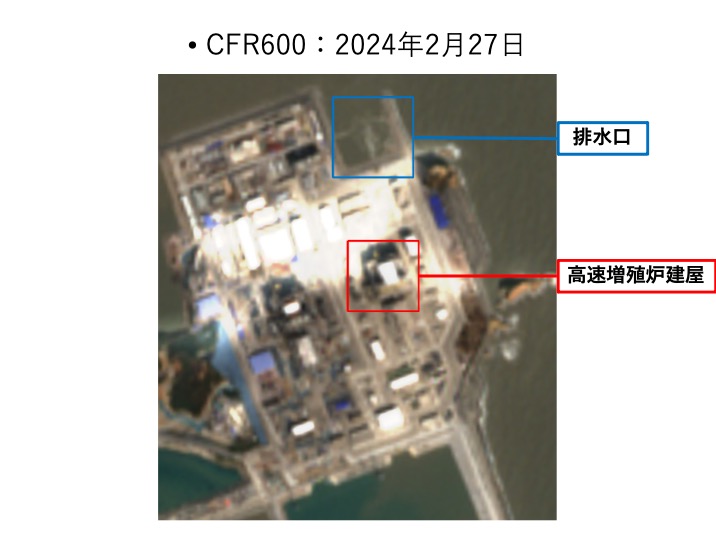
Nuclear non-proliferation experts are voicing concern that China's fast breeder reactor (FBR), which has been constructed on the coast of Fujian Province and appears to have gone into test operation, may be a step toward building up nuclear arms capabilities. This is because the FBR may be used to reprocess spent nuclear fuel to extract copious quantities of ultrapure plutonium-239, the type of plutonium best suited for the production of nuclear weapons.
Regarding the FBR in China, Russia has been providing technical assistance including the supply of nuclear fuel. The two countries signed a cooperation agreement on FBRs back in 2018. Another agreement, which includes some new commitments, was concluded at the China-Russia summit meeting in March 2023.[1] When a country transfers its nuclear technology for facilities that may lead to nuclear proliferation, such as FBRs, its agreement with the recipient country usually includes a provision prohibiting diversion for military use. That is why I pointed to the importance of analyzing the nuclear energy agreement between China and Russia in my previous article, “Intention behind Russia's Involvement in China's Plutonium Production.”
The Sasakawa Peace Foundation obtained a copy of the Russian text of the China-Russia Nuclear Energy Agreement of 2018. After translating it into English, we analyzed its content together with nuclear non-proliferation experts from Japan and abroad, including a Russian national. As a result, we found that the agreement includes provisions prohibiting China from using the nuclear fuel and technology provided by Russia for any military purposes, including, but not limited to the production of nuclear weapons and nuclear bombs. Some experts point out that if the agreement is complied with, it would be difficult for China—given the amount of plutonium currently held—to field a stockpile of roughly 1,500 nuclear warheads by 2035 as projected by the U.S. Department of Defense,[2] or it would take much more time to achieve that end. At the same time, however, the agreement has no mention of the International Atomic Energy Agency (IAEA) inspections of nuclear facilities and materials, meaning that the international community has no way of checking whether China actually complies with the agreement.
This article first provides an overview of the FBR, which China is working to bring into full operation, and estimates the country's nuclear weapon production capability by reference to the amount of plutonium held in China. Then, it examines the China-Russia Nuclear Energy Agreement to analyze its impact on China's nuclear armament.