Seminars Social Innovation Program
Symposium

Co-creating Sustainable and Inclusive Migration Governance

Lessons from Multi‑Stakeholder Collaboration across East and Southeast Asia

OrganisersSasakawa Peace Foundation (SPF) & Human Rights Working Group (HRWG)
 
Across Asia and globally, expectations for governments and businesses to uphold human rights in migration governance are evolving rapidly. Countries are strengthening labour mobility systems and introducing new due‑diligence requirements following the development of international frameworks on Business and Human Rights. Together with emerging regulations in major markets, companies are increasingly expected to demonstrate greater transparency, responsible business practices, and meaningful engagement with rights holders and affected communities. As migration becomes one of the major and complex political issues in many countries, governments are increasingly expected to design systems that are not only efficient but also aligned with international standards.

Japan is also at a pivotal moment. Major reforms are underway, including the transition from the Technical Intern Training Program (TITP) to the new Employment for Skills Development (ESD) scheme, and the implementation of the 2nd National Action Plan on Business and Human Rights. Under the “Comprehensive Measures for Promoting a Society of Well-Ordered and Harmonious Coexistence with Foreign Nationals,” a number of practical measures are being discussed. As Japan deepens its economic and diplomatic ties with Southeast Asian countries and relies more heavily on migrant workers from the region to address labour shortages, developments within ASEAN offer important lessons for Japan’s evolving approach.

In 2018, the Human Rights Working Group (HRWG) in Indonesia and the Sasakawa Peace Foundation (SPF) launched a partnership to strengthen cross‑regional collaboration and ensure that the experiences of migrants, their communities, and civil society actors inform policy discussions in both origin and destination countries. This collaboration led to the creation of BEBESEA (Better Engagement Between East and Southeast Asia), an advocacy platform that facilitates multistakeholder cooperation across borders.

Against this backdrop, this symposium invites participants to explore recent regional developments and reflect on lessons from BEBESEA initiatives that work collaboratively with impacted communities, their supporters, civil society organisations, and experts with lived and learned experience to influence regional and national policy developments in the ASEAN region and engage with business actors in East Asia. By convening experts and key actors, the event aims to deepen understanding, foster dialogue, and support meaningful multistakeholder engagement in shaping migration governance that is effective, sustainable, and grounded in real‑world experience.

Registration

This seminar will be held online only.
If you wish to participate, please register from this page by 12:00 on Wednesday, August 5 (JST).
Once your registration is complete, we will provide the access link in the registration confirmation email.

*When registering, please make sure to enter your email address correctly.

*After registration, you will receive a temporary registration confirmation email. Please click the registration completion link in the email within 24 hours to finalize your registration.

*If you do not receive the email, please check your spam or junk mail folder.

*The information you provide will be used for future invitations to seminars and lectures hosted or supported by SPF.
Contact
Social Innovation Program, West Asia and Islam Unit
E-mail: social-innovation@spf.or.jp
Tel: +81-3-5157-5280

Media Inquiries:
Public Relations Division
E-mail: spfpr@spf.or.jp
Tel: +81-3-5157-5395
*For members of the media who plan to record video, please contact PR in advance.

Description

13:00-13:30 JST Registration
13:30-13:45 JST Opening Remarks
Mr. Itsu Adachi, Executive Director, Sasakawa Peace Foundation
Background & Purpose of the Symposium
Mr. Daniel Awigra, Executive Director, Human Rights Working Group
13:45-15:00 JST Session 1
Evolving Migration Governance & Business and Human Rights

[Speakers]
●Prof. Motoko Shuto, University of Tsukuba 
●Dr. Andika Wahab, Deputy Director & Associate Professor, Institute of Malaysian & International Studies (IKMAS), The National University of Malaysia (UKM)
●Ms. Akiko Sato, Attorney At Law, Kotonoha Law
●Dr. Jotaro Kato, Associate Professor, Department of Social Work, Meiji Gakuin University 
[Moderator] Ms. Mariko Hayashi, Co-Founder, BEBESEA

Q&A Session
15:00-15:15 JST Break
15:15-16:30 JST Session 2
Lessons from Cross‑Regional Multi-stakeholder Collaboration

[Speakers]
●Ms. Mariko Hayashi, Co-Founder, BEBESEA
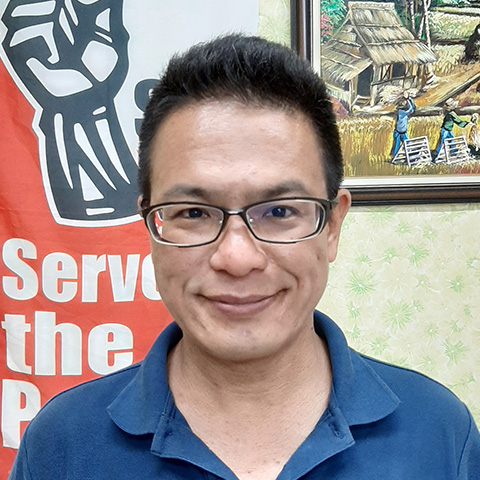
●Mr. Lennon Ying-Da Wang, Director, Department of Policies on Migrant Workers, Serve the People Association
●Dr. Razel Andrea D. Navalta, Programme Officer, Strategic Country Support Team, ASEAN-Japan Centre
●Ms. Masako Iwashina, Program Officer, Social Innovation Program, West Asia and Islam Unit, Sasakawa Peace Foundation
[Moderator] Daniel Awigra, BEBESEA/HRWG

QA session to follow
16:30-16:40 JST Reflection & Closing Remarks
Mr. Ken Aoo, Director, Social Innovation Program, West Asia and Islam Unit, Sasakawa Peace Foundation
*The event program and speakers are subject to change.

Speakers

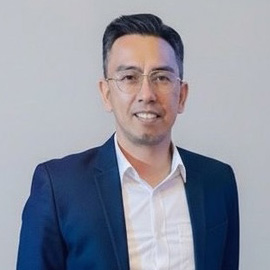
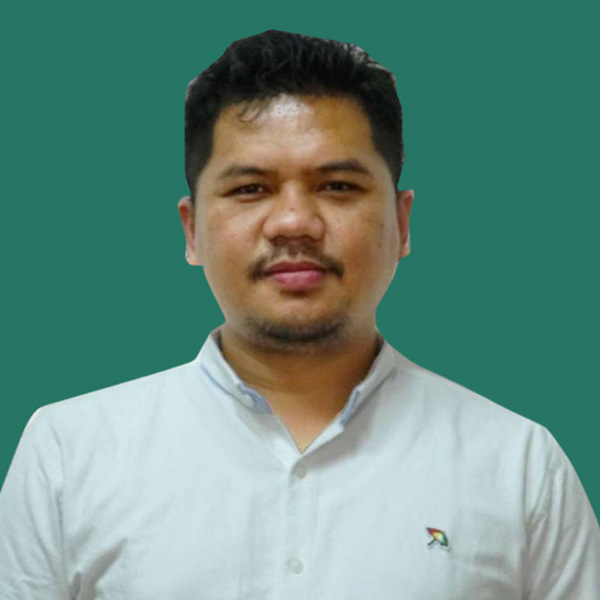
Mr. Daniel Awigra
Background & Purpose of the Symposium/ Moderator

Mr. Daniel Awigra

Executive Director, Human Rights Working Group / Co-Founder, BEBESEA
Profile

Daniel Awigra is a human rights activist and currently serves as the Executive Director of the Human Rights Working Group (HRWG), Indonesia’s leading NGO coalition dedicated to international human rights advocacy. In this leadership role, he also oversees the work of the BEBESEA Secretariat.
He has extensive experience in advancing human rights advocacy and facilitating multi‑stakeholder policy dialogues across UN, ASEAN, and other regional and national frameworks, working with governments, civil society, international institutions, and community groups to strengthen human rights and democratic governance.
Since 2025, Daniel has served as a member of the Executive Committee of FORUM‑ASIA, a prominent regional human rights network comprising 85 member organizations that works to protect human rights defenders and defend democracy.
In 2008, he co‑founded the Journalist Association for Diversity (SEJUK) to promote human rights and inclusive journalism in Indonesia, reinforcing the intersection between media and human rights advocacy.

Prof. Motoko Shuto
Panelist

Prof. Motoko Shuto

Professor Emerita, University of Tsukuba

Profile

Prof. Motoko Shuto obtained her doctorate at the Doctoral Program in Law/International Relations, Hitotsubashi University.
She served as an analysis consultant of the ACMW Self-Assessment of the ASEAN Forum on Migrant Labour (AFML) Recommendations for the ASEAN Socio-Cultural Community(ASCC) from April 2022 to March 2023. She is currently serving as President of the Japan Society for Public Interest and Common Goods Studies for the 2025–2027 term.
Some of her latest publications include: J.Akashi, M.Sato and M. Shuto eds., Survival and Acceptance of Migrants and Refugees: Diverse Actors, Institutions and Practices, Akashi-Shoten, 2026. “ASEAN’s Regional Governance on Labor Migration,” in Labor Migration and Diaspora Policy, ed. by Junichi Akashi, University of Tsukuba Press, 2022, pp.18-45.

Dr. Andika Wahab
Panelist

Dr. Andika Wahab

Deputy Director & Associate Professor, Institute of Malaysian & International Studies (IKMAS), The National University of Malaysia (UKM)

Profile

Andika Wahab holds a PhD in Anthropology and International Relations from the National University of Malaysia (UKM). He is currently Deputy Director and Senior Fellow of the Institute of Malaysian and International Studies (IKMAS), UKM.
His research cuts across the fields of international migration, human security and human rights. He also served as the elected Deputy President of the Malaysian International Studies Association; an Executive Committee Member of Humana Child Aid Society (Sabah); a Board Member to Advocates for Non-Discrimination and Access to Knowledge (ANAK); Member of the Advisory Board of the European Research Council-funded project “Gendered-Climate-Migration Initiative”; and an Accredited Monitor to Fair Labor Association (FLA) for labour standards compliance in supply chains.
In 2025, Andika was appointed as the Assistant to the Chairperson of the ASEAN Intergovernmental Commission of Human Rights (AICHR), supporting the implementation of human rights, human security and peacebuilding programmes across the region.

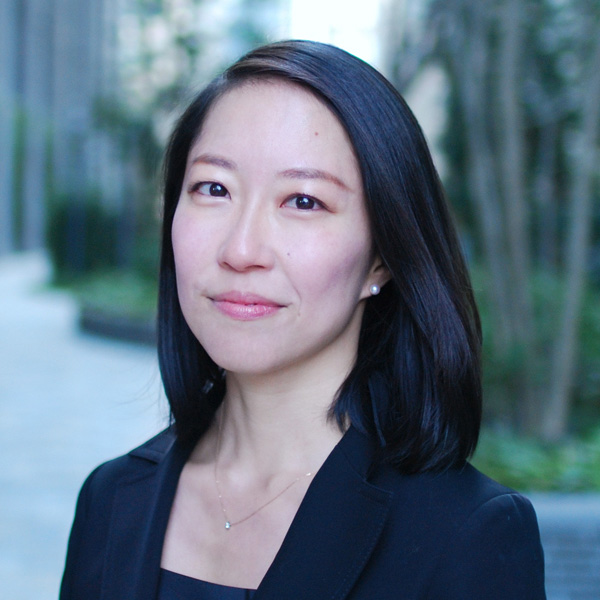
Ms. Akiko Sato
Panelist

Ms. Akiko Sato

Attorney At Law, Kotonoha Law

Profile

Akiko Sato is a human rights lawyer with 15 years of experience specialising in Business and Human Rights. She supports companies and organizations in embedding respect for human rights through policy development, human rights due diligence, stakeholder engagement, and policy advocacy.
Drawing on her experience with NGOs and international organizations, she is committed to advancing practical, rights-holder-centred approaches that translate international standards into meaningful action.
Akiko holds an MA in Development Studies (Human Rights) from the International Institute of Social Studies of Erasmus University Rotterdam and a JD from Hitotsubashi University. She combines legal expertise with practical experience to ensure businesses strengthen responsible and sustainable practices across their operations and value chains.

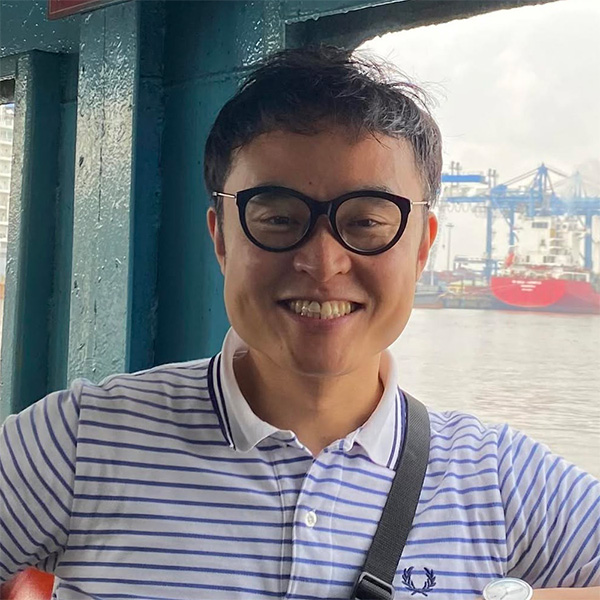
Dr. Jotaro Kato
Panelist

Dr. Jotaro Kato

Associate Professor, Department of Social Work, Meiji Gakuin University

Profile

Jotaro Kato is an Associate Professor in the Department of Social Work, Faculty of Sociology and Social Work, Meiji Gakuin University.
His research focuses on migration studies, multicultural coexistence, international labour mobility, and migration governance in Japan and East Asia. He has conducted research on irregular migration, the Technical Intern Training Program, and the Specified Skilled Worker system, with particular attention to migrant agency, legal status, labour conditions, and migrants’ lived experiences across different stages of the migration process.
His major publications include Japan’s “Irregular Migrants” and edited volumes on immigration control, migrant rights, and Japan’s labour migration policies.

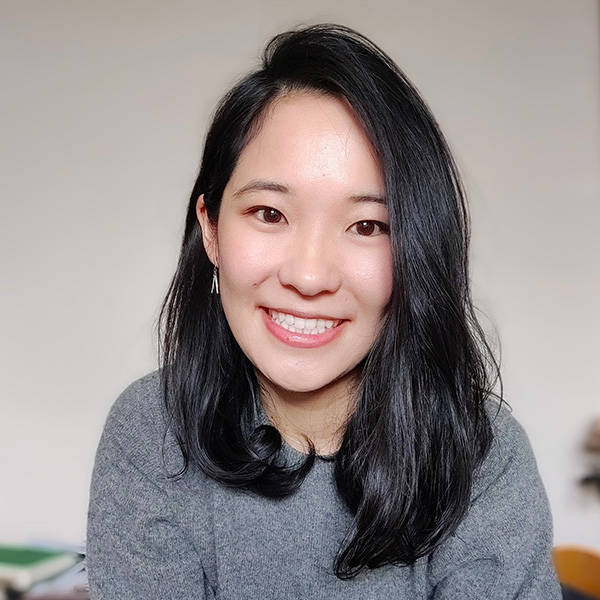
Ms. Mariko Hayashi
Moderator / Panelist

Ms. Mariko Hayashi

Co-Founder, BEBESEA / Board Director, Southeast and East Asian Centre (SEEAC)

Profile

Mariko Hayashi is one of the co-founding members of BEBESEA and leads its policy and stakeholder engagement work at the secretariat.
Her professional experiences in the civil society spans grassroots organisations, international philanthropy, and research, with a focus on community organising and policy advocacy on human rights at the intersections of migration, displacement, labour, and gender in Asia and Europe.
She has held strategic leadership and board roles in several human rights and migrant-led NGOs. Most recently, from 2021 to 2026, Mariko served as the Executive Director of the Southeast and East Asian Centre (SEEAC), a community‑led organisation supporting East and Southeast Asian migrants in the UK. Her previous positions include serving as a Board Trustee of Protection Approaches (2021-2025), and as a Program Officer at the Sasakawa Peace Foundation (2014-2019).
She is also a trained trauma‑informed practitioner and holds an MSc in Global Migration from University College London.

Mr. Lennon Ying-Da Wang
Panelist

Mr. Lennon Ying-Da Wang

Director, Department of Policies on Migrant Workers, Serve the People Association

Profile

Lennon Ying-Da Wang has spent 22 years in the labor movement, including four years with the Chinese Federation of Labor (CFL), seven years with the First Bank Union (CBU), and eleven years in the Serve the People Association (SPA) in Taiwan, where he continues to work today.
He currently serves as the Director of the Department of Policies on Migrant Workers at SPA, and the International Director for ROCMU.
He is also a member of the Advisory Board in BEBESEA, the Board of Trustees of Electronics Watch, and the Steering Committee of GoodElectronics, and the LabourStart Executive.
Lennon’s recent work focuses on fair recruitment and treatment of migrant workers, the elimination of forced labor and human trafficking, and strengthening the corporations and governmental due deligence through worker-centered supply chain monitoring. He is committed to eliminating all forms of discrimination against migrants and immigrants and advancing the genuine equality for all migrant communities.

Dr. Razel Andrea D. Navalta
Panelist

Dr. Razel Andrea D. Navalta

Programme Officer, Strategic Country Support Team, ASEAN-Japan Centre

Profile

Razel Andrea Navalta is a Programme Officer at the ASEAN-Japan Centre, where she manages trade and investment programmes for Cambodia and Myanmar and contributes to cross-cutting initiatives across ASEAN member states.
She holds a PhD in International Development from Nagoya University, where her research examined migration and inclusive society issues in Japan, focusing on the empowerment of migrant workers.
She previously worked with the Philippine Consulate General in Nagoya, coordinating with local government and migrant community organizations and managing emergency assistance for Filipino nationals during the COVID-19 pandemic.

Ms. Masako Iwashina
Panelist

Ms. Masako Iwashina

Program Officer, Social Innovation Program, West Asia and Islam Unit, Sasakawa Peace Foundation

Related Links

Latest Events

pagetop