Sasakawa Peace Foundation

日本語
  • About SPF
    • About Us
      • About Us
      • History
      • Program Policy and Five Priority Goals
      • Board Members
      • Diversity and Inclusion
      • Financial Position
      • Honorary Chair's Message Archive
      • Activities Before 2017
    • President's Message
    • Integrated Report
    • Access
    • Idea Submission
    • Careers
    • Contact Us
  • Experts
  • Programs
    • Japan-U.S. and Security Studies Unit
    • General Affairs and Networking Program
    • National Security and Japan-U.S. Program
    • Strategy and Deterrence Program
    • Asia Unit
    • Strategic Dialogue and Human Resource Development Program
    • Peacebuilding Program
    • Sasakawa Japan-China Friendship Program
    • West Asia and Islam Unit
    • West Asia and Islam Program
    • Social Innovation Program
    • Ocean Policy Research Institute
    • Division of Ocean Vision and Action
    • Division of Island Nations
    • Scholarship Unit
    • Sasakawa Scholarship Program
    • Center for Mediation Support
    • Center for Mediation Support
  • Research & Analysis
    • Reports and Publications
    • Essays and Commentary
    • SPF Now Interviews
    • Videos
    • Podcasts
    • Browse by Regions
    • Regions
    • Americas
    • Northeast Asia
    • Southeast Asia
    • South Asia
    • Middle East
    • Oceania
    • Europe and Eurasia
    • Arctic
    • Africa
    • Satellite Sites
    • International Information Network Analysis
    • SPF China Observer
    • Asia Women Impact Fund
    • The OPRI Center of Island Studies
    • The Friends of WMU, Japan
    • SPF Insights into Japan–U.S. Relations
    • From the Oceans
    • Asia Peacebuilding Initiatives (APBI)
    • History of the Sasakawa Japan-China Friendship Program
      (Japanese language)
    • Japan-China Relations Data Graph (Japanese language)
    • Third Pole Project
  • News
    • News
    • Press Releases
    • SPF Newsletter
    • Media Coverage
  • Events
  • Reports and Publications
  • Essays and Commentary
  • SPF Now Interviews
  • Videos
  • Podcasts
  • Regions
Regions
All Regions

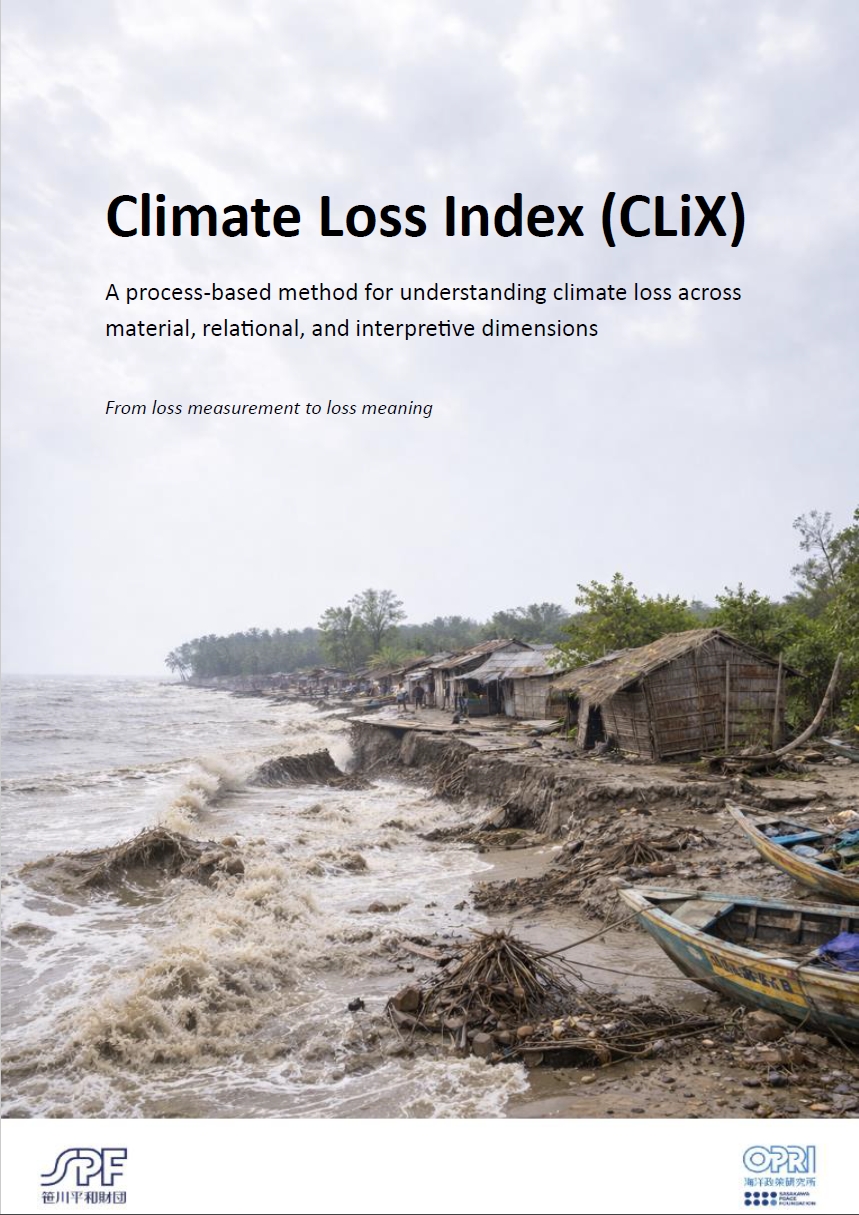
Climate Loss Index (CLiX)

CLiX (Climate Loss Index) is a process-based methodology designed to help researchers, practitioners, and policy actors understand the multiple dimensions of climate loss and translate that understanding into meaningful action.

By Climate Loss Index (CLiX)

May 27, 2026
Read more
Climate Loss Index (CLiX)
Ocean Newsletter No.601-603

Ocean Newsletter No.601-603

Ocean Newsletter No. 601-603 is now available.

May 25, 2026
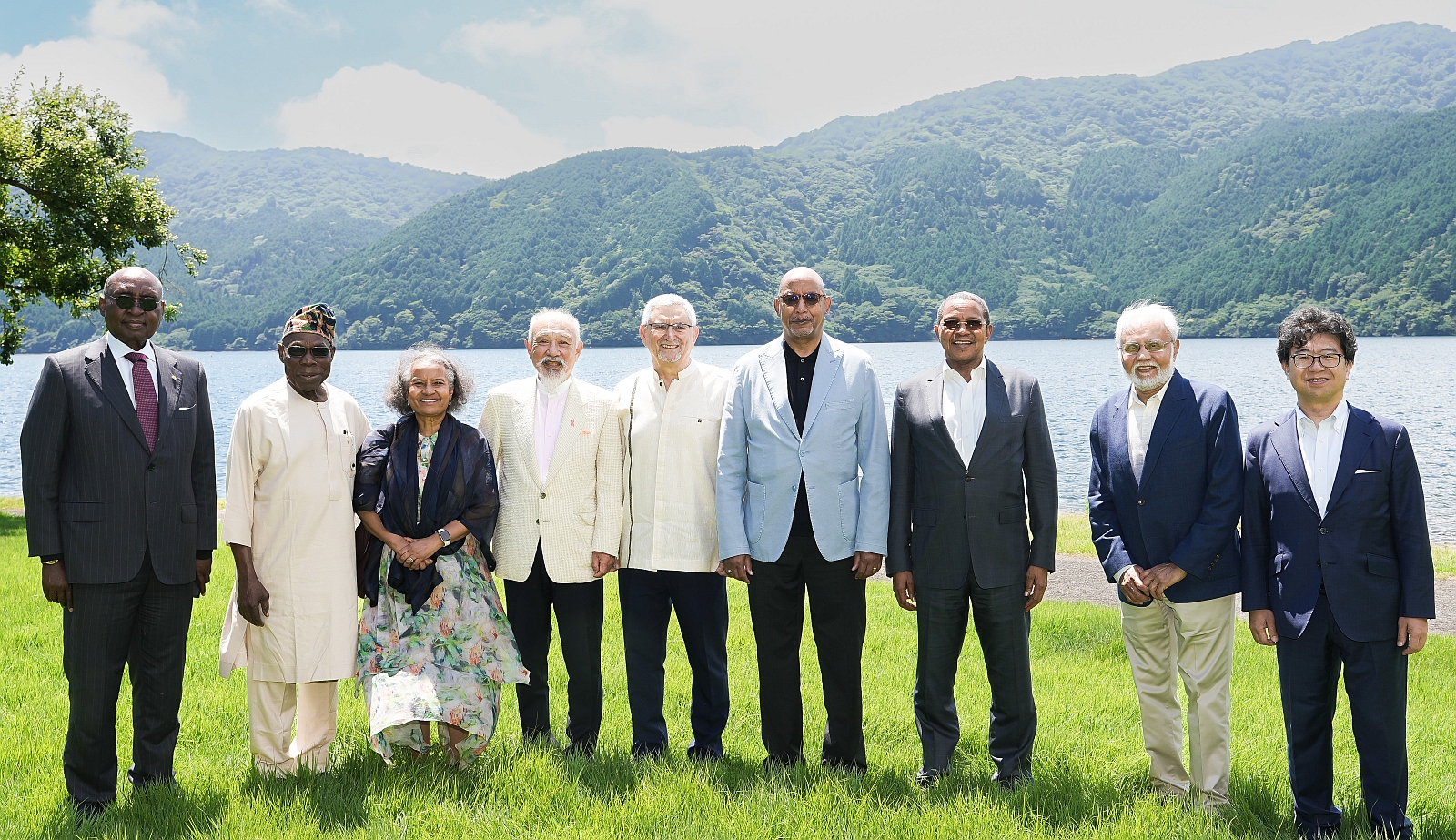
Digest Report: High Level Policy Dialogues on Sustainable Blue Economies and Food Security in Africa, Japan 2025

Digest Report: High Level Policy Dialogues on Sustainable Blue Economies and Food Security in Africa, Japan 2025

Africa, a region with buoyant population and economic growth has a great potential of promoting sustainable blue economies by enhancing marine and aquatic food production while safeguarding ecological integrity, biological diversity and socio-economic equity. The Sasakawa Peace Foundation and the Nippon Foundation spearheaded high level policy dialogues in 2025 as a way to forge international partnership toward achieving sustainable development, promoting sustainable blue economies and enhancing food security in Africa. Here are brief highlights.

May 22, 2026
The Importance of Maritime Transportation for Japan: Considering the Hormuz Strait Crisis and the Supply of Goods in a Potential Taiwan Contingency

The Importance of Maritime Transportation for Japan: Considering the Hormuz Strait Crisis and the Supply of Goods in a Potential Taiwan Contingency

The repercussions of the Hormuz Strait crisis, triggered by the armed attack by the United States and Israel on Iran, have been steadily expanding. In Japan, which depends on the Middle East for more than 90 percent of its crude oil, the disruption caused by the closure of the Strait has led to shortages in a wide range of products derived from crude oil. However, the lessons of this crisis extend beyond oil alone. When considering a potential future contingency involving Taiwan, the importance of securing maritime transportation routes for Japan—an island nation surrounded by seas—has been strongly reaffirmed. In light of this situation, it is necessary to comprehensively reassess sources and routes for procuring essential goods required for socio-economic activities and to strengthen resilience against potential crises.

By OPRI Perspectives

May 18, 2026
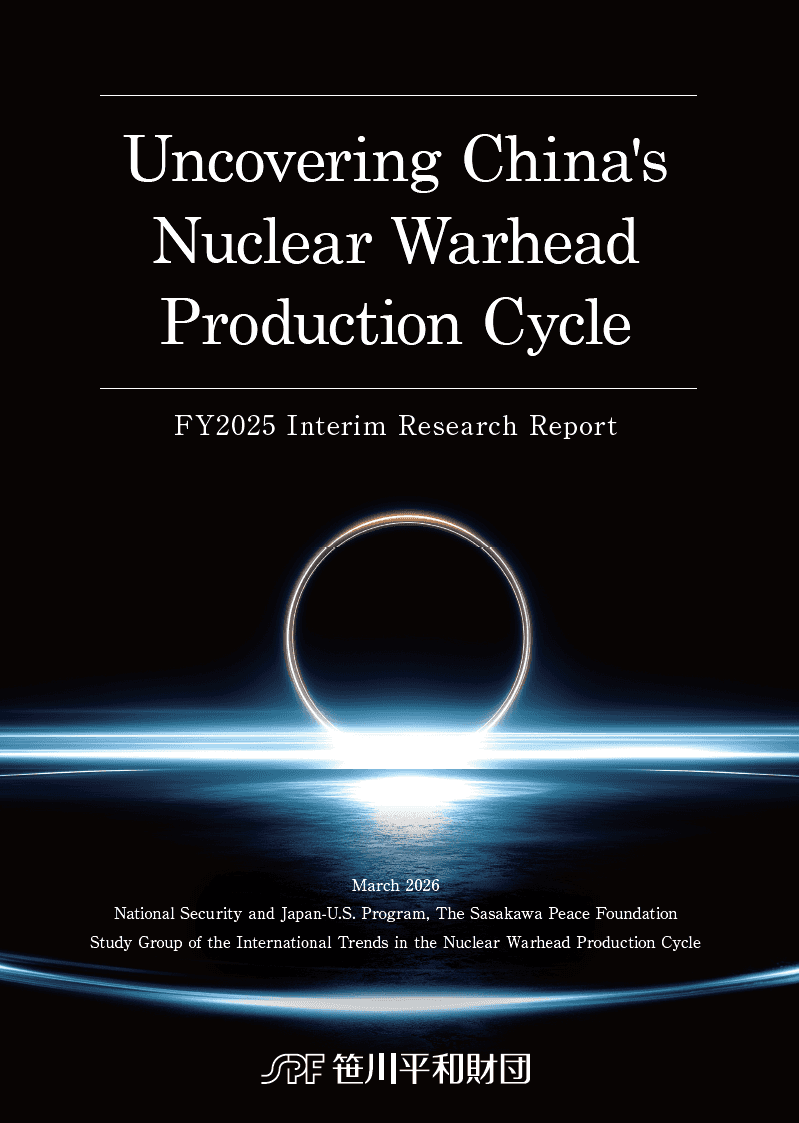
Uncovering China's Nuclear Warhead Production Cycle — FY 2025 Interim Research Report —

Uncovering China's Nuclear Warhead Production Cycle — FY 2025 Interim Research Report —

Within the Project for Elucidating China’s Nuclear Warhead Production Cycle (FY 2025) conducted under the National Security and Japan–U.S. Program of The Sasakawa Peace Foundation, the Group on International Trends in the Nuclear Warhead Production Cycle (Chair: Mr. Yū Koizumi, Senior Fellow, The Sasakawa Peace Foundation) has undertaken an in-depth investigation into China’s nuclear warhead production cycle—an area that remains insufficiently understood.

By Sasakawa Peace Foundation (SPF)

May 1, 2026
Report: Nuclear Escalation Control in a Taiwan Strait Crisis: Opportunities for Japan-U.S.-Taiwan Cooperation A Tabletop Exercise

Report: Nuclear Escalation Control in a Taiwan Strait Crisis: Opportunities for Japan-U.S.-Taiwan Cooperation A Tabletop Exercise

The rapid modernization of China’s military has raised concerns about the People’s Republic of China’s (PRC, China) ability to threaten Taiwan and the wider Indo-Pacific region. Qualitative and quantitative advancements in the People’s Liberation Army’s (PLA) naval and air forces have made them a growing threat to their U.S. counterparts. Meanwhile, significant investments in nuclear forces are giving Beijing new ways in which to coerce potential adversaries and shape escalation in a conflict.

By Sasakawa Peace Foundation, Strategy and Deterrence Program

March 31, 2026
Rapid baseline study – Community mediation practices in the Bangsamoro Autonomous Region in Muslim Mindanao

Rapid baseline study – Community mediation practices in the Bangsamoro Autonomous Region in Muslim Mindanao

Community mediation serves as a cornerstone of conflict prevention and management in the Bangsamoro Autonomous Region in Muslim Mindanao (BARMM), offering a culturally grounded approach to addressing family disputes, clan feuds, and other locally driven tensions. This report presents findings from a rapid baseline study conducted by the Sasakawa Peace Foundation in partnership with Conciliation Resources, examining how a diverse range of actors practice mediation across the region. By mapping community-based mediation as it operates in practice, the study offers a foundational reference for peacebuilding efforts and informs policy development in BARMM.

March 23, 2026
  • 1/23
  • 2
  • 3
  • 4
  • …
  • >
  • ≫

pagetop

Video Title

Footer

Sasakawa Peace Foundation

  • About SPF
  • News
  • Experts
  • Events
  • Programs
  • Access
  • Research & Analysis
  • Contact Us

Latest Updates

Receive regular updates about news, events, and research from the Sasakawa Peace Foundation

Sign Up to Our Newsletter

Satellite Sites

  • From the Oceans
  • The Friends of WMU Japan
  • Asia Women Impact Fund
  • Insights into Japan–U.S. Relations
  • International Information Network Analysis (IINA)
  • The OPRI Center of Island Studies
  • SPF China Observer
  • Asia Peacebuilding Initiatives (APBI)
  • History of the Sasakawa Japan-China Friendship Program (Japanese language)
  • Japan-China Relations Data Graph (Japanese language)
  • Third Pole Project
  • PRIVACY POLICY
  • SITE POLICY
  • SOCIAL MEDIA POLICY
  • SITE MAP
  • WEB ACCESSIBILITY POLICY

Copyright © 2021 The Sasakawa Peace Foundation. All Rights Reserved.