Sasakawa Peace Foundation

日本語
  • About SPF
    • About Us
      • About Us
      • History
      • Program Policy and Five Priority Goals
      • Board Members
      • Diversity and Inclusion
      • Financial Position
      • Honorary Chair's Message Archive
      • Activities Before 2017
    • President's Message
    • Integrated Report
    • Access
    • Idea Submission
    • Careers
    • Contact Us
  • Experts
  • Programs
    • Japan-U.S. and Security Studies Unit
    • General Affairs and Networking Program
    • National Security and Japan-U.S. Program
    • Strategy and Deterrence Program
    • Asia Unit
    • Strategic Dialogue and Human Resource Development Program
    • Peacebuilding Program
    • Sasakawa Japan-China Friendship Program
    • West Asia and Islam Unit
    • West Asia and Islam Program
    • Social Innovation Program
    • Ocean Policy Research Institute
    • Division of Ocean Vision and Action
    • Division of Island Nations
    • Scholarship Unit
    • Sasakawa Scholarship Program
    • Center for Mediation Support
    • Center for Mediation Support
  • Research & Analysis
    • Reports and Publications
    • Essays and Commentary
    • SPF Now Interviews
    • Videos
    • Podcasts
    • Browse by Regions
    • Regions
    • Americas
    • Northeast Asia
    • Southeast Asia
    • South Asia
    • Middle East
    • Oceania
    • Europe and Eurasia
    • Arctic
    • Africa
    • Satellite Sites
    • International Information Network Analysis
    • SPF China Observer
    • Asia Women Impact Fund
    • The OPRI Center of Island Studies
    • The Friends of WMU, Japan
    • SPF Insights into Japan–U.S. Relations
    • From the Oceans
    • Asia Peacebuilding Initiatives (APBI)
    • History of the Sasakawa Japan-China Friendship Program
      (Japanese language)
    • Japan-China Relations Data Graph (Japanese language)
    • Third Pole Project
  • News
    • News
    • Press Releases
    • SPF Newsletter
    • Media Coverage
  • Events

Table Top Exercise (TTX) on the Taiwan Strait Crisis

Report

By Sasakawa Peace Foundation, Security Studies Program


October 1, 2024
The Sasakawa Peace Foundation conducted a Table Top Exercise (TTX) in Japan, as part of  the "Table Top Exercise on the Taiwan Strait Crisis" (FY2022) project. The exercise was based on a hypothetical Taiwan Strait Crisis scenario developed by U.S. researchers to identify issues that could arise in the event of a crisis across the Taiwan Strait.
 
Click here to download the report.
※You can read Japanese version here.
 

Share
Table Top Exercise (TTX) on the Taiwan S
Download the PDF

Recent Publications

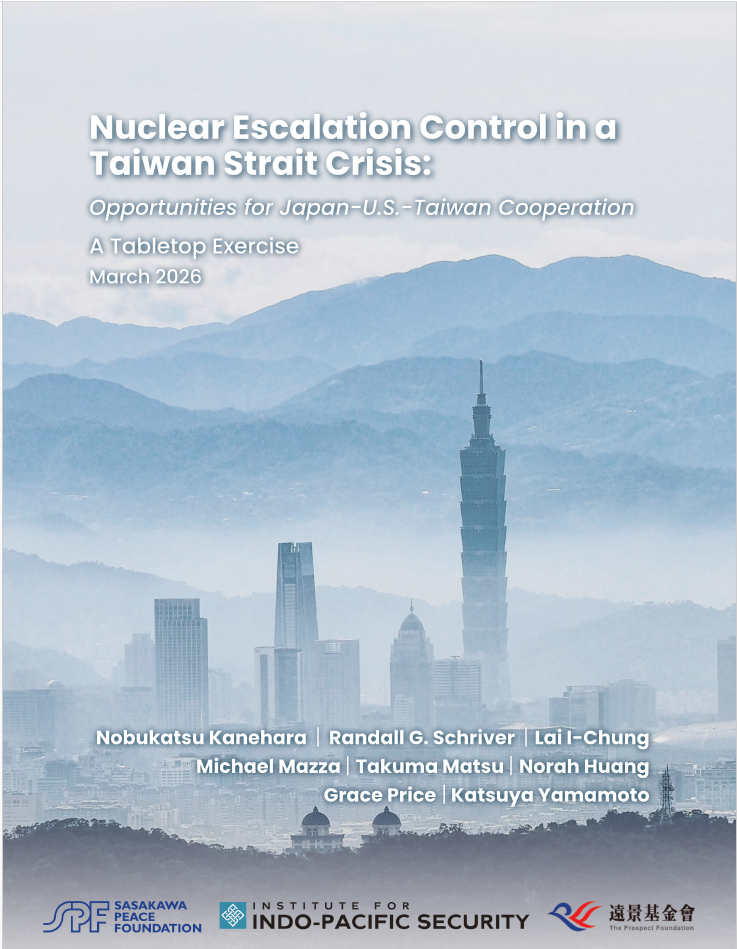
Report: Nuclear Escalation Control in a Taiwan Strait Crisis: Opportunities for Japan-U.S.-Taiwan Cooperation A Tabletop Exercise

Report: Nuclear Escalation Control in a Taiwan Strait Crisis: Opportunities for Japan-U.S.-Taiwan Cooperation A Tabletop Exercise

The rapid modernization of China’s military has raised concerns about the People’s Republic of China’s (PRC, China) ability to threaten Taiwan and the wider Indo-Pacific region. Qualitative and quantitative advancements in the People’s Liberation Army’s (PLA) naval and air forces have made them a growing threat to their U.S. counterparts. Meanwhile, significant investments in nuclear forces are giving Beijing new ways in which to coerce potential adversaries and shape escalation in a conflict.
By Sasakawa Peace Foundation, Strategy and Deterrence Program

March 31, 2026
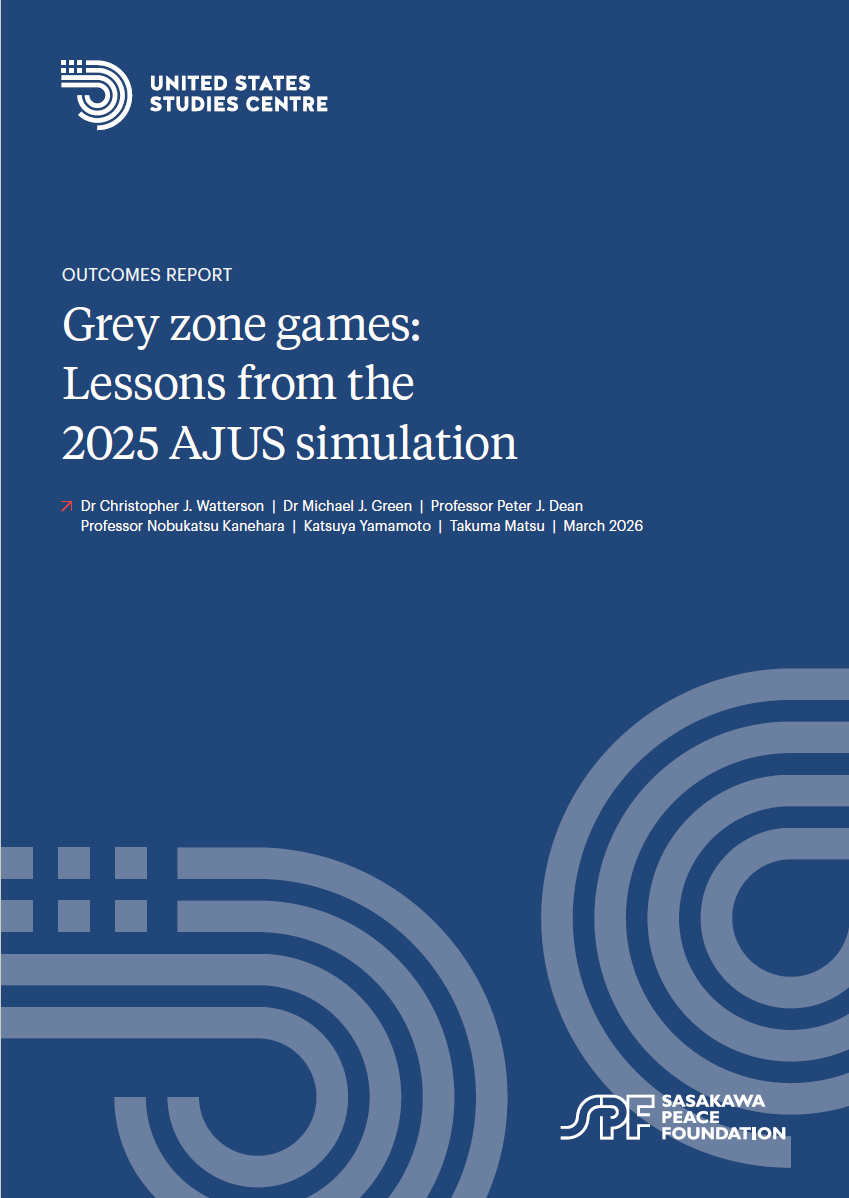
Report: Grey zone games: Lessons from the 2025 AJUS simulation

Report: Grey zone games: Lessons from the 2025 AJUS simulation

Each year since 2023, the United States Studies Centre (USSC) has convened a ‘Strategy Simu-lation’ in which senior Australian, Japanese, and US (AJUS) experts engage with a simulated strategic crisis in the Indo-Pacific. Working in national teams, AJUS experts draft policy recommendations for their respective political leaderships (simulated by a control team) in responding to the evolving crisis, negotiating both internally and trilaterally in shaping national policy responses. The Strategy Simulation provides an opportunity to refine and ‘stress test’ AJUS trilateral approaches to regional strategy while tracking how AJUS trilateral strategic dynamics are evolving in response to changes in the Indo-Pacific strategic environment.

By Sasakawa Peace Foundation, Strategy and Deterrence Program

March 3, 2026
Explore Our Reports and Publications

pagetop

Video Title

Footer

Sasakawa Peace Foundation

  • About SPF
  • News
  • Experts
  • Events
  • Programs
  • Access
  • Research & Analysis
  • Contact Us

Latest Updates

Receive regular updates about news, events, and research from the Sasakawa Peace Foundation

Sign Up to Our Newsletter

Satellite Sites

  • From the Oceans
  • The Friends of WMU Japan
  • Asia Women Impact Fund
  • Insights into Japan–U.S. Relations
  • International Information Network Analysis (IINA)
  • The OPRI Center of Island Studies
  • SPF China Observer
  • Asia Peacebuilding Initiatives (APBI)
  • History of the Sasakawa Japan-China Friendship Program (Japanese language)
  • Japan-China Relations Data Graph (Japanese language)
  • Third Pole Project
  • PRIVACY POLICY
  • SITE POLICY
  • SOCIAL MEDIA POLICY
  • SITE MAP
  • WEB ACCESSIBILITY POLICY

Copyright © 2021 The Sasakawa Peace Foundation. All Rights Reserved.