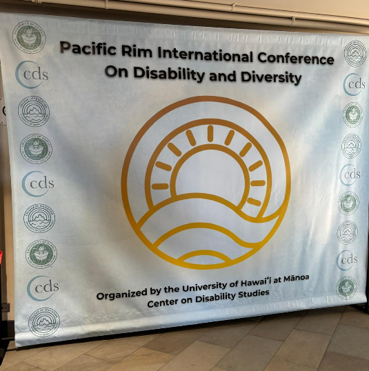
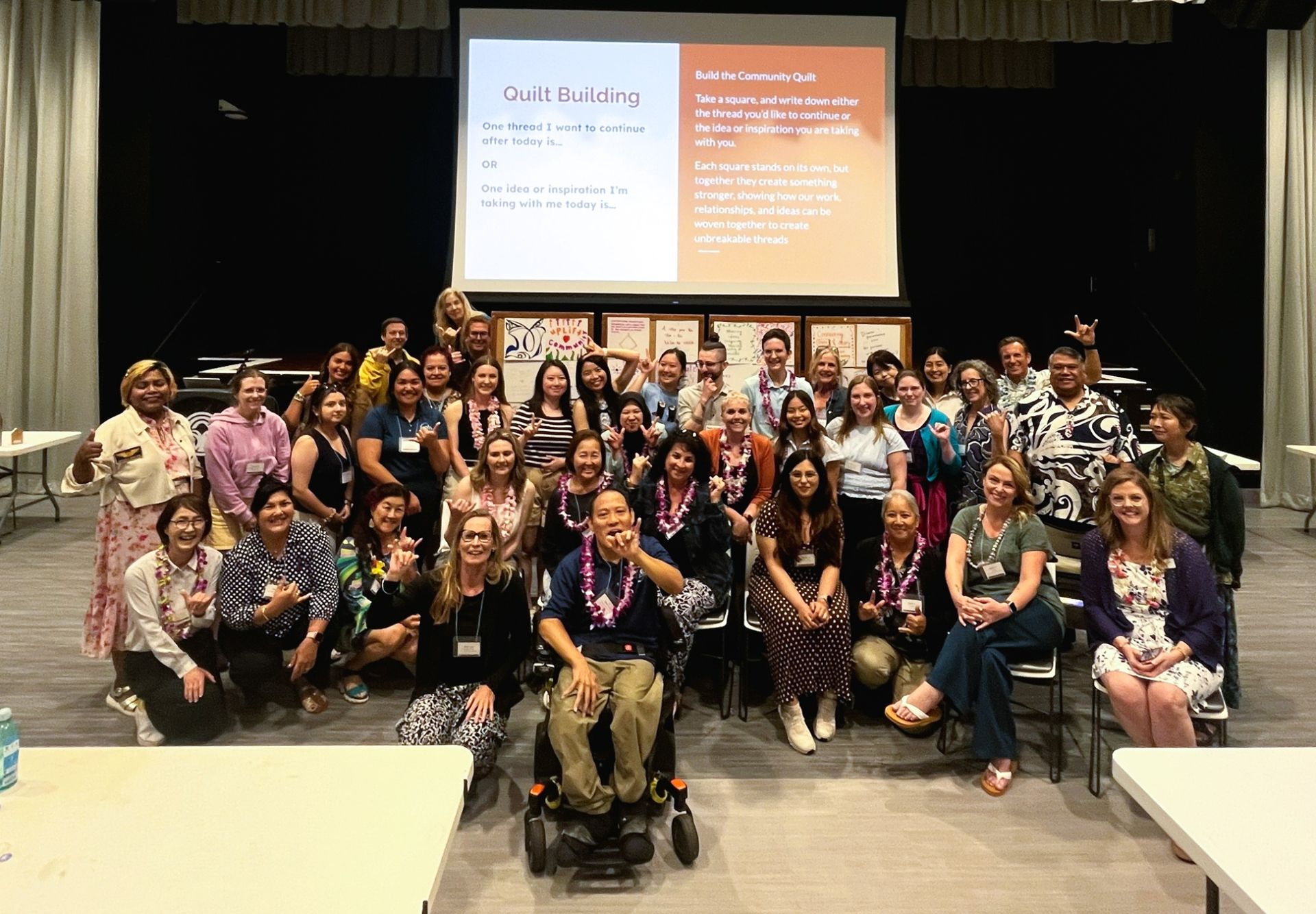
In May 2026, the Sasakawa Peace Foundation (SPF) participated in the 41st Pacific Rim International Conference on Disability, held at the University of Hawaiʻi at Mānoa. The conference convened researchers, practitioners, policymakers, and civil society actors from across the United States, the Pacific, and Asia to examine approaches to resilience, inclusion, and community-based development.
The conference provided an important platform to situate SPF’s work in Central Sulawesi, Indonesia within a broader international dialogue on disability-inclusive development and social cohesion.
Sharing the Palu Initiative
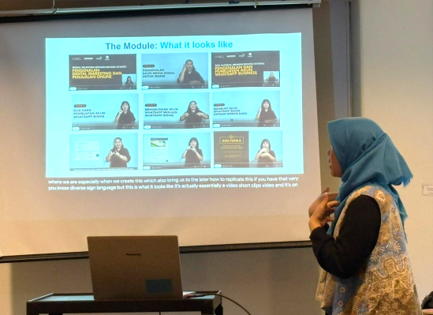
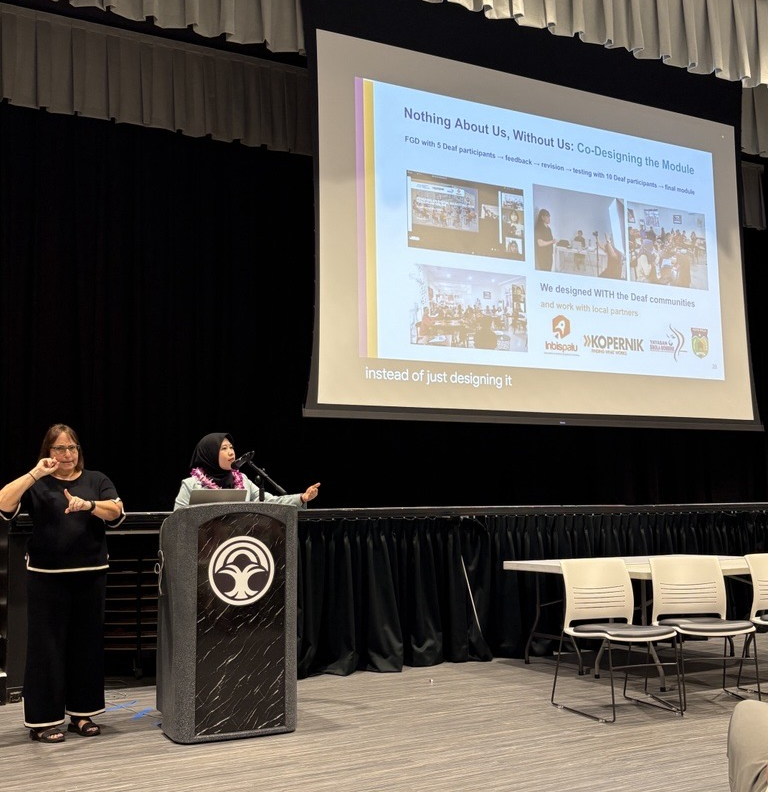
During the conference, Dr. Dissa Syakina Ahdanisa, on behalf of SPF delivered two presentations—one at the University Centers for Excellence in Developmental Disabilities (UCEDD) Pre-Conference (10 minutes) and one in the main conference program (25 minutes). Both sessions highlighted an ongoing initiative in Palu, Central Sulawesi, focused on co-developing Deaf-friendly entrepreneurship tools through collaboration among local Deaf communities, civil society organizations, and local government.
Co-created together with the Deaf community and local partners such as local government of Palu, INBIS Palu (government-initiated business incubator), Sikola Mombine and Kopernik, the case of Palu drew significant engagement, particularly in relation to its process-oriented approach. Discussions centered not only on outcomes, but on how partnerships were structured, how constraints such as limited data were addressed, and how the initiative contributed to local policy developments, including the Palu Declaration and the establishment of an Inclusive Task Force.
Bridging the “Last Mile” Gap
A recurring theme across the conference was the gap between policy frameworks and lived realities. Across diverse contexts, participants emphasized that while legal frameworks for disability inclusion may exist, implementation often remains inconsistent. This “last mile” challenge—connecting policy to everyday experience—continues to be a shared concern globally.
This finding closely aligns with SPF’s ongoing work, especially the Peacebuilding program, reinforcing the importance of implementation-focused, context-sensitive approaches.
Local Values as Foundations for Inclusion
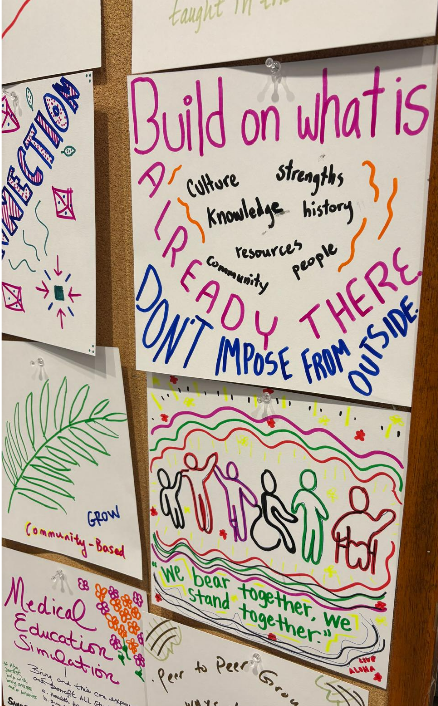
Discussions throughout the conference highlighted the role of locally rooted values as foundational to inclusive development. In Hawaiʻi, concepts such as aloha ʻāina and kuleana reflect deeply embedded principles of responsibility and interdependence.
These resonate strongly with nosarara nosabatutu in Central Sulawesi, which emphasizes unity and solidarity. Such parallels underscore the importance of grounding inclusive initiatives in local value systems, positioning them not as supplementary references but as guiding frameworks.
Economic Participation and Social Cohesion
Economic inclusion emerged as a central theme, particularly in relation to employment and entrepreneurship for persons with disabilities. The conference underscored that economic participation plays a critical role in reinforcing dignity, agency, and social relationships.
For post-disaster contexts such as Palu, economic empowerment is closely linked to recovery processes and the rebuilding of community cohesion.
Expanding Knowledge and Partnerships
Participation in PacRim facilitated the identification of practical tools and approaches relevant to SPF’s programming, including frameworks for person-centered emergency preparedness, employer engagement, and inclusive design.
In addition, the conference enabled the development of targeted relationships with academic institutions and practitioners, particularly within the University of Hawaiʻi network, opening avenues for future collaboration and comparative learning.
Hawaiʻi as a Point of Connection
Hawaiʻi’s position at the intersection of the United States, the Pacific, and Asia was reflected in the diversity of perspectives represented at the conference. This positioning offers a valuable platform for strengthening cross-regional exchanges.
In particular, disability inclusion presents a shared area of relevance across regions such as Hawaiʻi, Japan, and Southeast Asia, creating opportunities for collaboration on themes including disaster preparedness, inclusive economic development, and community resilience.
The conference reaffirmed the relevance of SPF’s approach, which emphasizes co-creation, the integration of local values, and engagement with institutional systems.
At the same time, it highlighted the importance of advancing beyond co-design toward greater community ownership of initiatives. Strengthening this transition will be an important consideration in the future development of SPF’s programs.
The 41st Pacific Rim International Conference on Disability provided a valuable opportunity to reflect on and further develop SPF’s approach to disability-inclusive development. By connecting local initiatives in Palu with global discussions on inclusion and resilience, the conference reinforced the importance of context-driven, community-based solutions.
Moving forward, these insights will contribute to strengthening SPF’s work in advancing inclusive economic development and peacebuilding in Indonesia and beyond. carry forward as we continue our work in Palu and beyond.