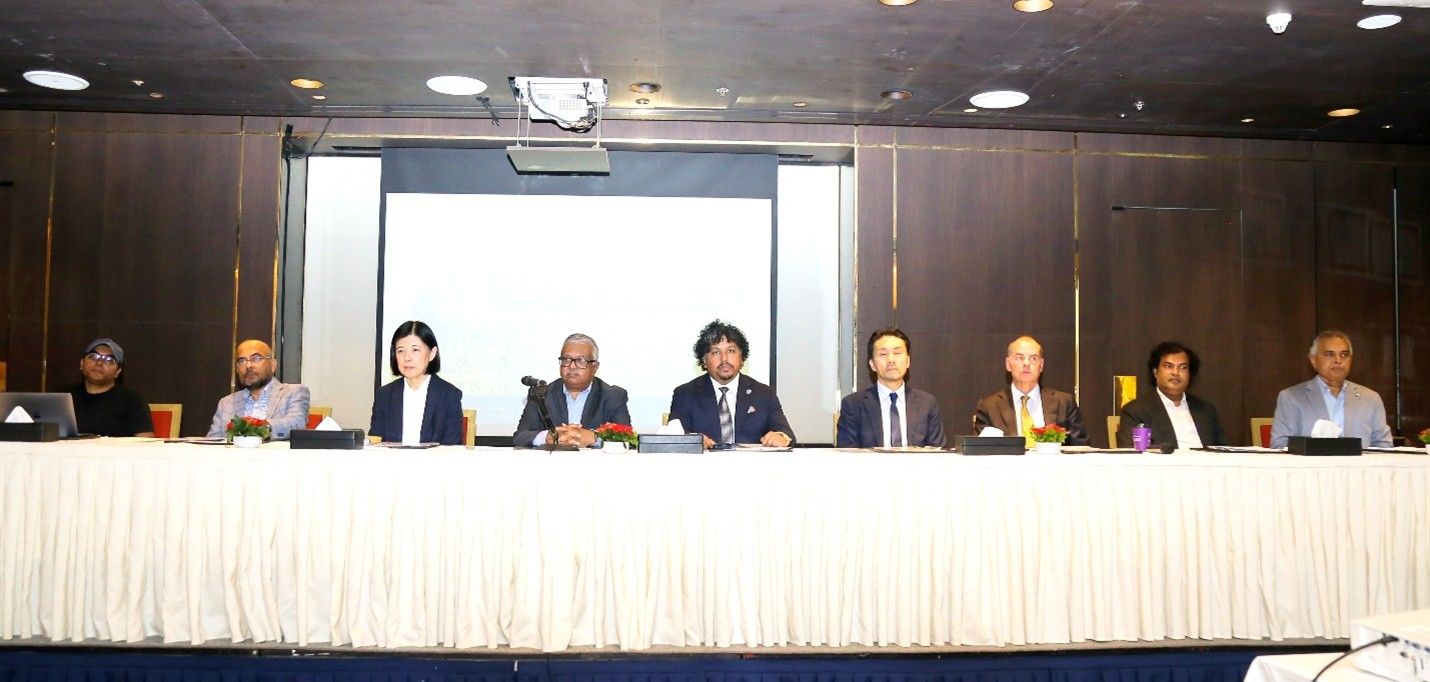
Session One: Panelists’ Plenary of the Seminar
A national seminar organized by the Sasakawa Peace Foundation (SPF) in collaboration with Young Power in Social Action (YPSA) presented the research findings emphasizing that structural vulnerabilities and psychosocial stress significantly influence perceptions of security among Rohingya refugees living in camps in Bangladesh.
The seminar titled “From Vulnerability to Resilience: Assessing Security Risks and the Role of Livelihoods in Rohingya Camps” was held at the InterContinental Hotel in Dhaka on March 15, 2026, and brought together policymakers, researchers, academicians, humanitarian actors, and development practitioners to discuss the evolving security and livelihood dynamics within the Rohingya refugee camps.
Bangladesh currently hosts over one million Rohingya refugees, most of whom reside in camps in Cox’s Bazar, with a smaller number relocated to Bhasan Char. As the crisis continues into a protracted phase, experts increasingly emphasize the need to better understand the social, economic, and psychological conditions that influence stability and resilience within the camps. The seminar highlighted the complex humanitarian situation, noting a decline in international aid support and the need for sustainable solutions.
The research presented at the seminar was conducted by an international team of scholars from institutions including the Sasakawa Peace Foundation, the Australian National University, Indiana University, Queen’s University Belfast, and the University of Chittagong. The study was implemented in partnership with YPSA and covered Rohingya camps in Ukhiya and Teknaf in Cox’s Bazar as well as the relocation site in Bhasan Char. This study combined large-scale survey data with extensive qualitative fieldwork to understand how structural conditions and psychosocial experiences shape perceptions of security in displacement settings. The quantitative survey included responses from more than 2,000 Rohingya refugees across multiple camp locations.
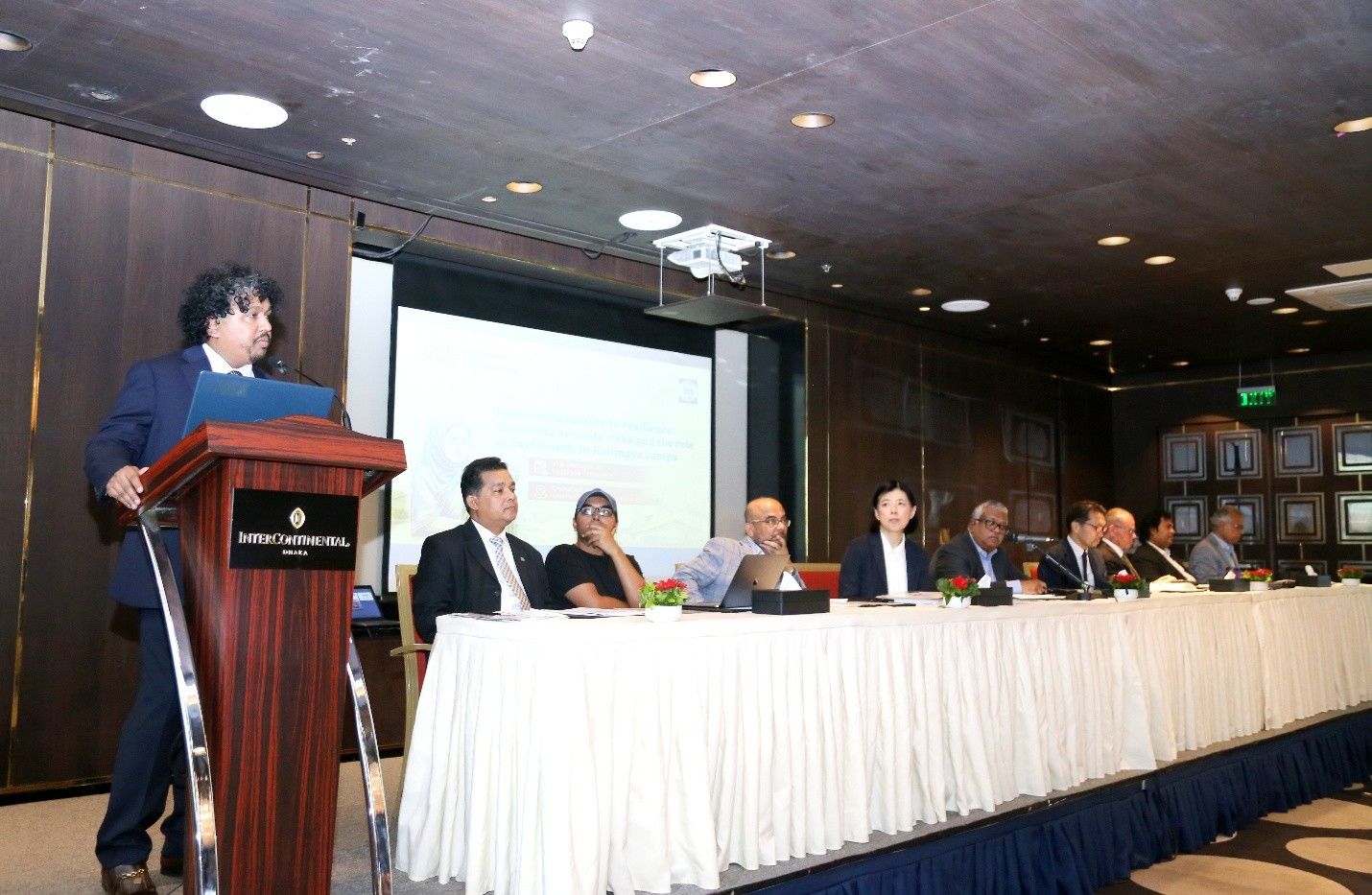
Senior Research Fellow Dr. Emadul Islam, Sasakawa Peace Foundation
Dr. Emadul Islam, Senior Research Fellow from the Sasakawa Peace Foundation, Japan and Dr. Mohammad Zainuddin, Australian National University presented the research study findings. The study found that structural exclusion such as limited opportunities for income generation, restricted mobility, and limited participation in decision-making processes significantly increases perceptions of insecurity among refugees. These structural conditions also contribute to higher levels of psychological distress and weakened social cohesion within communities. According to the research, psychological stress and reduced trust among community members act as important pathways through which structural vulnerabilities translate into feelings of insecurity. When these psychosocial factors were taken into account, the direct influence of structural exclusion on insecurity perceptions decreased significantly, highlighting the complex relationship between social conditions and perceived safety.
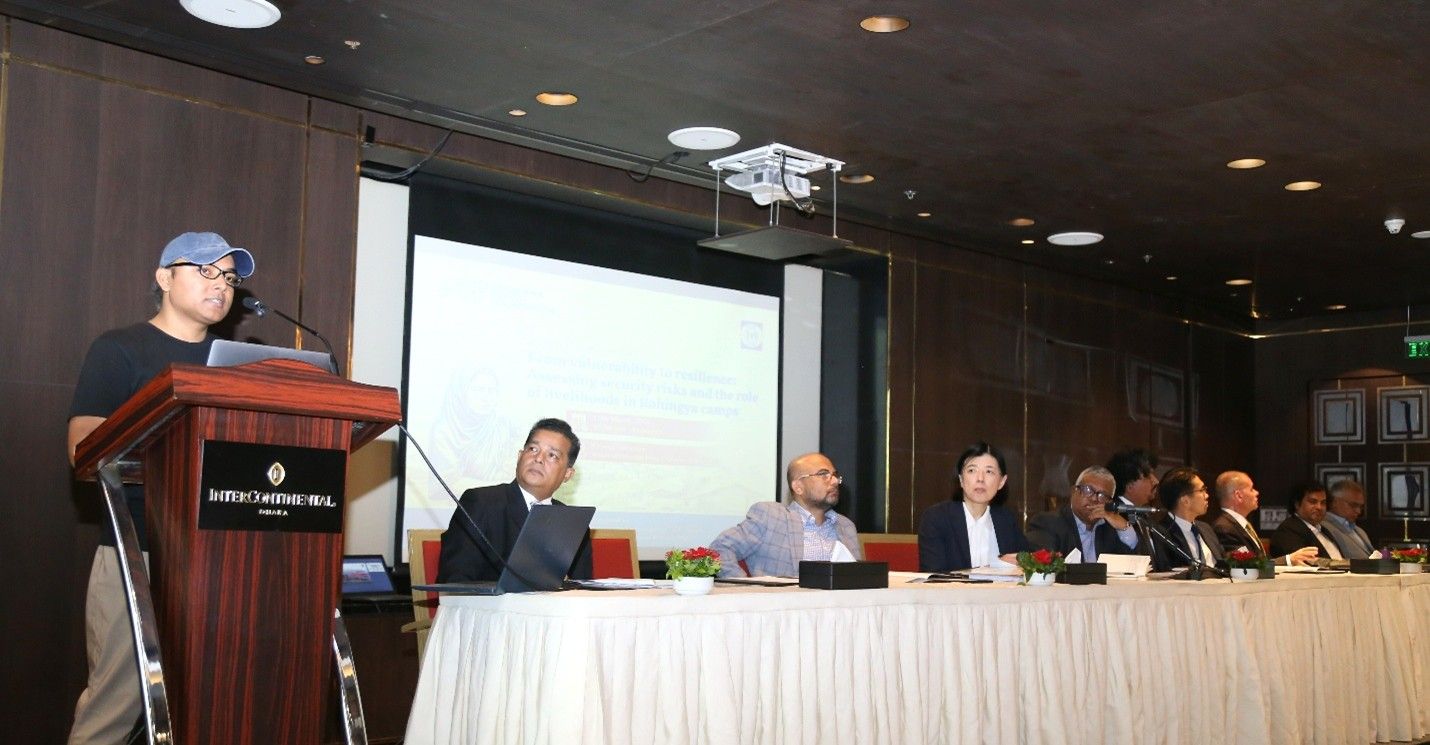
Co-Principal Researcher Dr Mohammad Zainuddin, Australian National University
The study findings also highlight that participation in existing livelihood programs does not significantly reduce structural exclusion or perceived insecurity among camp residents. This may be attributed to the limited access to, and availability of, meaningful livelihood opportunities within the camp setting.
Researchers emphasized that while livelihood initiatives are valued by refugees, their current scale and economic impact may be too limited to meaningfully transform everyday living conditions within the camps. Qualitative interviews conducted with refugees and community leaders further highlighted several pressing challenges faced by camp residents, including uncertainty about the future, limited employment opportunities, and psychological stress associated with prolonged displacement. Youth vulnerability, gender-related protection concerns, and tensions surrounding resource distribution were also identified as important issues affecting camp stability.
Speakers at the seminar emphasized that addressing insecurity in refugee camps requires a holistic approach that considers both material conditions and psychosocial well-being. Expanding meaningful livelihood opportunities, strengthening community cohesion, and improving access to education and psychosocial support services were identified as key areas for policy attention.
The seminar was structured into two main sessions. The first session featured research presentations and guest remarks.
Welcome Address and Research Presentation
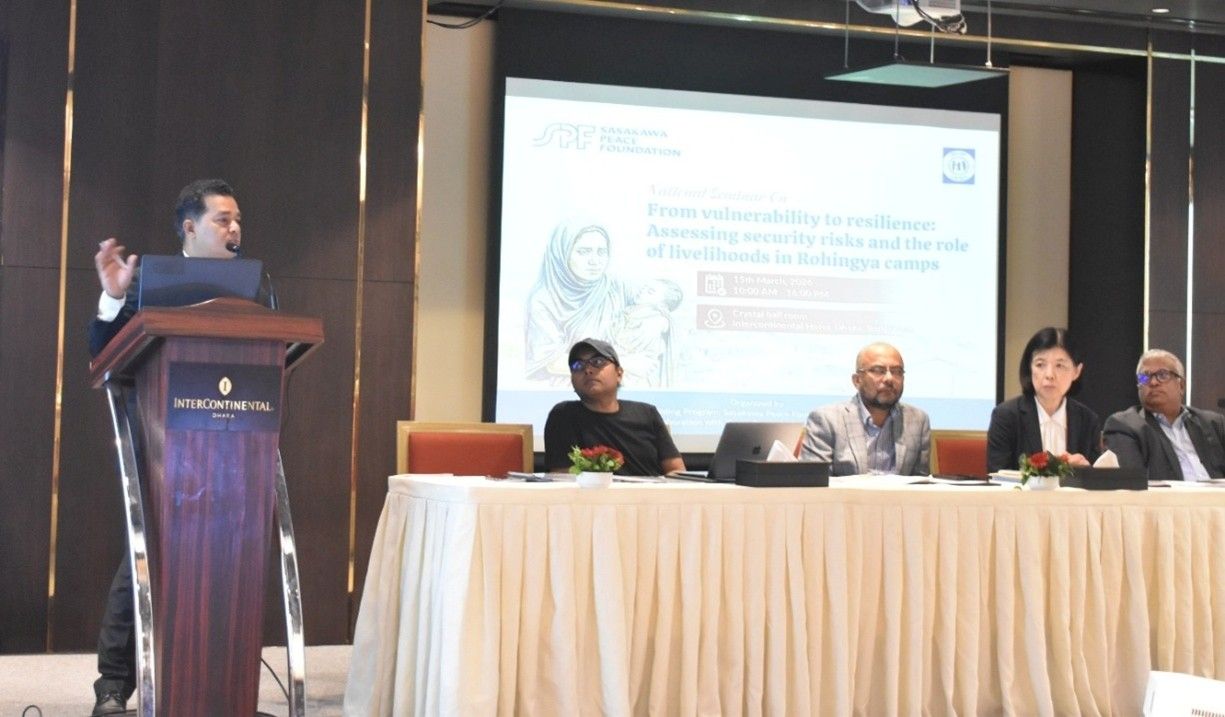
Professor Amir Mohammad Nasrullah, University of Chittagong
Professor Amir Mohammad Nasrullah, University of Chittagong moderated the session. The research was presented by Dr Emadul Islam, Senior Research Fellow, Sasakawa Peace Foundation, Japan and Dr Mohammad Zainuddin, Australian National University.
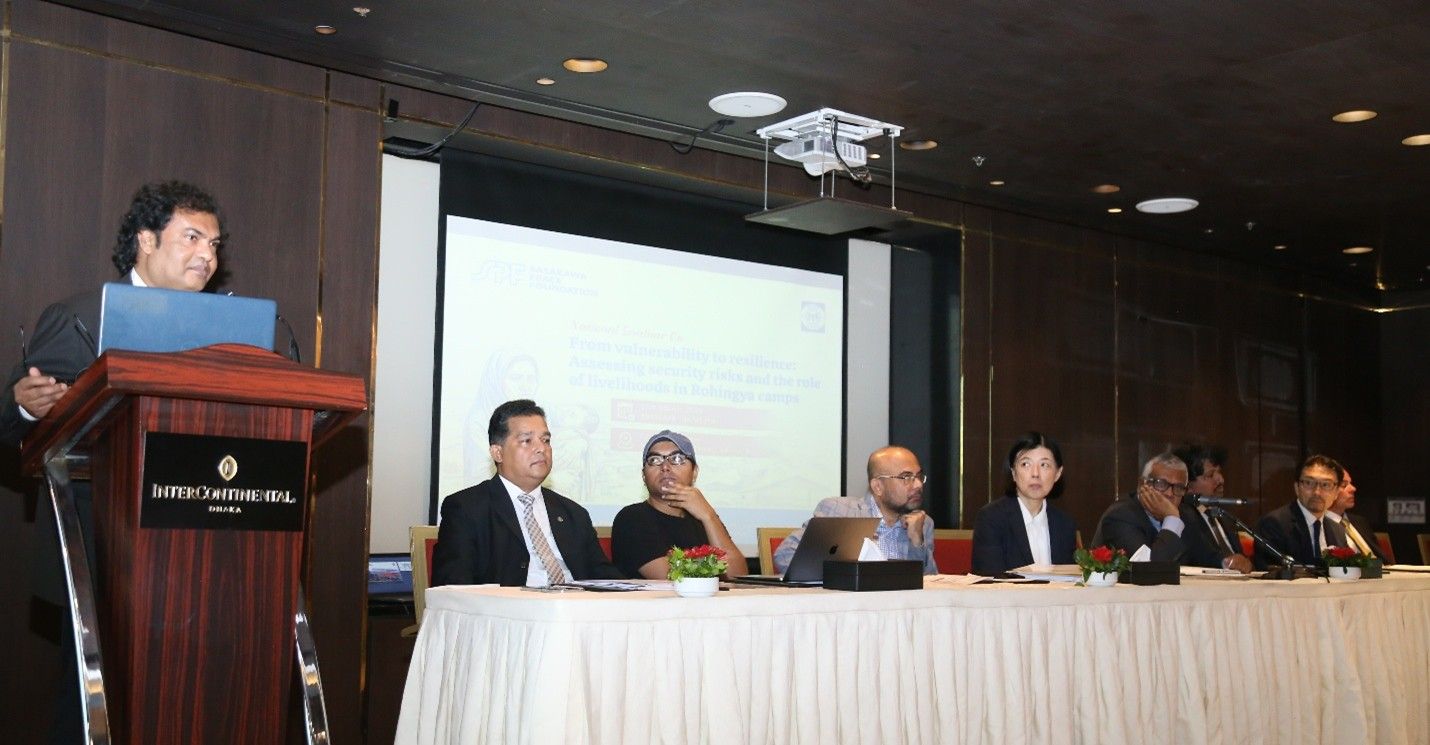
Dr. Nasir Uddin, Professor, University of Chittagong, Bangladesh
The discussants highlighted the complex humanitarian situation of Rohingya refugees in Bangladesh, noting a decline in international aid support and the need for sustainable solutions. Emphasis was placed on the importance of providing limited livelihood strategies to reduce dependency. It was pointed out that even though there are many stakeholders in the international community, there is no international congress for refugee management and dealings, suggesting a potential role for the international community which remains inconsistent and unstable in addressing refugee situations around the world.
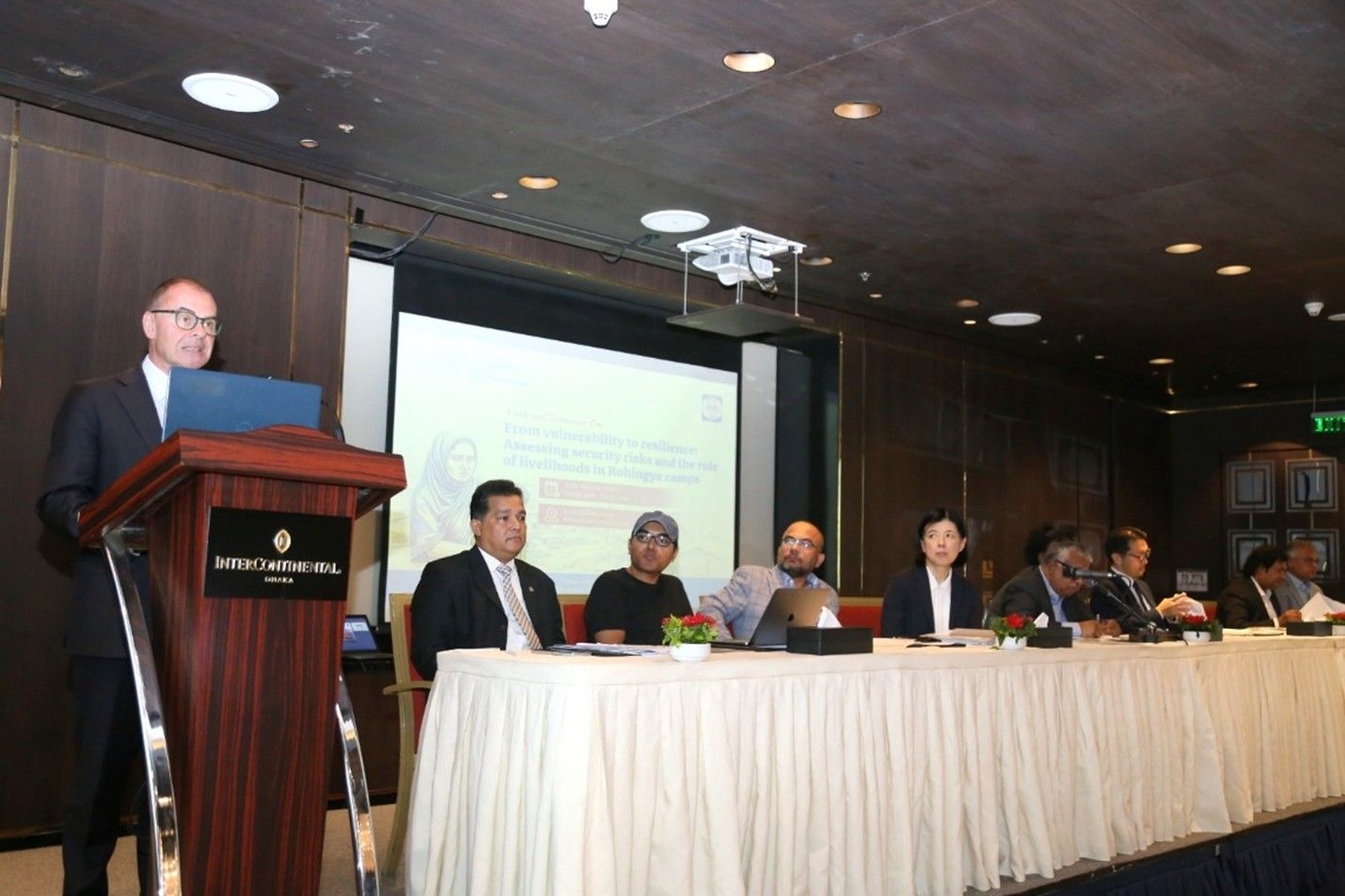
Dr. Khalid Koser, Executive Director, GCERF, Geneva, Switzerland
Dr. Khalid Koser, Executive Director, GCERF, Geneva, Switzerland, particularly appreciated, as both an academician and practitioner, the mixed-method approach combining quantitative and qualitative evidence in the study presented. He explained how Bangladesh holds a special place in GCERF’s history as the organization has worked with the country since 2015. During GCERF’s time in Bangladesh, it invested over 10 million dollars working with more than 40 local partners and reaching over 1.4 million people across the country. Drawing from experience, he highlighted the lesson that when people feel excluded, idle, and uncertain, future insecurity grows. The research presented made exactly this point, demonstrating precisely where prevention can complement humanitarian persistence. This includes meaningful engagement for youth, strengthening social appreciation with hosting communities, and supporting community leadership.
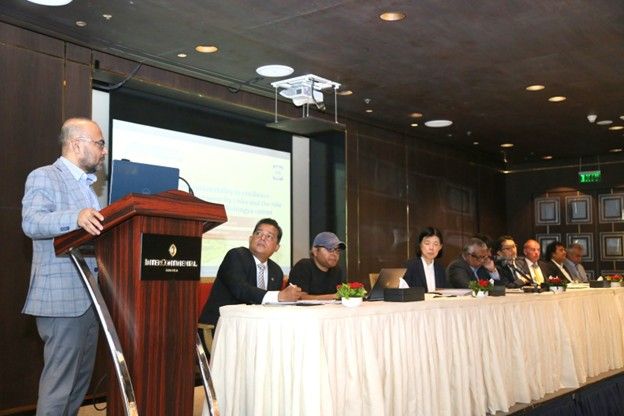
Mr. Mohammed Mizanur Rahman, Commissioner Refugee Relief and Repatriation Commissioner (RRRC)
Mr. Mohammed Mizanur Rahman, Commissioner Refugee Relief and Repatriation Commissioner (RRRC) at Cox’s Bazar, discussed that the camp situation is temporary, so the challenges of providing education and certification in Bangladesh are not practical since the Rohingyas are to follow Myanmar’s education system and standardized certification. He also emphasized the trauma experienced by Rohingya refugees, particularly children, who have fled atrocities committed to them. He noted that RRRC is putting its efforts to heal this trauma through recreational activities like sports tournaments, acknowledging the significant efforts being put forth by the RRRC and the Government of Bangladesh.
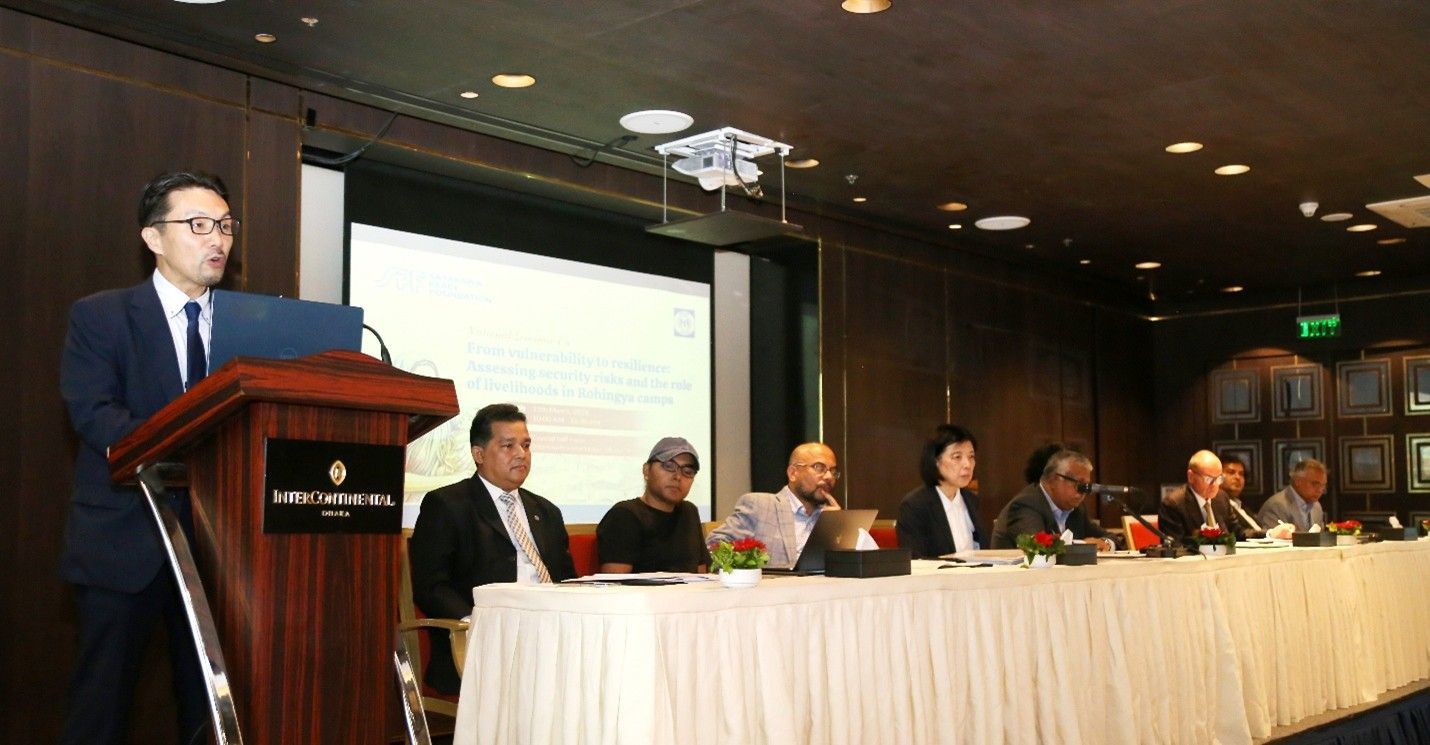
Mr. Tomohide Ichiguchi, Chief Representative, JICA Bangladesh
Mr. Tomohide Ichiguchi, Chief Representative, JICA Bangladesh, highlighted JICA’s long-standing commitment to development in various sectors like infrastructure, education, and disaster relief since 1973, emphasizing a focus on strengthening local governance and supporting communities to thrive particularly during crises. He detailed the importance of host community support as a central element of their approach, emphasizing the compassion and resilience shown by affected populations.
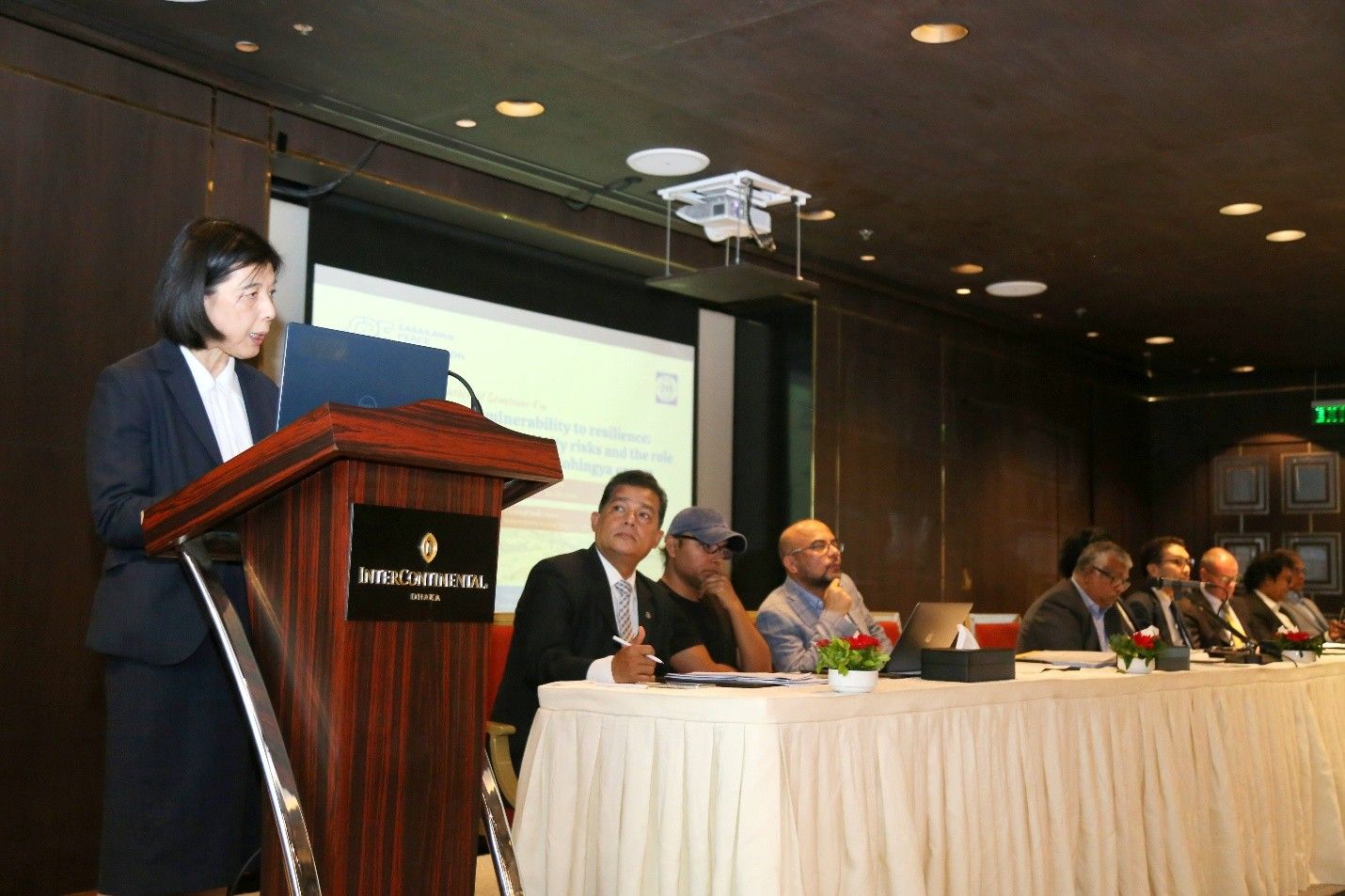
Dr. Nobuko Kayashima, Executive Director, Sasakawa Peace Foundation
Dr. Nobuko Kayashima, Executive Director, Sasakawa Peace Foundation, stated that the Sasakawa Peace Foundation, a Japan-based foundation, hosted the seminar to present the findings of a research project examining the security and humanitarian dimensions of the Rohingya crisis in Bangladesh. The research, commissioned by the foundation and implemented by Young Power in Social Action (YPSA), aims to inform policy and program design efforts for a more dignified and sustainable future for the refugees. She noted that the Rohingya crisis remains a significant humanitarian and security challenge, with nearly 1.2 million refugees straining Bangladesh’s resources. The seminar highlighted long-term strategies focusing on resilience, stability, and livelihood opportunities to prevent social instability and reduce reliance on humanitarian aid.
Open Discussion of Session One
- A seasoned practitioner challenged the study for focusing on Rohingya vulnerability while neglecting parallel vulnerabilities of Bangladeshi host communities, citing rising unemployment, local protests, and livelihood displacement. Concern were raised about the absence of data on job creation, unemployment rates in Cox’s Bazar versus national averages, and the unintended economic consequences of humanitarian interventions.
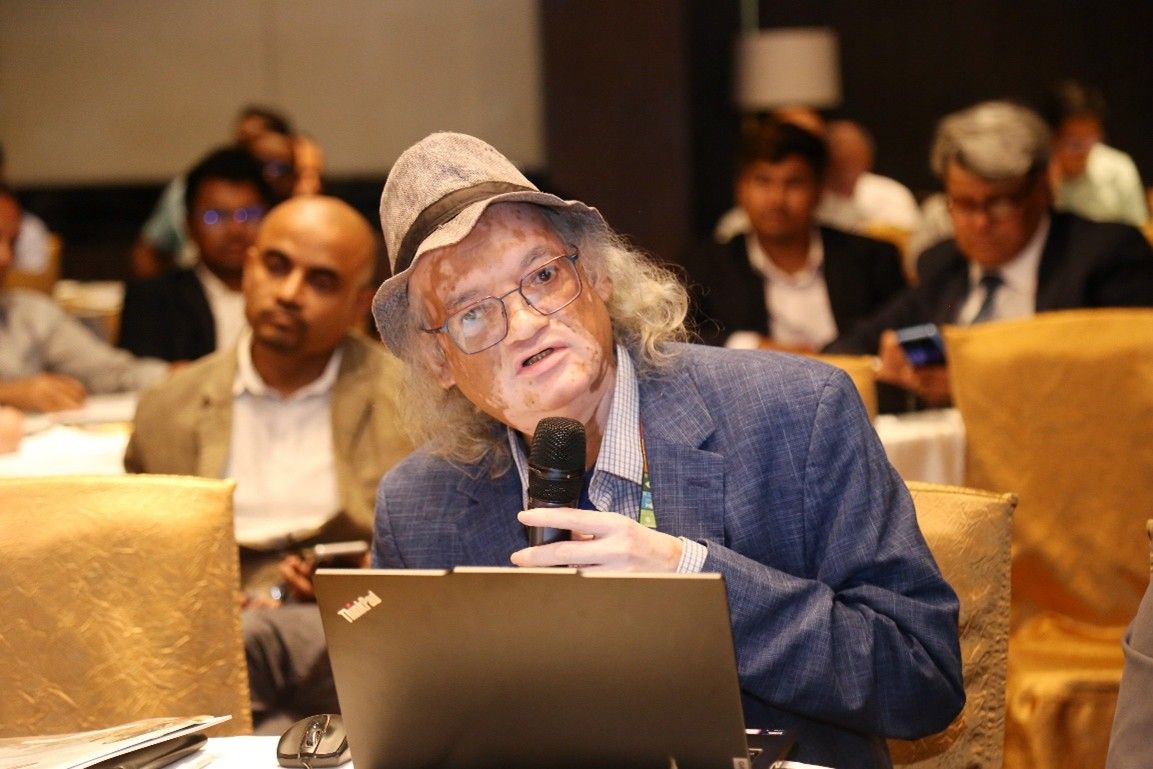
The guests shared their views during the open discussion session.
- Digital inclusion was framed as encompassing five dimensions: legal identity, financial access, education continuity, safe payments (mobile financial services), and protection from technology-facilitated gender-based violence. Without these, Rohingya remain “locked out of assistance, opportunity, and voices.”
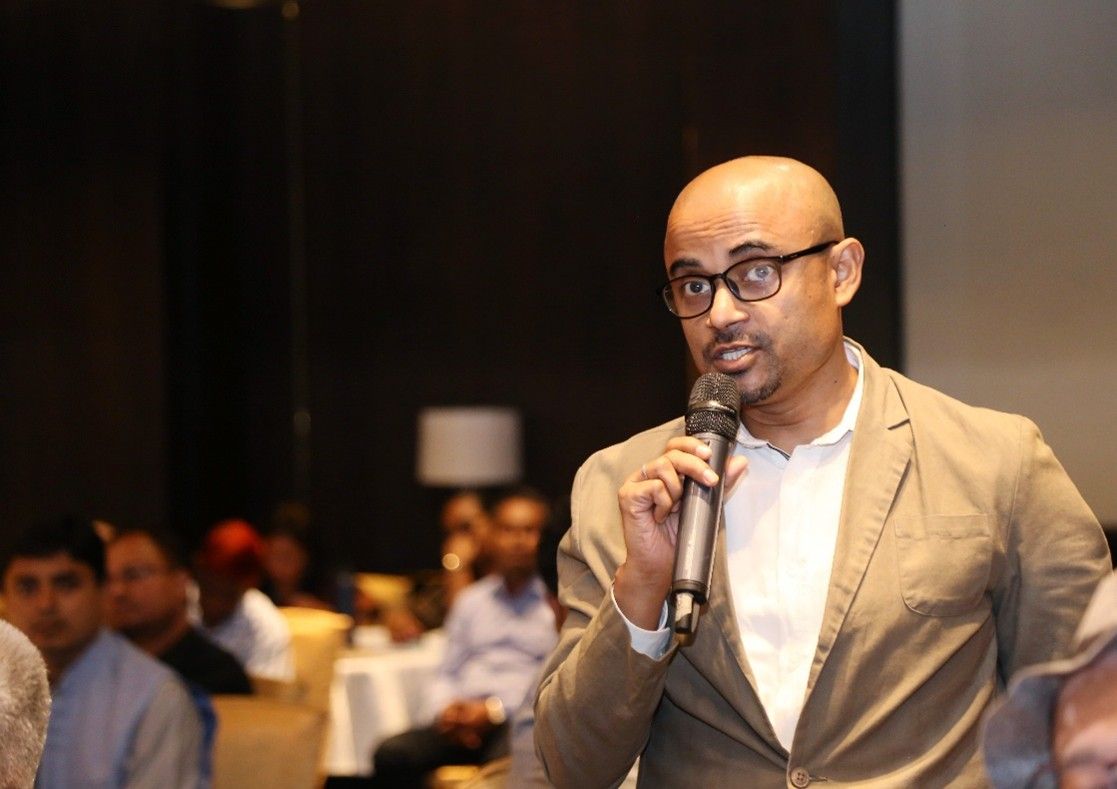
Guest remarks during the open discussion session.
- A panelist argued that skills development programs ignore Bangladesh’s massive labor surplus and high unemployment, creating political friction. The question was posed: Skills building for whom? Future research must address the gap between labor surplus and the skills being developed.
- The crisis was described as not bilateral but regional, involving Chinese and Indian infrastructure interests. Employment spillovers risk being framed as security threats, fueling populist agendas.
- The crisis was described as an “identity-resource crisis complex.” Sustainable repatriation requires land reform in Rakhine—without land rights, return is meaningless. Rakhine lacks civil society, institutional capacity, and alternative economic structures; Bangladesh could provide political economy support, not just security cooperation.
- A consensus emerged on the need to move from a security-centric view to a market-centric and political economy framework. Scenario planning for Cox’s Bazar—particularly if displacement prolongs and regional powers become more involved—was identified as essential.
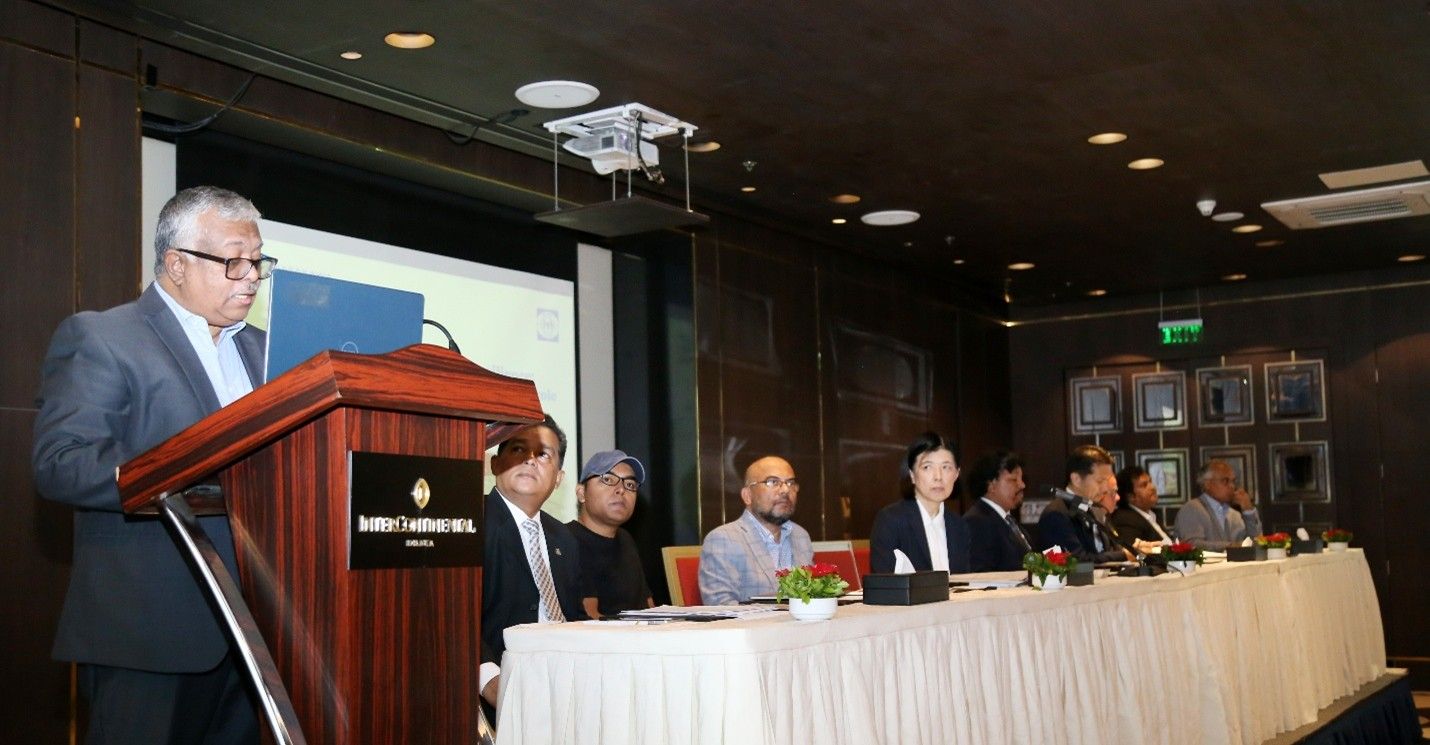
Mr. Asad Alam Siam, Foreign Secretary, Ministry of Foreign Affairs, Government of Bangladesh
Mr. Asad Alam Siam, Foreign Secretary, Ministry of Foreign Affairs, Government of Bangladesh, emphasized that the Rohingya crisis originates in Myanmar and must be resolved there, firmly rejecting any notion of long-term settlement in Bangladesh, as it risks legitimizing ethnic cleansing and undermining prospects for repatriation. He also called for regional and international cooperation to address cross-border challenges and create conditions in Rakhine, reaffirming that sustainable solutions depend on ensuring a conducive political and economic environment for safe repatriation.
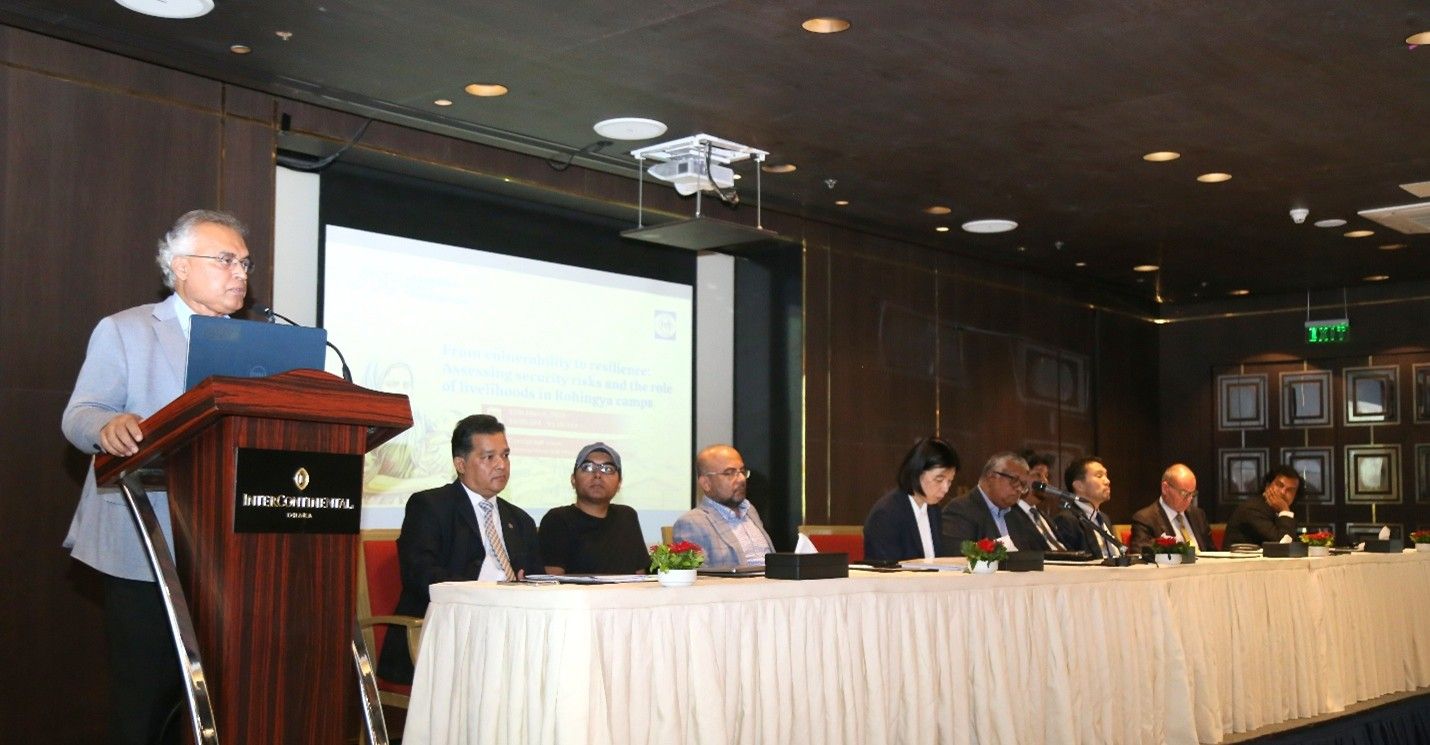
Dr. Md. Arifur Rahman, Founder and Chief Executive, YPSA
Dr. Md. Arifur Rahman, Founder and Chief Executive, Young Power in Social Action (YPSA), reiterated that “We need to make investment in youth, provide psychosocial support and meaningful economic participation for individual dignity in Rohingya camps and YPSA as a Bangladeshi local organization remains committed to this cause.” He also thanked all for taking time to actively participate in this important event which portrays the commitment of everyone on Rohingya issues to find solutions.
Session Two: High Level Panel Discussion on Security Challenges and Durable Solutions to the Rohingya Crisis
The second session featured a high-level panel discussion and open discussion.
Moderator: Dr Emadul Islam
The session addressed the prolonged Rohingya crisis and global failure, noting that over the past 40–45 years, both Bangladesh and the international community have failed to ensure basic human rights and justice for the Rohingya. The discussion emphasized that the Rohingya situation is not only a humanitarian issue but also a broad security concern, including non-traditional dimensions such as social instability, economic deprivation, environmental degradation, and risks of conflict within and around the camps. With around 52% of the Rohingya population being youth growing up without proper education or opportunities, there is a concern about a “lost generation,” which may increase long-term instability.
Key points included how structural exclusions like restrictions on movement and limited economic participation contribute to rising insecurity, and how the camps face recurring challenges such as COVID-19 impacts, natural disasters, fires, and violence. Research findings indicate a strong desire for repatriation among the Rohingya, though practical progress has been extremely limited. The session also noted policy contradictions in livelihood support, host community tensions, environmental and security challenges, barriers to repatriation due to instability in Myanmar, and limited progress in diplomatic efforts, highlighting the need for practical solutions and global action.
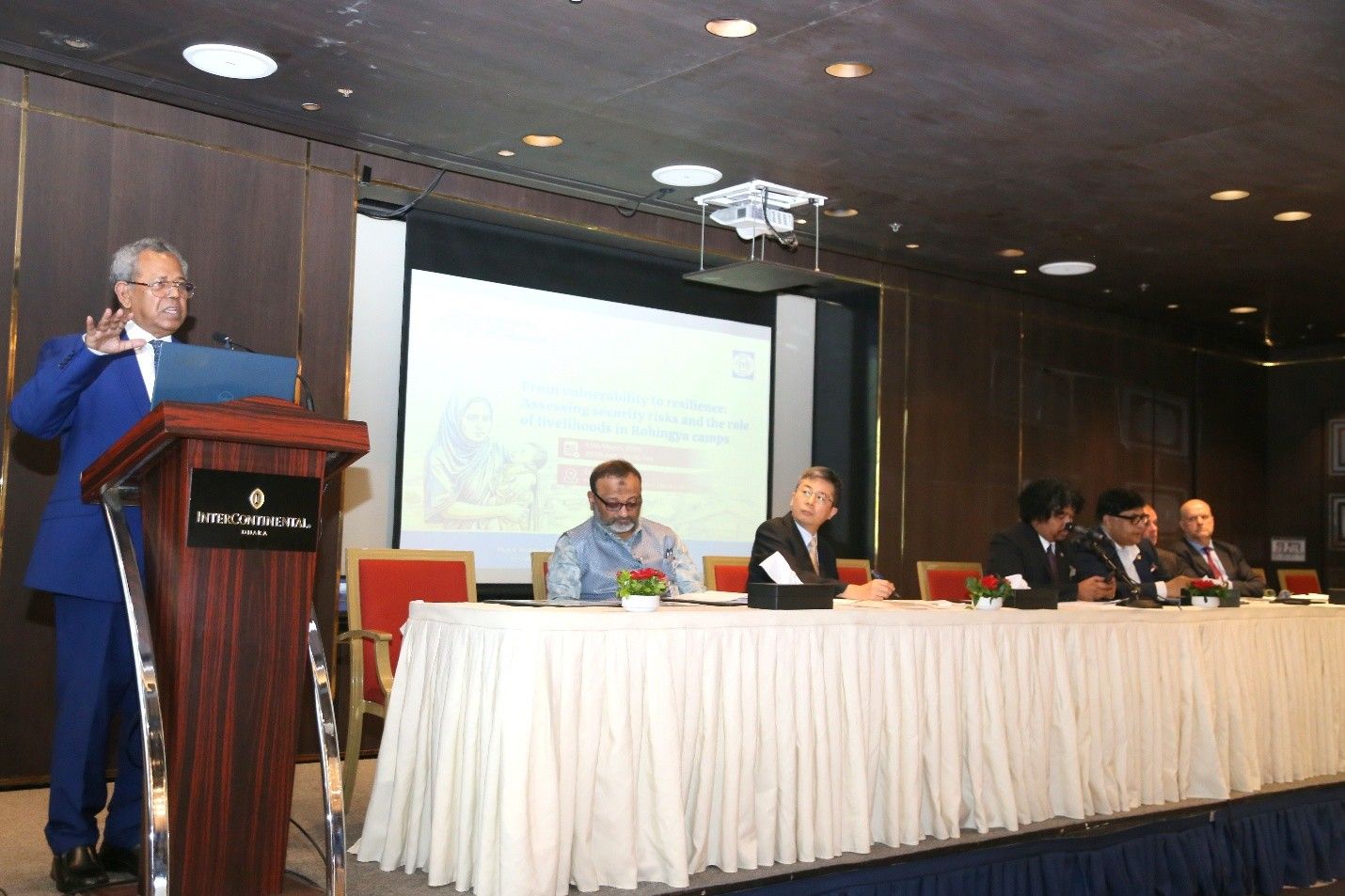
Rear Admiral Md. Khurshed Alam, Director, CBoBS, Independent University, Bangladesh
- Rear Admiral Md. Khurshed Alam, Director, CBoBS, Independent University, Bangladesh, recommended forming a high-level national committee consisting of representatives from the Ministry of Foreign Affairs, Ministry of Disaster Management, and the RRRC, with strong decision-making authority to coordinate and accelerate repatriation efforts.
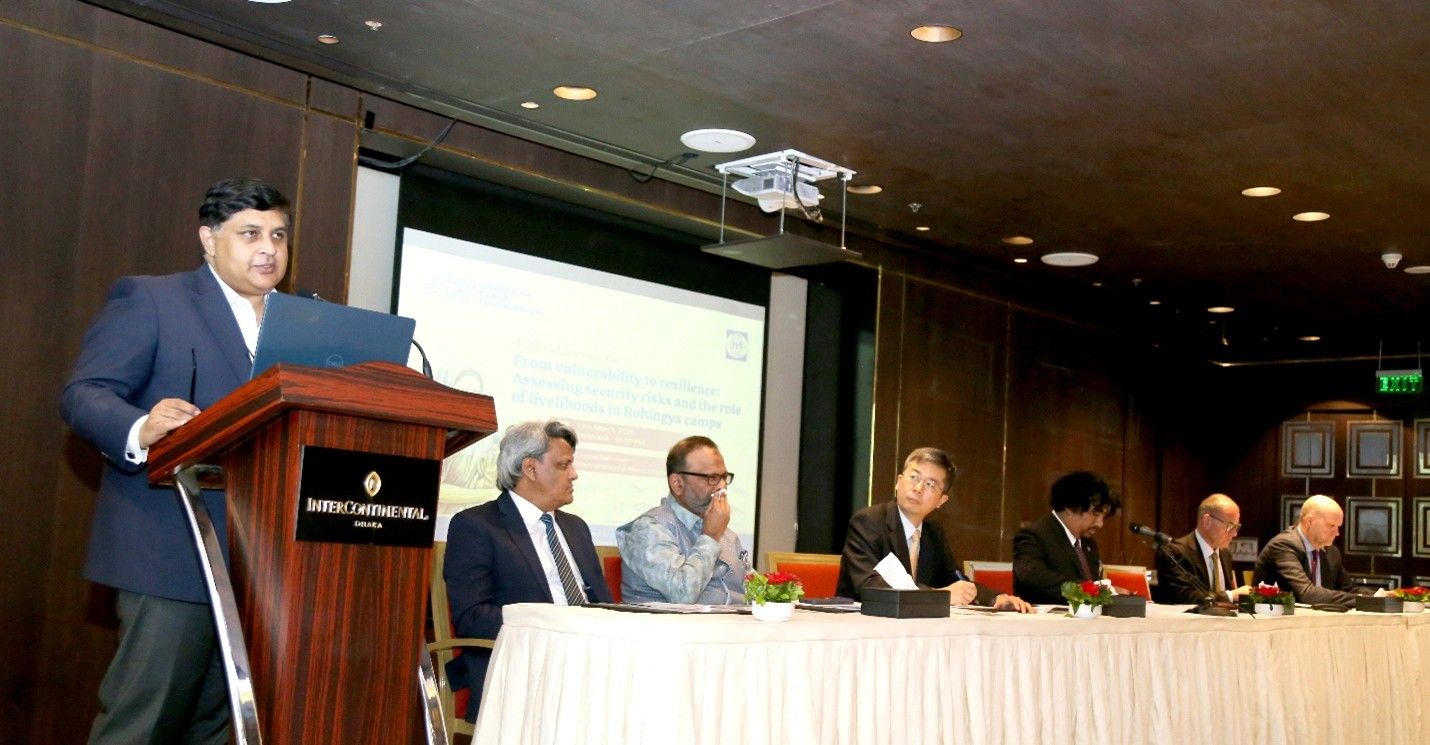
Dr Shahab Enam Khan, Professor, Jahangirnagar University
Dr Shahab Enam Khan, Professor, Jahangirnagar University, described the Rohingya crisis as a regional and global conflict ecosystem, not just a Bangladesh-specific issue, involving Myanmar, China, India, and Southeast Asia, and increasingly shaped by shifting geopolitics and a weakening multilateral system.
Dr. Khalid Koser, Executive Director, GCERF, Geneva, Switzerland, acknowledged Bangladesh’s extraordinary leadership and generosity in hosting Rohingya refugees, while emphasizing that the crisis remains both a humanitarian and growing security and stability challenge, particularly due to youth vulnerability and prolonged displacement.
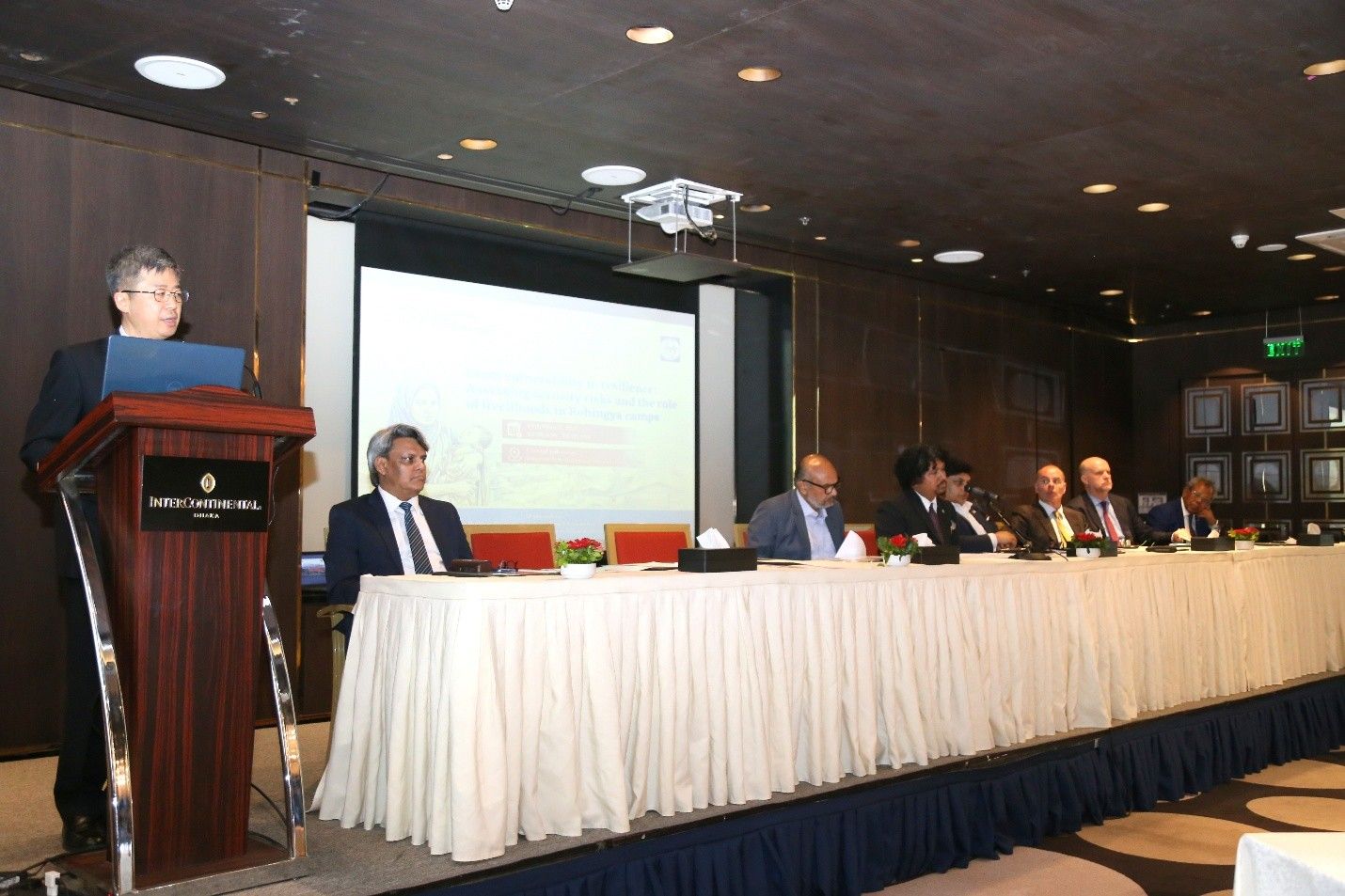
Mr. Naoki Takahashi, Minister and Deputy Chief of Mission, Embassy of Japan in Bangladesh
Mr. Naoki Takahashi, Minister and Deputy Chief of Mission, Embassy of Japan in Bangladesh, underscored Japan’s comprehensive support approach, combining humanitarian assistance (food, health, education, WASH) with long-term resilience-building, including recent financial commitments through UN agencies. He stressed the importance of supporting host communities, enhancing refugee self-reliance, and promoting public-private partnerships, reaffirming Japan’s continued commitment to working with Bangladesh and global partners toward a sustainable solution.
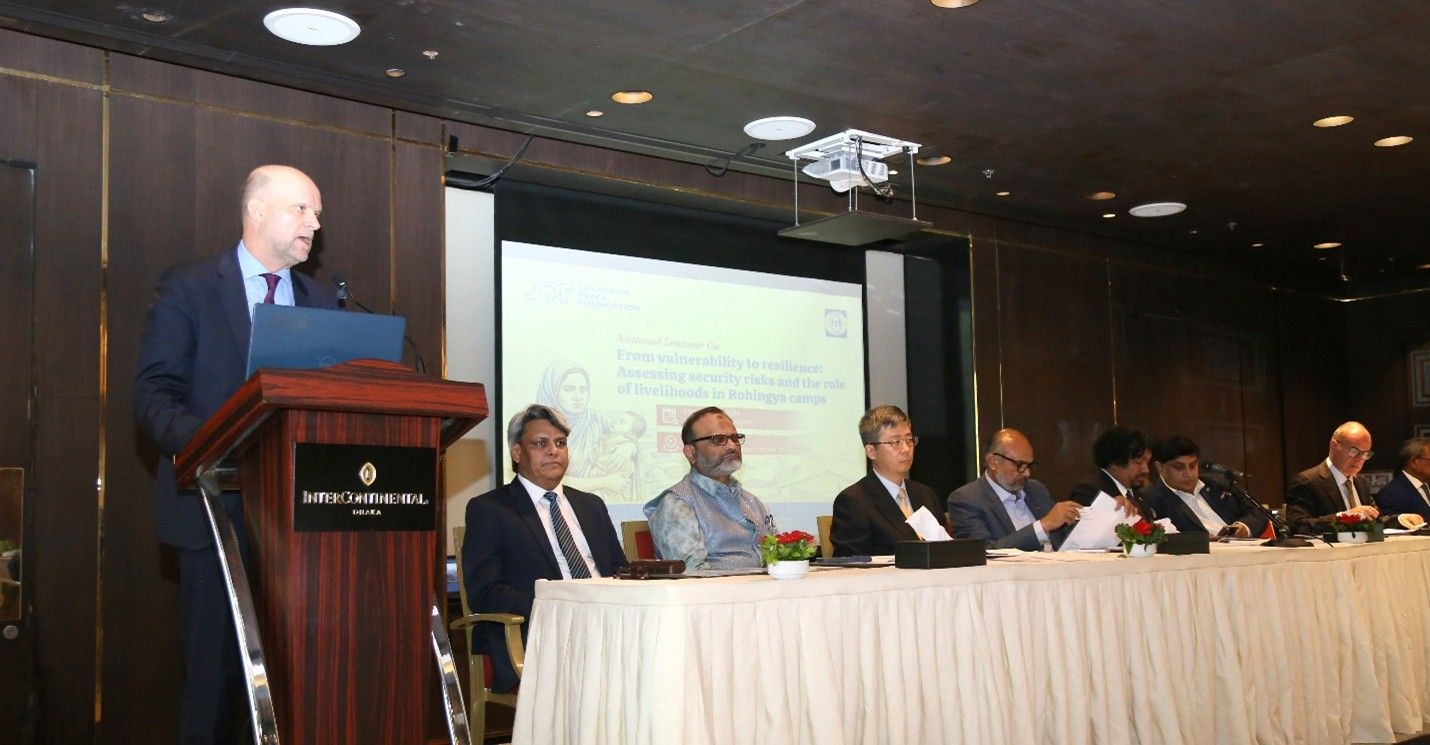
Mr. Ivo Freijsen, UNHCR Country Representative, Bangladesh
Mr. Ivo Freijsen, UNHCR Country Representative, Bangladesh, highlighted that the Rohingya crisis has become a protracted and increasingly complex situation, with limited prospects for repatriation in the near term due to political constraints in Myanmar, declining global attention, and reduced humanitarian funding. He also emphasized growing challenges on the ground, including rising refugee population, increased vulnerability, youth frustration, and cross-border security risks, all compounded by funding shortages and insufficient international burden-sharing.
Open Discussion of Session Two
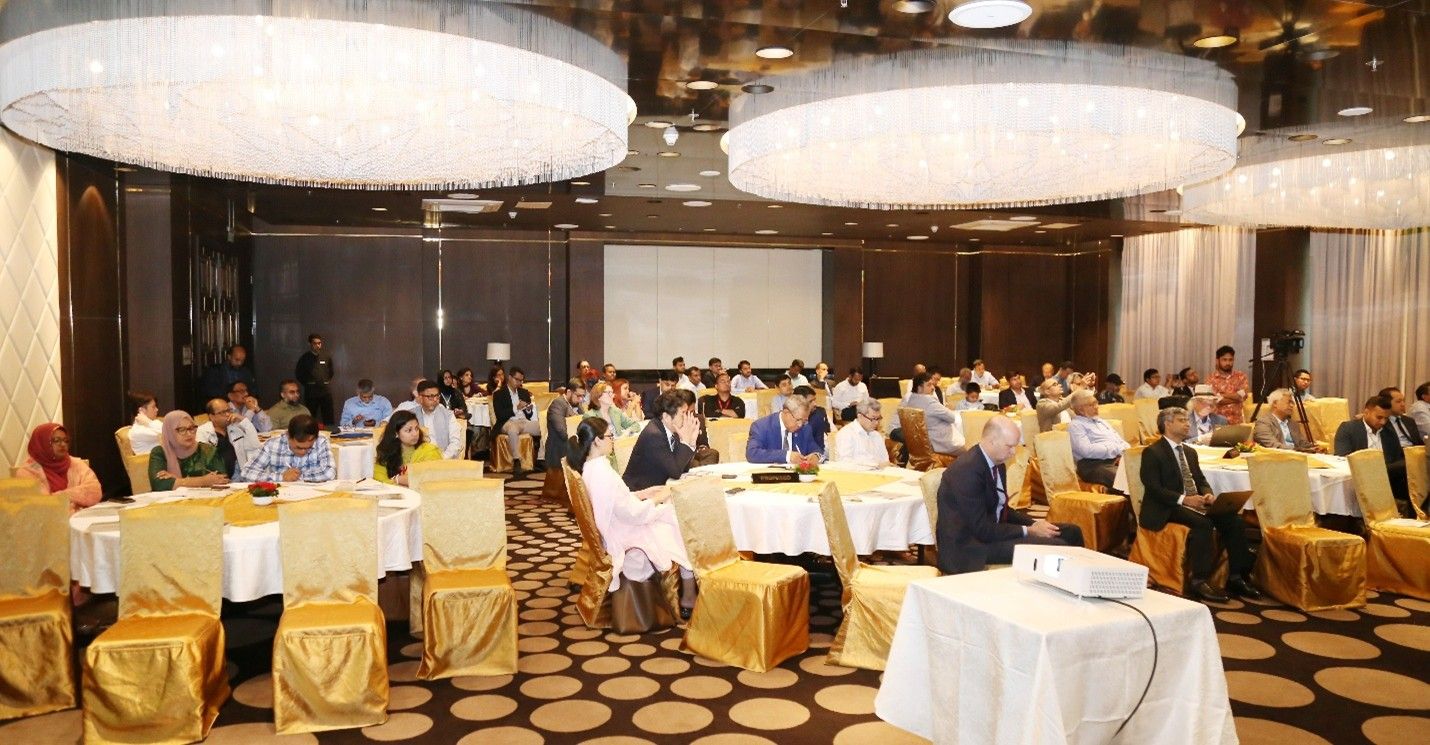
Participants of the National Seminar
An open floor session followed the initial presentations. A speaker with five years of experience in the Rohingya response posed critical questions regarding the socioeconomic impact on Bangladeshi host communities and the sustainability of current humanitarian approaches.
Key points raised by the questioner included a disconnect between research and ground realities, noting that while the presented research focused on Rohingya vulnerability, it failed to address the parallel vulnerability of the host community. He emphasized that after seven years, there is a lack of data on key indicators such as job creation, unemployment rates specific to Cox’s Bazar versus national averages, and the economic displacement of locals. He highlighted recent protests by Bangladeshi job card holders as evidence of rising local frustration and referenced a 2018 FAO study indicating that local people had already been forced to change their livelihoods due to the influx. The questioner posed direct queries to the panel and international community: How many jobs have been created for Bangladeshis in the last seven years? How many Bangladeshis will be economically displaced by efforts to include Rohingyas in the local economy? He argued that solutions cannot be found solely within the camps and that Myanmar is a “land of ethnicities,” stressing that any sustainable solution requires understanding how other ethnic groups participate in the political architecture.
The panelists acknowledged the urgent need to shift the discourse from a narrow humanitarian lens toward a broader labor market perspective, emphasizing that the Rohingya crisis must be understood through the dual framework of an “identity and resource crisis.” In response to criticism, one panelist clarified that the research did not seek to dismiss the burdens faced by host communities; rather, it aimed to critically examine existing approaches in order to address emerging security risks more effectively.
He highlighted a critical demographic reality: approximately 52% of the Rohingya population is under the age of 18, representing nearly half a million young people who will enter the labor market in the coming years. He warned that without strategic planning to address this demographic pressure, the current humanitarian challenge could evolve into a major security and economic crisis for the host ecosystem.
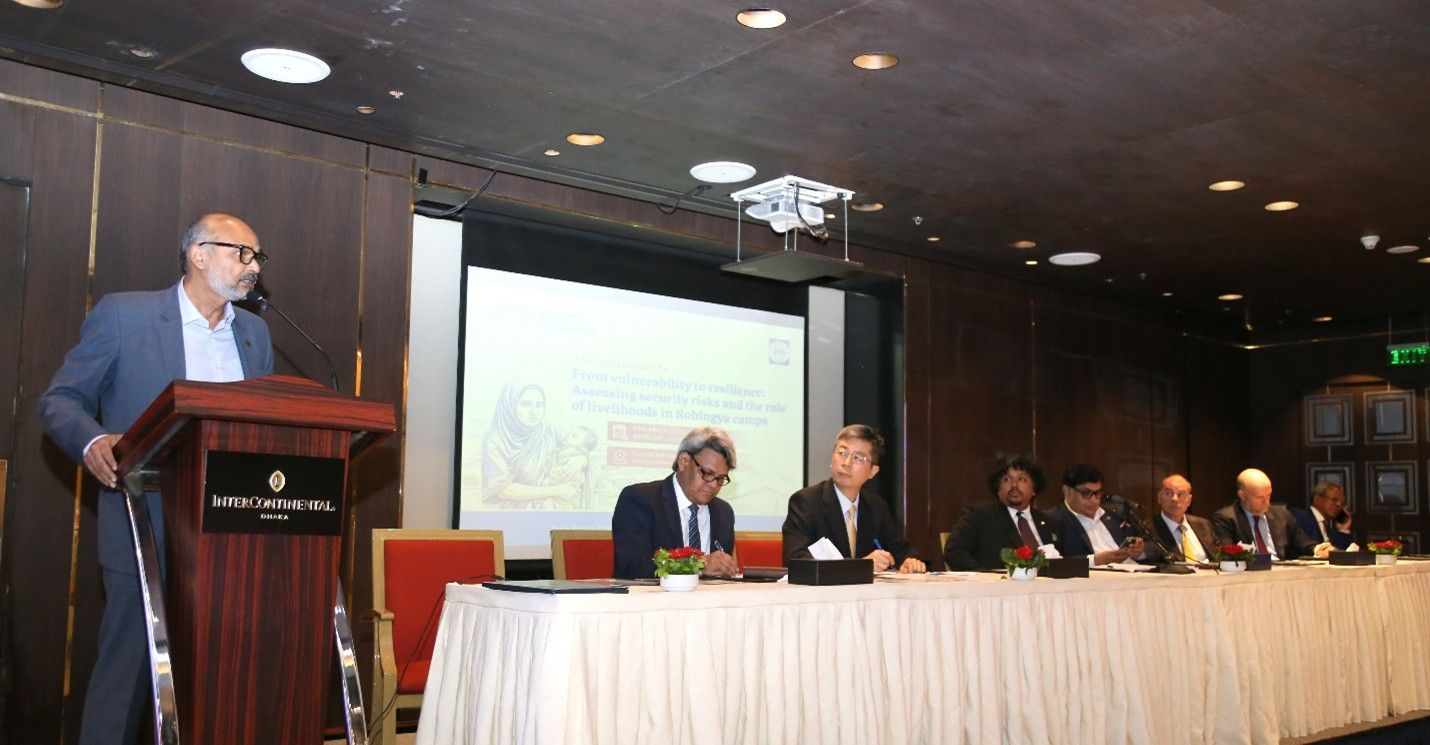
Dr Rashed Al Mahmud Titumir, Adviser to the Prime Minister of Bangladesh
Dr Rashed Al Mahmud Titumir, Adviser to the Prime Minister of Bangladesh, pointed toward sustainable repatriation. In his speech he mentioned,
“We are committed to extending our relationships and engagement with our neighboring countries, including ASEAN, South Asian countries, as well as other nations, to resolve the crisis and achieve a durable solution through the safe, voluntary, dignified, and sustainable repatriation of Rohingya refugees to their homeland. Let us work together towards ensuring their return to their homeland.”
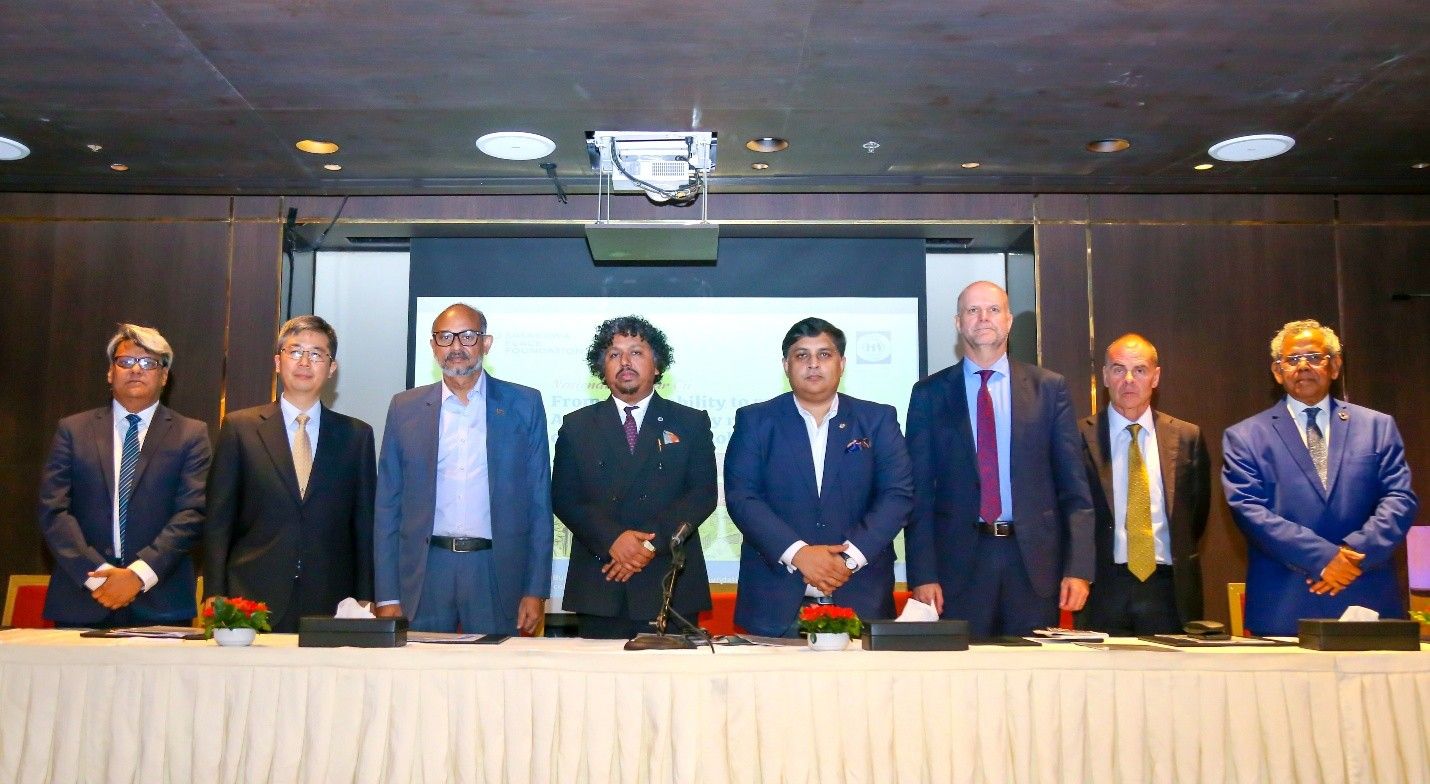
Session Two: Panelists’ Plenary of the Seminar.
The seminar featured remarks from policymakers and humanitarian stakeholders, including representatives from the Government of Bangladesh and international organizations working on the Rohingya response. Other high-level participants included Mr Mohammed Mizanur Rahman, Commissioner Refugee Relief and Repatriation Commissioner (RRRC) at Cox’s Bazar, Mr Tomohide Ichiguchi, Chief Representative, JICA Bangladesh, Dr. Hasan Reza, Associate Professor, Indiana University, USA, Dr Nasir Uddin, Professor, University of Chittagong, Bangladesh, and Dr Abu Bakar Siddiqui, Royal University, Dhaka. The importance of continued international cooperation to ensure sustainable humanitarian support while pursuing long-term solutions, including repatriation, was emphasized throughout the event.