
40YEARS Sasakawa Peace Foundation

日本語
  • About SPF
    • About Us
      • About Us
      • Overview
      • History
      • Board Members
      • Diversity and Inclusion
      • Financial Position
      • Asset Owner Principles
      • Honorary Chair's Message Archive
      • Activities Before 2017
    • President's Message
    • Integrated Report
    • Access
    • Idea Submission
    • Careers
    • Contact Us
  • Experts
  • Programs
    • Japan-U.S. and Security Studies Unit
    • General Affairs and Networking Program
    • National Security and Japan-U.S. Program
    • Strategy and Deterrence Program
    • Asia Unit
    • Strategic Dialogue and Human Resource Development Program
    • Peacebuilding Program
    • Sasakawa Japan-China Friendship Program
    • West Asia and Islam Unit
    • West Asia and Islam Program
    • Social Innovation Program
    • Ocean Policy Research Institute
    • Division of Ocean Vision and Action
    • Division of Island Nations
    • Scholarship Unit
    • Sasakawa Scholarship Program
    • Center for Mediation Support
    • Center for Mediation Support
  • Research & Analysis
    • Reports and Publications
    • Essays and Commentary
    • SPF Now Interviews
    • Videos
    • Podcasts
    • Browse by Regions
    • Regions
    • Americas
    • Northeast Asia
    • Southeast Asia
    • South Asia
    • Middle East
    • Oceania
    • Europe and Eurasia
    • Arctic
    • Africa
    • Satellite Sites
    • International Information Network Analysis
    • Asia Women Impact Fund
    • The OPRI Center of Island Studies
    • The Friends of WMU, Japan
    • SPF Insights into Japan–U.S. Relations
    • From the Oceans
    • Asia Peacebuilding Initiatives (APBI)
    • History of the Sasakawa Japan-China Friendship Program
      (Japanese language)
    • Japan-China Relations Data Graph (Japanese language)
    • Third Pole Project
  • News
    • News
    • Press Releases
    • SPF Newsletter
    • Media Coverage
  • Events
Middle East News

Forms of "Social Contribution" in Islam

Ken Aoo
Director, West Asia and Islam Unit

November 17, 2026

Introduction: Muslim Societies and “Social Contribution”

Anyone who has travelled in the Islamic world may remember getting lost and being helped by a passer-by. Sometimes the directions turn out to be completely wrong, but the person’s eagerness to help still comes through.

This is no accident. According to a global survey of how much people give of their money and time to help others (CAF 2024), Indonesia has ranked first for seven years running. There, 90% of respondents said they had donated money to a charity and 65% said they had volunteered. Indonesia is a Muslim-majority society, and this low threshold for helping others is rooted in part in Islamic teachings and ways of behaving. This article gives an overview of how charity and public-benefit activity — what we might call “social contribution” — has been carried out in Muslim societies, both historically and today.

Almsgiving and Charity: Zakat and Sadaqa

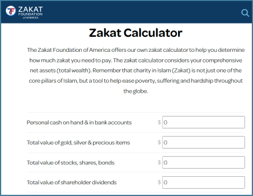
Figure 1: A zakat calculator (Zakat Foundation of America)

Many Japanese people may have learned in world history class about zakat, one of the “Five Pillars” of duties for Muslims. Zakat is an obligatory donation representing “God’s share” of the wealth a person owns. The categories and annual rates are set out in detail: 5–10% for agricultural produce, one sheep out of every forty, 2.5% for gold and silver, and so on. The Qur’an specifies who may receive it, usually through an intermediary such as a religious leader: “the poor and the needy, those who administer the alms, those whose hearts are to be reconciled, those in bondage and in debt, those who work in the cause of God, and the wayfarer” (9:60).

This may sound like an antiquated arrangement, but a great many zakat management bodies are still active in Muslim societies around the world, and there are numerous “zakat calculators” online (Figure 1). Muslims use these to work out and donate the amount due on their own assets. A 2018 UNDP estimate put the potential annual value of zakat from Muslims worldwide at between US$200 billion and US$1 trillion (UNDP 2018) — an indication of the sheer scale involved.

Alongside zakat, which is obligatory, voluntary giving and acts of kindness are called sadaqa. Sadaqa is not limited to donations of money or goods: it also covers helping others, speaking kindly, and even attending a funeral. Recipients may include one’s own family and relatives, ordinary people in need, and even polytheists — so it can be used far more flexibly.

Waqf: The Islamic Endowment

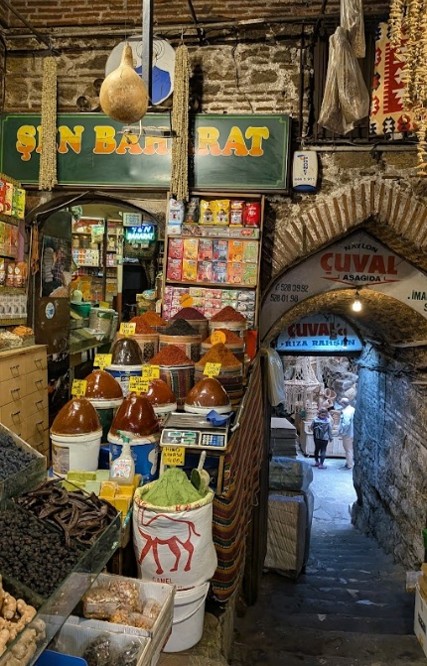
Figure 2: Shops attached to a mosque (waqf property)

Although it is not mentioned in the Qur’an, the waqf became a central mechanism for social contribution in Muslim societies. Waqf means “stopping” in Arabic: the transfer of a piece of private property is halted, and the income it generates is devoted to public purposes. Typically a legal document designates a specific asset (often real estate such as a house, a shop or farmland) and the purpose it is to serve (running a mosque or a school, or charitable work, for example), and the arrangement takes effect once a court approves it.

Once property has been made waqf, it can no longer be sold, transferred or divided — not even by the donor — and it is meant to sustain the designated activity in perpetuity. As a rule, waqf property may not be rebuilt or repurposed either, which is why old shops and other buildings are sometimes still in use in their original form today (Figure 2).

Figure 3: A waqf supporting people with visual impairments (DG of Foundations 2020: 63)

Waqf served a remarkable range of purposes. Besides the running costs of mosques and schools, there were waqfs for caravanserais, bazaars and public baths; for the upkeep of bridges, roads and water-supply facilities; for shelters for the elderly, widows and orphans; for hospitals; for feeding the poor; for travel expenses for pilgrims; for scholarships; for tree planting and beautifying the environment; for freeing slaves; and even for arranging marriages for single people (Figure 3).
 

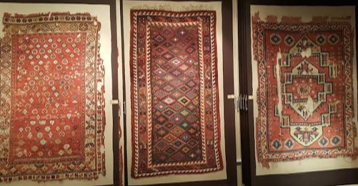
Figure 4: Old prayer carpets (Waqf Museum, Ankara, Türkiye)

Waqf is also described as a "lasting sadaqa": for each and every person who benefits from it, it brings salvation to the donor, and goes on doing so long after the donor's own death. Figure 4 shows an old prayer carpet I came across at the Waqf Museum in Ankara. Its pile was worn down and its edges were fraying — yet by the logic of waqf, that very wear is the measure of the reward returned to the one who gave it. Another example is the donation of a handwritten manuscript as a waqf[1]. In such cases, each person who reads the manuscript and acquires knowledge from it is believed to contribute to the donor's spiritual reward.
 
[1] I am grateful to Mr. Saito Mori, a doctoral candidate at the Graduate School of Waseda University and a participant in the 2026 SPF Fellowship for Young Japanese Middle East Researchers' Fieldwork Program, for drawing my attention to this point.
While waqf clearly carried this religious meaning, it is also worth noting how much it delivered in practical terms: education, medical care, public health, welfare and infrastructure, especially in pre-modern societies. Waqf can be seen as an expanded form of social contribution in Muslim societies, one that met needs which zakat alone, as originally defined, could not cover. It reflects the fact that Islam is not a religion detached from worldly or secular life, but one that has engaged flexibly with human affairs, including economic and social life.

What is interesting is that in these Muslim countries, newly created foundations are also called waqf and are understood to share the character of the historical institution. This new “Muslim philanthropy” shows historical and cultural traits that set it apart from Western-style foundations. For example, rather than making grants to NGOs — the dominant model in the United States and Japan — these foundations tend to prefer running programmes themselves, such as operating schools, hospitals and museums, or distributing goods directly.

Where Things Stand Today, and What Is Changing

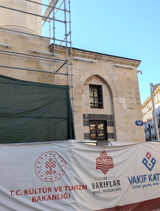
Figure 5: Türkiye’s Directorate General of Foundations also manages and restores historical waqf property

Zakat, sadaqa and waqf were originally independent of the state, run autonomously by Muslim communities themselves. With the rise of the modern nation state, however, governments began to intervene. Examples include state administration of zakat in Saudi Arabia and Pakistan, and state control of waqf in Saudi Arabia, the Gulf states, Türkiye, Egypt and Iran (Figure 5).

At the same time, non-state zakat management organisations in many countries are modernising, and some now describe themselves as Islamic NGOs / charities. Their work, too, has moved into areas quite distinct from traditional charity, such as emergency relief in disasters and the advancement of women’s rights (Nejima 2018). Zakat and waqf funds are also being channelled into “productive uses” such as Islamic (interest-free) finance (Adachi 2025), and used to establish interest-free banks. In Indonesia, the zakat management body BAZNAS has partnered with UNDP to create a mechanism for directing zakat funds to projects that support the SDGs (UNDP 2018). Across these countries, Islamic philanthropy is visibly evolving — including in how Islamic law itself is interpreted.

What Social Contribution in Islam Means

The institutions of giving, charity and public benefit described above have two sides to them. One is religious: the idea that doing good earns a reward in the next life. The other is functional: meeting real needs in society. And they have been expanded and adapted flexibly as those needs have changed.

The idea of charity towards the poor and the suffering is shared with Christianity, Buddhism and many other religions. What stands out in the Qur’an, though, is how often it speaks of the reward for spending in a way that pleases God — a “goodly loan” — as in the image of a single grain that yields seven hundred grains (2:261). Rather than asking believers for unconditional love, it offers the logic that contributing to society brings salvation at the Final Reckoning (hisab). This may well be a characteristic of a religion that emerged from a society of merchants and contracts (Nagaoka 2024).

The Qur’an also states that wealth should not “circulate only among the rich among you” (59:7). Underlying social contribution in Islam, it seems, has been an awareness dating back to the Prophet Muhammad that society breaks down if the strong and the wealthy monopolise resources as they please. The word zakat derives from a root meaning “purification”: at its core is the notion that giving away part of one’s wealth neutralises and cleanses one’s own sins. In other charitable acts, too, one is expected to avoid any sense of self-congratulation. All of this reflects a religion that places great weight on social justice within the community. Muslim societies, like others, are marked by wide gaps between rich and poor, yet the values and institutions that work to heal those gaps have survived to this day.

Japan, too, had values, behaviours and institutions before the modern era — some of them religious — built around the idea of repaying society, such as hōtoku and hōon (Aoo 2026). But what about today? In the survey on helping others mentioned at the outset, Japan ranked 141st out of 142 countries: 17% of people had donated and 19% had volunteered. While learning about the ways of others, it may also be worth considering what we ourselves ought to be. 

References

(In English)
Adam, F., and Bushill-Matthews, L. (2018) Zakat is not Just Charity: Unlocking the Transformative Power of Islam’s Third Pillar. Yaqeen Institute for Islamic Research.
Aoo, K. (2026) The Role of Foundations in Japanese Society: A sharing with Asian colleagues. Japan Foundation Center.
Charities Aid Foundation (2024) CAF World Giving Index 2024. Charities Aid Foundation.
Directorate of Foundations (2020) Marvelous Pious Foundations (Waqfs) Throughout History. DG of Foundations.
UNDP (2018) “Zakat for the SDGs”, UNDP website. https://www.undp.org/blog/zakat-sdgs
(In Japanese)
Adachi, M. (2025) Isurāmu no jizen no ronri to shakai fukushi [The Logic of Islamic Charity and Social Welfare: Zakat innovation and local agency in contemporary Indonesia]. Akashi Shoten.
Iwamoto, H. (2017) “Isurāmu ni okeru jakusha kyūsai no fukushi seido” [Welfare institutions for the vulnerable in Islam], Sociologica 14(1・2), pp. 65–79.
Otsuka, K. et al. (eds.) (2002) Iwanami Isurāmu jiten [The Iwanami Dictionary of Islam]. Iwanami Shoten.
Sato, H. (1991) “Zakāto no disukonsutorakushon: shakai rentai, gōshū, kyōdō kitaku” [Deconstructing zakat: social solidarity, reciprocity and common trust], Bulletin of the Middle East Research Institute, International University of Japan, No. 5, pp. 323–337.
Nagaoka, S. (2024) Isurāmu kara okane o kangaeru [Thinking about Money through Islam]. Chikuma Shobō.
Nejima, S. (2014) Musurimu NGO: shinkō to shakai hōshi katsudō [Muslim NGOs: Faith and social service]. Yamakawa Shuppansha.
Mita, R. (trans. and annot.) (1983) Nichi-A taiyaku Sei Kuruān [The Holy Qur’an: Japanese–Arabic parallel translation]. Japan Muslim Association.

News West Asia and Islam Program
Share

Related Articles

Latest News

Strategic Dialogue and Human Resource Development Program

Event Report: The 4th Asian Statespersons’ Forum (ASF)

The Sasakawa Peace Foundation has been implementing the Asia Political Leaders Exchange program since 2023 with the aim of fostering mutual understanding and strengthening networks among political leaders from Southeast Asia and Japan. As part of this initiative, the Asia Statespersons’ Forum (ASF) is held annually as a platform for political leaders from Southeast Asia and Japan to engage in dialogue and exchange perspectives. The fourth Forum (ASF4) was held in Chitose, Hokkaido, from July 30 to August 1, 2026. A total of 12 political leaders from five countries, namely Indonesia, Japan, Malaysia, the Philippines, and Singapore, participated in the Forum.

September 4, 2026
Strategic Dialogue and Human Resource Development Program

【Report】Co-hosting of the 22nd Pan American Nikkei Convention (COPANI) and the Dispatch of Ms. Akie Abe to São Paulo, Brazil

The Sasakawa Peace Foundation (SPF) promotes mutual understanding through exchanges among opinion leaders, including politicians, with the aim of strengthening ties between Japan and the Nikkei communities in South America. In this context, the 22nd Pan American Nikkei Convention (COPANI: Convención Panamericana Nikkei) was held in São Paulo, Brazil, hosted by Brazilian Society of Japanese Culture and Social Assistance (Bunkyo) and the Pan-American Nikkei Association, and co-hosted by SPF and other organizations. As part of SPF’s initiatives, Ms. Akie Abe, Chairperson of Foundation for Social Contribution, was dispatched to São Paulo, Brazil. She attended COPANI, which brought together Nikkei participants from 15 countries across North and South America, including Japan, and delivered a speech addressed to the Nikkei community.

June 30, 2026
Strategic Dialogue and Human Resource Development Program

SPF welcomed Delegations from the Indonesian National Resilience Institute

The Sasakawa Peace Foundation (SPF) had the pleasure of hosting H.E. Dr. Ace Hasan Syadzily, Governor of the National Resilience Institute of the Republic of Indonesia (LEMHANNAS), and his delegation for a roundtable discussion in Tokyo on 8 June 2026.

June 16, 2026
Browse Latest News

pagetop

Video Title

Footer

Sasakawa Peace Foundation

  • About SPF
  • News
  • Experts
  • Events
  • Programs
  • Access
  • Research & Analysis
  • Contact Us

Latest Updates

Receive regular updates about news, events, and research from the Sasakawa Peace Foundation

Sign Up to Our Newsletter

Satellite Sites

  • From the Oceans
  • The Friends of WMU Japan
  • Asia Women Impact Fund
  • Insights into Japan–U.S. Relations
  • International Information Network Analysis (IINA)
  • The OPRI Center of Island Studies
  • Asia Peacebuilding Initiatives (APBI)
  • History of the Sasakawa Japan-China Friendship Program (Japanese language)
  • Japan-China Relations Data Graph (Japanese language)
  • Third Pole Project
  • PRIVACY POLICY
  • SITE POLICY
  • SOCIAL MEDIA POLICY
  • SITE MAP
  • WEB ACCESSIBILITY POLICY

Copyright © 2021 The Sasakawa Peace Foundation. All Rights Reserved.