40YEARS Sasakawa Peace Foundation

日本語
  • About SPF
    • About Us
      • About Us
      • Overview
      • History
      • Board Members
      • Diversity and Inclusion
      • Financial Position
      • Honorary Chair's Message Archive
      • Activities Before 2017
    • President's Message
    • Integrated Report
    • Access
    • Idea Submission
    • Careers
    • Contact Us
  • Experts
  • Programs
    • Japan-U.S. and Security Studies Unit
    • General Affairs and Networking Program
    • National Security and Japan-U.S. Program
    • Strategy and Deterrence Program
    • Asia Unit
    • Strategic Dialogue and Human Resource Development Program
    • Peacebuilding Program
    • Sasakawa Japan-China Friendship Program
    • West Asia and Islam Unit
    • West Asia and Islam Program
    • Social Innovation Program
    • Ocean Policy Research Institute
    • Division of Ocean Vision and Action
    • Division of Island Nations
    • Scholarship Unit
    • Sasakawa Scholarship Program
    • Center for Mediation Support
    • Center for Mediation Support
  • Research & Analysis
    • Reports and Publications
    • Essays and Commentary
    • SPF Now Interviews
    • Videos
    • Podcasts
    • Browse by Regions
    • Regions
    • Americas
    • Northeast Asia
    • Southeast Asia
    • South Asia
    • Middle East
    • Oceania
    • Europe and Eurasia
    • Arctic
    • Africa
    • Satellite Sites
    • International Information Network Analysis
    • Asia Women Impact Fund
    • The OPRI Center of Island Studies
    • The Friends of WMU, Japan
    • SPF Insights into Japan–U.S. Relations
    • From the Oceans
    • Asia Peacebuilding Initiatives (APBI)
    • History of the Sasakawa Japan-China Friendship Program
      (Japanese language)
    • Japan-China Relations Data Graph (Japanese language)
    • Third Pole Project
  • News
    • News
    • Press Releases
    • SPF Newsletter
    • Media Coverage
  • Events
Middle East News

What the Label “Women Refugee Entrepreneurs” Challenges us to Rethink

Ken Aoo, Ratikorn Norasethaporn, Miyuki Konnai
Sasakawa Peace Foundation, West Asia and Islam Unit

October 16, 2026

Women "Entrepreneurs" from Gaza?

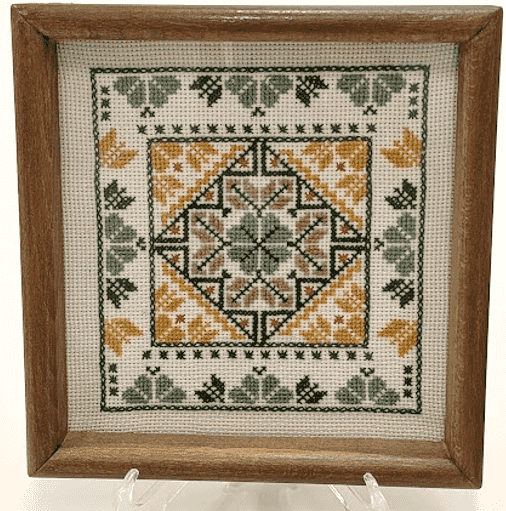
Wooden frames and embroidery made by two women from Gaza

What image comes to mind when you hear the word "entrepreneur"? You probably picture someone leveraging cutting-edge technology and innovative services to launch their own company with abundant capital. During our field research in Middle Eastern countries—including Türkiye, Jordan, and Egypt—this year, we met several "women entrepreneurs" living as refugees. Wondering what technologies they might be using, what kinds of companies they run, perhaps a restaurant, we conducted our interviews with great curiosity. While such cases did exist, in most cases their “business activities” centered on handicrafts, woodwork, cooking, tailoring, or photography. We could not help but wonder "Wait, does that really count as 'entrepreneurship'?” These activities seemed much closer to hobbies or home industry, with modest monthly earnings of around 30,000 to 50,000 yen (USD200-350). Our initial image of the innovative, wealthy entrepreneur was completely shattered.

The Realities Behind These "Entrepreneurs"

Globally, over 40 million people live as refugees.[1] What background did these “entrepreneurs” begin with in host countries? Depending on countries they are residing in, most refugees find themselves in precarious legal situations—holding temporary protection status at best or merely “tolerated” presence without formal refugee recognition at worst. Consequently, they face many restrictions on establishing and registering businesses, accessing bank loans, and receiving government support.
Moreover, many of these women bear household caregiving responsibilities as Muslim women, meaning they cannot easily leave behind children, elderly relatives, or sick and disabled family members. In traditional Muslim societies, the cultural norm that “men earn outside, women care for the home” remains deeply rooted. When they become into displacement, jobs are unavailable, or male breadwinners are lost, women are forced to become the primary earners for their families. For women living in such society, “entrepreneurship” is overwhelmingly born “out of necessity”, making home-based businesses a rational and pragmatic choice.
 
[1] According to the UNHCR Global Trends Report (2026), there were an estimated 41.6 million refugees and an additional 68.7 million internally displaced persons worldwide as of the end of 2025.

Pride in Supporting the Family

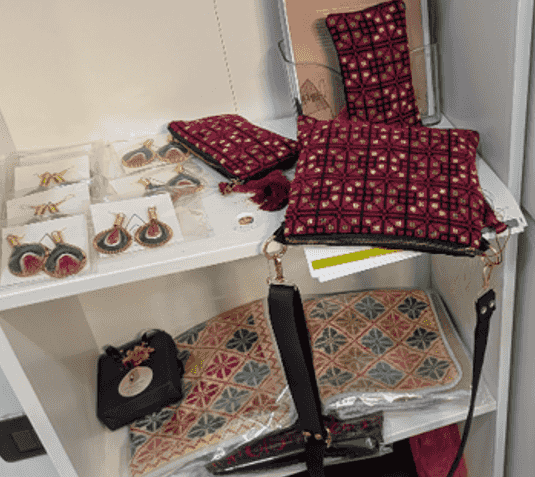
Products reflecting the ingenuity and pride of women from Gaza

As the “breadwinners” of their families, these women show no trace of gloom expressions; instead, they light up with joyfulness when speaking about the products they craft and the ideas they put into them. Through "entrepreneurship," their creations bring happiness to customers, and build sense of pride in their ability to support their families while blossoming their newfound talents.

Among the refugee women we met in Cairo were those who held advanced education degrees and stable careers in their home countries before the war forced them to leave home country with not choices but to make a living through cooking or handicrafts. Some women had lost their furniture workshops entirely yet manage to rebuild their lives by applying their skill to create wooden product like picture frames. One cannot help but feel the sheer injustice of war and disaster that robs people of their stable lives.
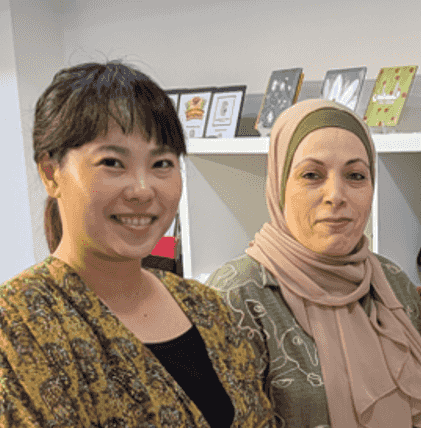
Ms. A (in her 40s, right side of photo), who arrived in Cairo from Gaza, shared her story as below.
"In Gaza, I completed a bachelor’s degree in English and an MBA, and I worked as an office manager at a law firm. My daughter married in Egypt but tragically passed away during childbirth. I left my husband behind in Gaza and came to Cairo to raise my grandchild.
My father and sister were martyred (Editor’s note: killed) in the war in Gaza. Wanting to do something to distract myself from the grief, I started a Facebook page and began selling “manakish” and “taboon” (types of flatbreads eaten daily.) I have always enjoyed cooking, but word of mouth spread quickly, especially for my whole-wheat bread, and neighbors soon began ordering one after another. I use an app to take orders, and an Egyptian deliveryman helps deliver them. With sales now on track, looking ahead, I hope to invest in equipment, hire staff, and eventually open a restaurant of my own. For now, however, cherishing this time with my young grandchild is my priority."

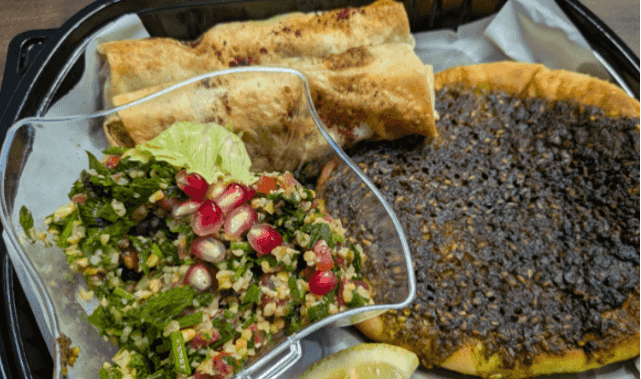
Lunchbox featuring Ms. A's signature manakish (on the right)

Ms. A spoke fluent English in a composed manner, which left us a lasting impression. The lunchbox she prepared for us featured fresh vegetables; while the seasoning was subtle, the meal was fragrant and full of flavor.
Listening to their stories brings a painful yet undeniable truth: there is no such people as "refugees” by nature, but only ordinary individuals who, through circumstances, “become” or “are made into” refugees. I hope we can help find pathways for them to utilize their exceptional talents for the benefit of their families, their communities, and ultimately their homelands. At the same time, we cannot ignore the deeper challenge of ending the wars that cause such tragedies. As SPF staff members, we shall continue to explore what meaningful, though humble role we can play to help achieve these goals

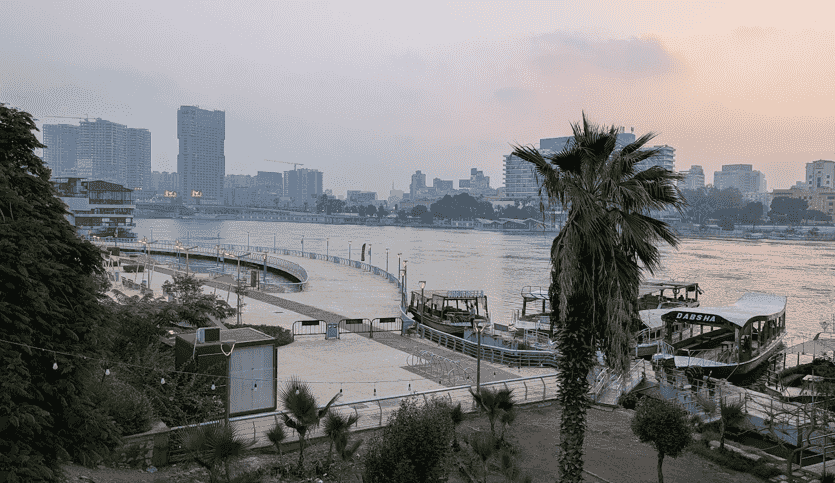
A scenery in Cairo


News West Asia and Islam Program
Share

Related Articles

Latest News

Strategic Dialogue and Human Resource Development Program

Event Report: The 4th Asian Statespersons’ Forum (ASF)

The Sasakawa Peace Foundation has been implementing the Asia Political Leaders Exchange program since 2023 with the aim of fostering mutual understanding and strengthening networks among political leaders from Southeast Asia and Japan. As part of this initiative, the Asia Statespersons’ Forum (ASF) is held annually as a platform for political leaders from Southeast Asia and Japan to engage in dialogue and exchange perspectives. The fourth Forum (ASF4) was held in Chitose, Hokkaido, from July 30 to August 1, 2026. A total of 12 political leaders from five countries, namely Indonesia, Japan, Malaysia, the Philippines, and Singapore, participated in the Forum.

September 4, 2026
Strategic Dialogue and Human Resource Development Program

【Report】Co-hosting of the 22nd Pan American Nikkei Convention (COPANI) and the Dispatch of Ms. Akie Abe to São Paulo, Brazil

The Sasakawa Peace Foundation (SPF) promotes mutual understanding through exchanges among opinion leaders, including politicians, with the aim of strengthening ties between Japan and the Nikkei communities in South America. In this context, the 22nd Pan American Nikkei Convention (COPANI: Convención Panamericana Nikkei) was held in São Paulo, Brazil, hosted by Brazilian Society of Japanese Culture and Social Assistance (Bunkyo) and the Pan-American Nikkei Association, and co-hosted by SPF and other organizations. As part of SPF’s initiatives, Ms. Akie Abe, Chairperson of Foundation for Social Contribution, was dispatched to São Paulo, Brazil. She attended COPANI, which brought together Nikkei participants from 15 countries across North and South America, including Japan, and delivered a speech addressed to the Nikkei community.

June 30, 2026
Strategic Dialogue and Human Resource Development Program

SPF welcomed Delegations from the Indonesian National Resilience Institute

The Sasakawa Peace Foundation (SPF) had the pleasure of hosting H.E. Dr. Ace Hasan Syadzily, Governor of the National Resilience Institute of the Republic of Indonesia (LEMHANNAS), and his delegation for a roundtable discussion in Tokyo on 8 June 2026.

June 16, 2026
Browse Latest News

pagetop

Video Title

Footer

Sasakawa Peace Foundation

  • About SPF
  • News
  • Experts
  • Events
  • Programs
  • Access
  • Research & Analysis
  • Contact Us

Latest Updates

Receive regular updates about news, events, and research from the Sasakawa Peace Foundation

Sign Up to Our Newsletter

Satellite Sites

  • From the Oceans
  • The Friends of WMU Japan
  • Asia Women Impact Fund
  • Insights into Japan–U.S. Relations
  • International Information Network Analysis (IINA)
  • The OPRI Center of Island Studies
  • Asia Peacebuilding Initiatives (APBI)
  • History of the Sasakawa Japan-China Friendship Program (Japanese language)
  • Japan-China Relations Data Graph (Japanese language)
  • Third Pole Project
  • PRIVACY POLICY
  • SITE POLICY
  • SOCIAL MEDIA POLICY
  • SITE MAP
  • WEB ACCESSIBILITY POLICY

Copyright © 2021 The Sasakawa Peace Foundation. All Rights Reserved.