Japan–China Friendship Program
Survey on Japanese views of China (FY2023)
December 26, 2023
4 Min. Read
The Sasakawa Japan-China Friendship Program of the Sasakawa Peace Foundation (President: Atsushi Sunami) conducted the "Survey on Japanese views of China (FY2023)" (fieldwork dates: Friday, August 18, 2023 - Wednesday, August 23, 2023) among 3,000 men and women aged 15-89 living in Japan as part of its "Enhancing Dissemination of Information Relating to China in Japan" project activities. The results of the survey are released below.
Ⅰ.Introduction
1.Purpose
To recognize the importance of understanding and grasping public sentiments, promote mutual understanding between the citizens of Japan and China, clarify current issues, and then apply this insight to future activities.
2.Fieldwork dates
Friday, August 18, 2023 - Wednesday, August 23, 2023
3.Subjects
(1)Respondents Japanese men and women aged 15–89 living in Japan
(2)Fieldwork area Nationwide
(3)Sample 3000 people
4. Methodology
(1)Methodology Online survey (Pre-registered population)
(2)Question count 18 questions in the main survey
(3)Sampling quota ※
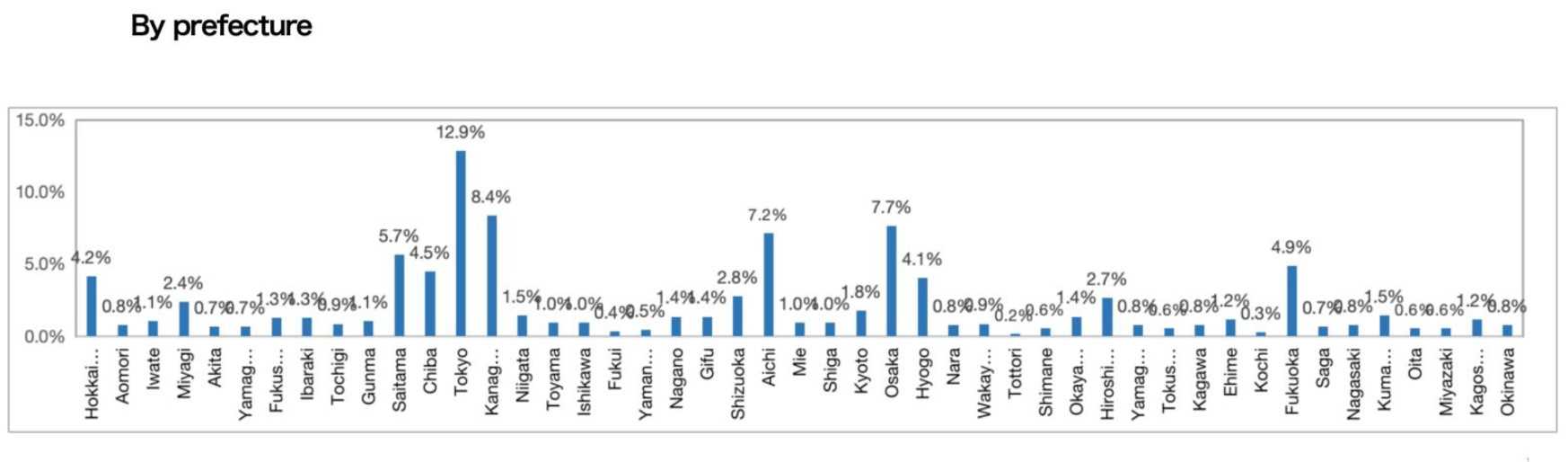
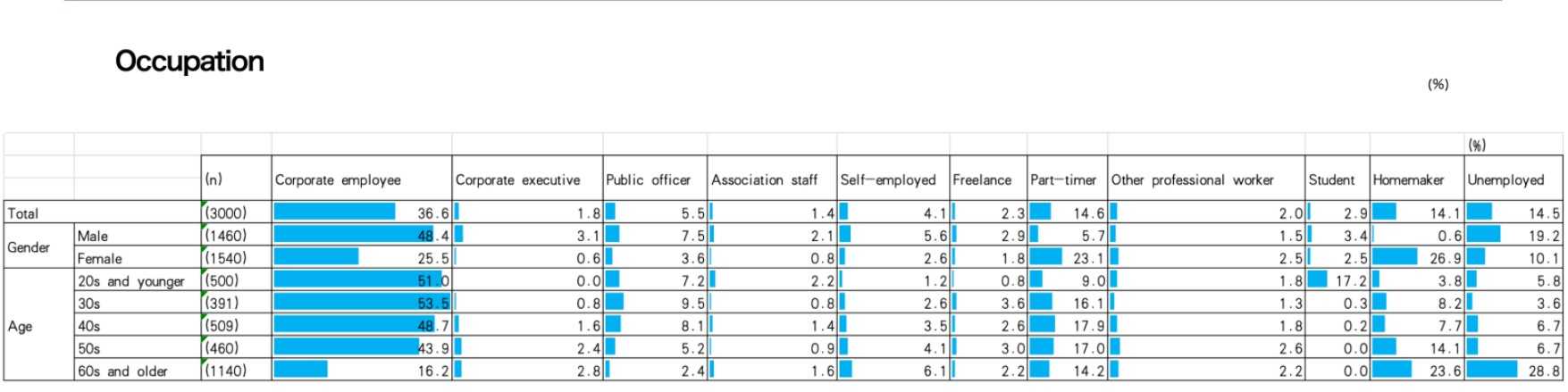
※ Allocations are calculated from the 2020 census by region, gender, and age group as a percentage of the population (Chart 0)
To recognize the importance of understanding and grasping public sentiments, promote mutual understanding between the citizens of Japan and China, clarify current issues, and then apply this insight to future activities.
2.Fieldwork dates
Friday, August 18, 2023 - Wednesday, August 23, 2023
3.Subjects
(1)Respondents Japanese men and women aged 15–89 living in Japan
(2)Fieldwork area Nationwide
(3)Sample 3000 people
4. Methodology
(1)Methodology Online survey (Pre-registered population)
(2)Question count 18 questions in the main survey
(3)Sampling quota ※
※ Allocations are calculated from the 2020 census by region, gender, and age group as a percentage of the population (Chart 0)
Ⅱ.Questions
(1)Affinity toward China and three overseas regions (South Korea, the U.S., and Taiwan)
(2)Level of interest in China and the three overseas regions (South Korea, the U.S., and Taiwan)
(3)Languages used to obtain information on China and the three overseas regions (China, South Korea, the U.S., and Taiwan)
(4)Level of trust in media reporting on Japan in China and the three overseas regions (China, South Korea, the U.S., and Taiwan)
(5)Views on Japan-China relations and the reasons for them
(6)Perceptions of Chinese politics, economy, culture, etc.
(7)Changes in China and Japan-China relations
(8)Ways of interacting with China
(9)Effective initiatives for advancing Japan-China relations
(10)Time Series Comparison (compared to FY2022)
(2)Level of interest in China and the three overseas regions (South Korea, the U.S., and Taiwan)
(3)Languages used to obtain information on China and the three overseas regions (China, South Korea, the U.S., and Taiwan)
(4)Level of trust in media reporting on Japan in China and the three overseas regions (China, South Korea, the U.S., and Taiwan)
(5)Views on Japan-China relations and the reasons for them
(6)Perceptions of Chinese politics, economy, culture, etc.
(7)Changes in China and Japan-China relations
(8)Ways of interacting with China
(9)Effective initiatives for advancing Japan-China relations
(10)Time Series Comparison (compared to FY2022)
Ⅲ.Results
1.Main survey
(1)Sampling quota (Chart 1)
Gender Male 48.7% Female51.3%
Nationality Japan
Age 60s and older 38.0%
50s 15.3%
40s 17.0%
30s 13.0%
20s and younger 16.7%
(1)Sampling quota (Chart 1)
Gender Male 48.7% Female51.3%
Nationality Japan
Age 60s and older 38.0%
50s 15.3%
40s 17.0%
30s 13.0%
20s and younger 16.7%
(2) Questions(Q1 - Q15)
※For detailed contents, please refer to [Survey Results (Q1-Q15) PDF].
Q1. Affinity toward China and three overseas regions (South Korea, the U.S., and Taiwan)
Q2. Level of interest in China and the three overseas regions (South Korea, the U.S., and Taiwan)
Q3. Languages used to obtain information on China and the three overseas regions (China, South Korea, the U.S., and Taiwan)
Q4. Level of trust in media reporting on Japan in China and the three overseas regions (China,South Korea,the U.S., and Taiwan)
Q5. Views on Japan-China relations and the reasons for them
Q6. Views on Japan-China relations and the reasons for them
Q7. Perceptions of Chinese politics, economy, culture, etc.
Q8. Changes in China and Japan-China relations
Q9. Ways of interacting with China
Q10. Effective initiatives for advancing Japan-China relations
Q11. Actors working on Japan-China relations
Q12. Reasons for choosing "government" as the main actor in Japan-China relations
Q13. Reasons for selecting "private sector" as the main actor in Japan-China relations
Q14. Private exchanges between Japan and China
Q15. Private exchanges that should be promoted
2.Time Series Comparison (compared to FY2022)
※Please refer to [PDF of Time Series Comparison] for detailed information.
(1) Affinity
(2) Level of interest
(3) Level of trust in media reporting
(4) Japan-China relations
(5) Effective initiatives for advancing Japan-China relations
(6) About the main actors working on Japan-China relations and private exchanges between Japan and China
Ⅳ.Use of Survey Results
If you want to cite or reproduce any data from this survey, you may do so by clearly citing the source. If you want to use the survey results with editing, please make this clear in the citation. When using the data, please contact us at the address below with a copy of the posting.
■ Contact: Sasakawa Peace Foundation Sasakawa Japan-China Friendship Program
■ E-mail: nicchu5157@spf.or.jp
■ Contact: Sasakawa Peace Foundation Sasakawa Japan-China Friendship Program
■ E-mail: nicchu5157@spf.or.jp