National Security and Japan-U.S. Program Seminars
Open Symposium

"China’s Nuclear Buildup and Japan-U.S. Deterrence Response"

Organized by: The Sasakawa Peace Foundation
 
Amid dramatic changes in Japan’s security environment, concern is growing over the possibility that nuclear threats or even the use of nuclear weapons could become a reality, particularly in current and future conflicts. As competition among major powers intensifies, Russia has in fact resorted to nuclear threats during the war in Ukraine. Furthermore, China and North Korea are expanding and modernizing their nuclear arsenals, and it cannot be ruled out that they may, in future conflicts, use nuclear weapons as a means of coercion to bring about a fundamental change in the status quo at the theater level.

Against this backdrop, both Japan and the U.S.-Japan Alliance are paying increasing attention to the role of nuclear weapons in deterrence. While the United States continues to modernize its strategic nuclear forces, it is also exploring the future redeployment of theater-level nuclear weapons in the Indo-Pacific. In Japan as well, public discussion has begun on revisiting the third principle of the Three Non-Nuclear Principles, “not to permit the introduction of nuclear weapons into Japan,” which had long been regarded as politically untouchable. It has also been suggested that the wording related to this issue may be revised in the next update of Japan’s three strategic documents.

In response to these developments, the Sasakawa Peace Foundation published the book Deterrence Being Shattered: The Reality of Nuclear Weapons Operations at the end of September to deepen understanding of the nuclear deterrence challenges facing Japan and the U.S.-Japan Alliance. Drawing on the insights presented in the book, this symposium brings together leading U.S. experts on nuclear deterrence - Madelyn R. Creedon (former Chair of the Strategic Posture Commission), Brad Roberts (Director, Center for Global Security Research at Lawrence Livermore National Laboratory), and Gregory Weaver (Principal, Strategy to Plans, LLC) - together with Nobukatsu Kanehara, Executive Director of the Sasakawa Peace Foundation, and Tomohisa Takei, Senior Fellow at the Sasakawa Peace Foundation (former Chief of Staff of the Japan Maritime Self-Defense Force), to discuss the nuclear deterrence challenges facing Japan and the U.S.-Japan Alliance.

Registration

This seminar will be held on-site only.
If you wish to participate, please register from this page by 12:00 on Friday, November 27 (JST).
Please note that registration will close once the venue reaches full capacity.

*When registering, please make sure to enter your email address correctly.

*After registration, you will receive a temporary registration confirmation email. Please click the registration completion link in the email within 24 hours to finalize your registration.

*If you do not receive the email, please check your spam or junk mail folder.

*The information you provide will be used for future invitations to seminars and lectures hosted or supported by SPF.
 
Contact
Japan-U.S. and Security Studies Unit
National Security and Japan-U.S. Program
E-mail: unit-event-4@spf.or.jp
Tel: +81-3-5157-5170

For media inquiries:
E-mail: spfpr@spf.or.jp
Tel: +81-3-5157-5431

Description

13:00 JST Opening Remarks

Nobukatsu Kanehara

13:05 JST Keynote Speech: "The U.S. Response to the 2 peer problem: issues related to the nuclear modernization"

Keynote Speaker: Madelyn R. Creedon
Discussant: Nobukatsu Kanehara
Moderator: Junichi Fukuda

14:15 JST Frist Session: "Achievements and Future Prospects of Extended Deterrence Cooperation in the Japan-U.S. Alliance"

Panelist: Brad Roberts, Nobukatsu Kanehara
Moderator: Junichi Fukuda

15:35 JST Second Session: "Nuclear Escalation Scenarios in the Taiwan Strait contingency and the Response of Japan and the U.S."

Panelist: Gregory Weaver, Tomohisa Takei 
Moderator: Junichi Fukuda

16:50 JST Closing Remarks

Junichi Fukuda

*The event program and speakers are subject to change.

Speakers

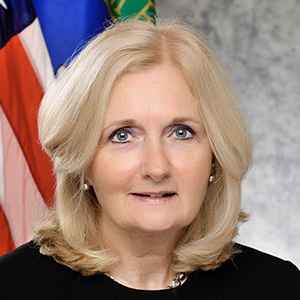
Madelyn R. Creedon
Keynote Speaker

Madelyn R. Creedon

Research Professor, George Washington University Elliott School of International Affairs
Profile

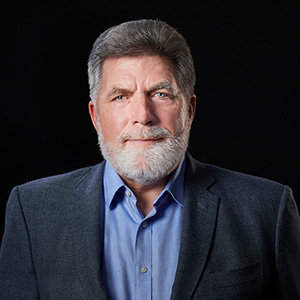
The Honorable Madelyn R. Creedon is a national security expert who served as Principal Deputy Administrator of the National Nuclear Security Administration (2014–2017) and Assistant Secretary of Defense for Global Strategic Affairs (2011–2014), overseeing policy on nuclear security, countering weapons of mass destruction, space, missile defense, and cybersecurity. She also spent many years as counsel to the Senate Armed Services Committee, focusing on strategic forces, threat reduction, and nuclear nonproliferation. After retiring from federal service in 2017, she founded Green Marble Group, LLC, and serves on national security advisory boards. She is a research professor at George Washington University’s Elliott School of International Affairs and chaired the 2023 Congressional Commission on the Strategic Posture of the United States.
Brad Roberts
Panelist

Brad Roberts

Director, Center for Global Security Research at Lawrence Livermore National Laboratory

Profile

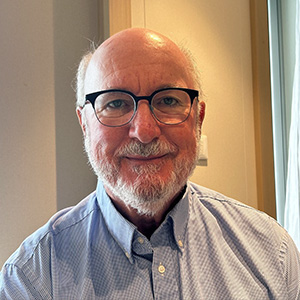
Dr. Brad Roberts has served as director of the Center for Global Security Research at Lawrence Livermore National Laboratory since 2015. As Deputy Assistant Secretary of Defense for Nuclear and Missile Defense Policy (2009–2013), he served as policy director for the Obama administration’s Nuclear Posture Review and Ballistic Missile Defense Review and led their implementation. His prior experience includes research positions at the Institute for Defense Analyses and the Center for Strategic and International Studies, as well as academic appointments at George Washington University and Stanford University.

Gregory Weaver
Panelist

Gregory Weaver

Principal, Strategy to Plans, LLC

Profile

As an independent consultant specializing in U.S. nuclear, deterrence, space, and arms control policy, strategy, and plans, Mr. Gregory Weaver serves as the principal, Strategy to Plans, LLC. Previously he served as Deputy Director for Strategic Stability on the Joint Staff (2015–2022), Principal Director for Nuclear and Missile Defense Policy in the Office of the Secretary of Defense (2013–2015), and Deputy J5 at U.S. Strategic Command (2011–2013). He also served as senior advisor to the Congressional Strategic Posture Commission (2022–2023) and as a consultant to NATO on arms control (2022–2023). His earlier experience includes managing defense analysis teams at SAIC and advising members of Congress on defense policy.

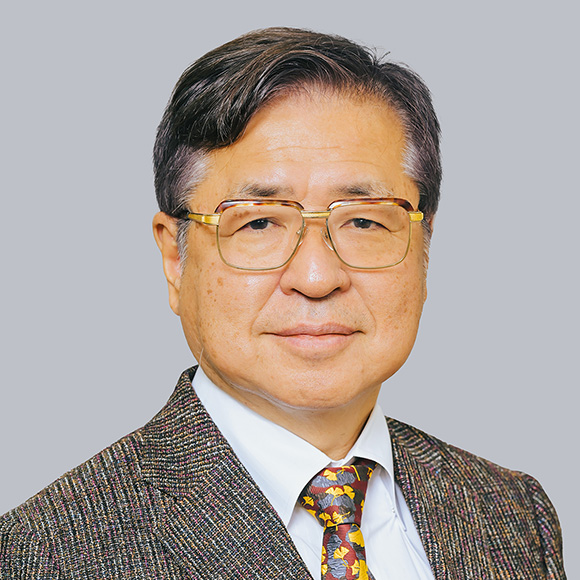
Nobukatsu Kanehara
Panelist

Nobukatsu Kanehara

Executive Director, The Sasakawa Peace Foundation

Profile

Executive Director of the Sasakawa Peace Foundation and a professor at Reitaku University. He served as Assistant Chief Cabinet Secretary to Prime Minister Shinzo Abe from 2012 to 2019. In 2013, he became the inaugural Deputy Secretary-General of the National Security Secretariat, a role which he held until he retired from government service in 2019. He also Served as Deputy Director of the Cabinet Intelligence and Research Office. From 2020 to March 2025, he served as a professor at Doshisha University. Mr. Kanehara’s role in the Cabinet built on a distinguished career at the Ministry of Foreign Affairs, where he served in several notable positions, including Director-General of the Bureau of International Law, Deputy Director-General of the Foreign Policy Bureau, Ambassador in charge of the United Nations and Human Rights. He served abroad as Deputy Chief of Mission in Seoul, Republic of Korea, and as Political Minister at the Embassy of Japan in Washington. He was decorated by the president of the Republic of France with l’Ordre de la Legion d’Honneur.

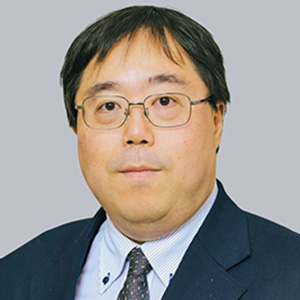
Tomohisa Takei
Panelist

Tomohisa Takei

Senior Fellow, The Sasakawa Peace Foundation

Profile

Admiral Takei retired from active duty in December 2016 after having served for two years as the 32nd Chief of Staff of the JMSDF. Prior to this post, Admiral Takei served as the Commandant, JMSDF Yokosuka District (2012-2014); Vice Chief of Staff, JMSDF (2011-2012); Commandant, JMSDF Ominato District (2010-2011); Director, the MSO Operations and Plans Department (N3/N5) (2008-2010); Chief of Staff, Kure District (2007-2008); Director, the C4I Systems Department (J6), Joint Staff Office (2006-2007), among others.

Junichi Fukuda
Moderator

Junichi Fukuda

Senior Research Fellow, The Sasakawa Peace Foundation

Profile

After graduating from Aoyama Gakuin University with a degree in international politics, Fukuda earned a master’s degree in international relations at the University of Tokyo’s Graduate School of Arts and Sciences. He withdrew from the doctoral program at the same institution after completing the coursework. He has worked as a Research and Analysis Specialist (covering U.S. security policy) in the Intelligence and Analysis Service at the Ministry of Foreign Affairs, as a research Fellow at the Institute for International Policy Studies (currently the Nakasone Peace Institute), and as a lecturer at the Hosei University, Graduate School of Law. He had also served as a visiting research fellow at the Air Command and Staff College, JASDF.

Latest Events

pagetop