TBA
Speakers
James H. Bergeron
Non-Resident Senior Fellow, Center for Maritime Strategy
| 10:00-10:05 JST | Opening remarks
Nobukatsu Kanehara |
| 10:05-10:15 JST | Presentation of NATO-IP4 recommendations from a NATO and Indo-Pacific allies' perspective
Speakers : |
| 10:15-11:05 JST | Panel Discussion “Strategic Convergence Between the Euro-Atlantic and Indo-Pacific” , Q & A Speakers : |
| 11:05-11:55 JST | Panel Discussion “Maritime Security and Allied Operations” , Q & A Speakers : |
| 11:55-12:00 JST | Concluding remarks
Liselotte Odgaard |
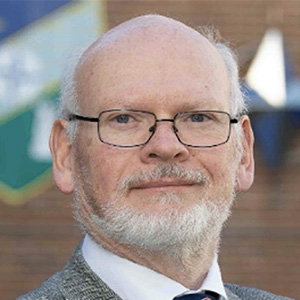
Non-Resident Senior Fellow, Center for Maritime Strategy
TBA
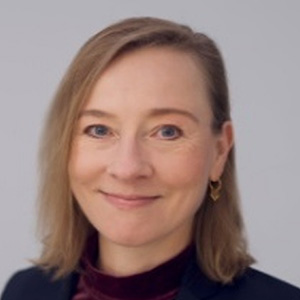
Senior Fellow, Hudson Institute
Liselotte Odgaard is a senior fellow at Hudson Institute. Her work focuses on geopolitical, military-strategic, and institutional aspects of great power relations with a particular focus on China, Russia, and the United States, as well as the implications of great power dynamics for medium and small powers in regions such as the Arctic, the Indo-Pacific, and Europe. Dr. Odgaard has been a visiting scholar at institutions such as Harvard University, the Woodrow Wilson International Center for Scholars, and the Norwegian Nobel Institute. She is the author of numerous monographs, books, peer-reviewed articles, and research reports, and she is a frequent commentator in the media. Recent publications include “How We Turn the Northern Sea Route into an Advantage” in RealClearDefense and Closing the Arctic Gaps: NATO Allies and Partners Can Protect Their Homelands by Updating Their Defense Force Postures, a Hudson Institute report cowritten with David Byrd, Bryan Clark, Shane Dennin, Zane Rivers, and Timothy A. Walton.
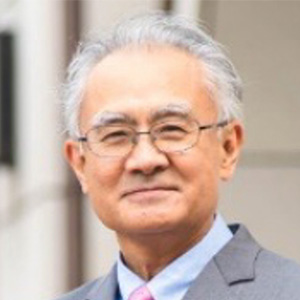
Director, Resona Research Institute
Born in Hiroshima in 1957, Ambassador Ishii graduated from the University of Tokyo and joined the Ministry of Foreign Affairs (MOFA) in 1980. His posts in Tokyo include Director for Policy Planning, Special Assistant to Foreign Minster, Director General for Global Issues and Legal Advisor.
His overseas experience covers Washington DC, where he served twice, London, Belgium and NATO as the Ambassador. His last post was in Jakarta that lasted for almost 4 years.
He has frequently participated in international seminars and symposium and is well known for his policy planning insight as well as his long-term experience in working with partners in ASEAN countries. Since retiring from MOFA in January 2021, he has taken on various roles, including serving as a Director at the Resona Research Institute.
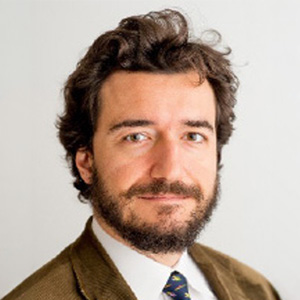
Director of the EU-Asia Project at the European University Institute
Dr Pugliese is Director of the EU-Asia Project at the European University Institute. He specializes in the international politics of the Asia-Pacific with a focus on Japan, China and the United States. He has presented and published on academic, policy-oriented and commercial themes, including in International Affairs, The Australian Journal of International Affairs, Pacific Affairs, The Pacific Review. He is a regular contributor to Asia Maior, Italy’s leading journal on contemporary Asian affairs, and co-author of Sino-Japanese Power Politics: Might, Money and Minds (Palgrave MacMillan, 2017, also available in Korean). In 2023, he was awarded the Nakasone Incentive Award for his research on Japanese diplomacy.
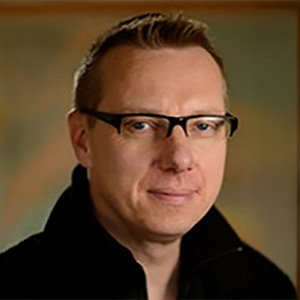
Associate Professor, The University of Sydney
Dr Thomas Wilkins is an Associate Professor in International Security at the University of Sydney. He also holds senior fellowships at the Japan Forum for International Relations (JFIR), The Pacific Forum and Indo-Pacific Studies Centre (IPSC), and previously, at the Australian Strategic Policy Institute (ASPI) and Japan Institute for International Affairs (JIIA). His academic and policy research focuses on Indo-Pacific security affairs, alliances and Japan-Australia relations. He is author of the monographs Security in Asia-Pacific: The Dynamics of Alignment (2019) and Strategic Minilateralism in the Indo-Pacific (2025) and numerous peer-reviewed articles in journals such as Contemporary Security Policy, Review of International Studies and The Pacific Review. He has also authored over 80 Policy Reports or commentaries for think tanks, including with his current affiliations and previous employers above. He presently serves as Associate Editor for the academic journals International Relations of the Asia-Pacific and the Australian Journal of International Affairs. He has been a Visiting Scholar or Researcher at the University of Tokyo, Keio University, the Graduate Research Institute for Policy Studies (GRIPS) and the University of Hong Kong. He gained his BA, MA and PhD from the University of Birmingham, and MPhil from the University of Sydney.
Adjunct Professor, National Graduate Institute for Policy Studies (GRIPS)
Policy Simulation, Security Studies, European History, Peacebuilding
As the Vice President for Academic Affairs, he oversaw research and education of the National Institute for Defense Studies(NIDS). After retiring from NIDS, he assumed a post of Specially Appointed Professor at the Graduate School of Tokyo University of Foreign Studies. Following his retirement in 2026, he has been teaching as an adjunct professor at GRIPS and the International University of Japan. He also serves as a visiting senior research fellow at the Research Center for Advanced Science and Technology (RCAST) and Graduate School of Public Policy and Collaborative Research (GraSPP) at the University of Tokyo.
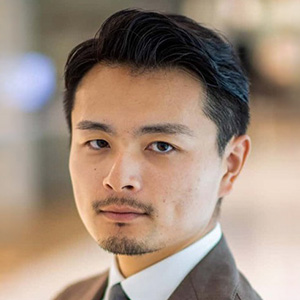
Senior Fellow, Japan Chair, Hudson Institute
Masashi Murano is a senior fellow in the Japan Chair at Hudson Institute. He specializes in U.S.–Japan defense cooperation, nuclear and conventional deterrence, and the future force design of the Japan Self-Defense Forces. His research uses wargaming and operational analysis to assess Japan’s defense posture and allied operational concepts in the Indo-Pacific.

Commander, Military Strategic Headquarters, UK Ministry of Defence
TBA

Commander, Royal Danish Navy
Sune Lund is a commander in the Royal Danish Navy, currently stationed in the International Military Staff at NATO Headquarters. Besides numerous positions afloat, including in the Arctic Squadron, air defense frigates, and taking command of a patrol vessel, Commander Lund has worked both at the political level and the strategic-operational level of the Danish armed forces. In addition to his naval education at the Danish Naval Academy and the master’s program at the Danish National Defense College, he received his bachelor’s degree in business administration from Staffordshire University in the UK, as well as a master’s degree in international relations from the American Military University in the US.
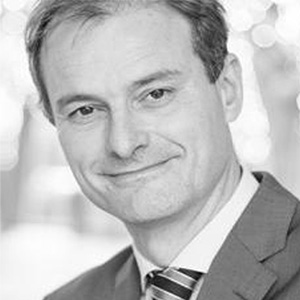
Chief Executive Officer, Odense Maritime Technology
Kåre Groes Christiansen is the CEO of Odense Maritime Technology (OMT) in Denmark. OMT designs commercial and naval ships, as well as shipyards. OMT has been involved in defense programs in countries including Denmark, the United States, Canada, the United Kingdom, Australia, and Singapore. Christiansen holds a Ph.D. from the Technical University of Denmark and was a visiting scholar at the University of Tokyo.
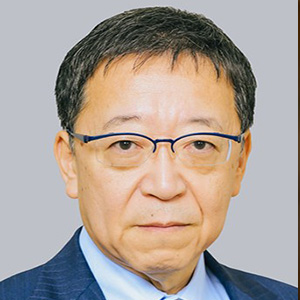
Senior Fellow, Sasakawa Peace Foundation
Tsuneo “Nabe” Watanabe is a senior fellow of the Sasakawa Peace Foundation, an independent policy research organization in Tokyo. In October 2016, Watanabe joined the Sasakawa Peace Foundation after serving a senior fellow and a director of foreign & security policy research at the Tokyo Foundation in 2009 to 2016. He served a senior fellow at the Mitsui Global Strategic Studies Institute in Tokyo in 2005 to 2009. In 1995, Watanabe joined Center for Strategic & International Studies (CSIS) in Washington, D.C. He served a visiting research scholar, research associate, fellow and senior fellow until 2005. He is currently adjunct fellow of the CSIS.
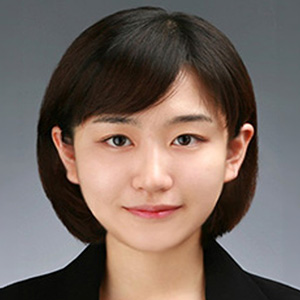
Research Fellow, Sasakawa Peace Foundation
Shinae Lee received a PhD in Public Policy from the University of Tokyo in 2022. She holds an MA in international studies from Seoul National University and a BA in political science from Ewha Womans University. She was previously a researcher at the Korea Institute for International Economic Policy and now serves as a research fellow in the Security Group, Sasakawa Peace Foundation. She specializes in strategic communications of the second Abe administration, Japan’s foreign and security policy, and Japan-Korea relations.