Peacebuilding Program Seminars

Beyond Prejudice: Understanding Differences, Learning Together,
Creating Harmony

Connecting Indonesia’s Cross-Cultural Religious Literacy (CCRL)—a pathway to interfaith dialogue and collaboration—with multicultural coexistence in Japan

Organizer: The Sasakawa Peace Foundation

 
What does it take for people from different religious and cultural backgrounds to address shared challenges while respecting one another’s differences? This symposium introduces Cross-Cultural Religious Literacy (CCRL), an approach practiced in Indonesia, and explores its relevance to multicultural coexistence and education in Japan.

In collaboration with the Leimena Institute, the Sasakawa Peace Foundation is carrying out the *Reconciliation and Religious Education in Post-Conflict Areas* project in Indonesia’s Maluku Province. As part of the project, CCRL encourages secondary school teachers to learn about religions other than their own and to share what they have learned with students through the subjects they teach. In areas where Muslim and Christian communities became geographically separated after conflict, this learning aims to foster mutual understanding and reconciliation between the communities and to help overcome prejudice and mistrust among future generations.

From Japan, the symposium will share examples of support for long-term foreign residents and efforts to promote multicultural coexistence in Kobe, as well as exchanges between the Muslim community and local residents in Shizuoka. Rather than equating the situations in Indonesia and Japan or applying CCRL in Japan as-is, the discussion will consider how its underlying approaches—understanding others from their own perspectives and creating opportunities for people to meet and work together—can be applied in the Japanese context.

Four teachers participating in the training program and visiting Japan will also introduce and perform a song they co-created around the theme of peace. When people from different religious backgrounds create and perform music together, it can make dialogue and collaboration tangible and serve as an educational practice that brings learning to students. The symposium will offer an opportunity to learn from experiences in both Indonesia and Japan and consider ways to foster mutual understanding and collaboration in schools and local communities.

*CCRL emphasizes three areas: understanding one’s own values (Personal), understanding others from their own perspectives (Comparative), and identifying ways to collaborate with people of different religions and beliefs (Collaborative). It also draws on the Contact Hypothesis: the idea that meaningful contact between people from different groups can deepen mutual understanding and reduce prejudice. CCRL therefore goes beyond learning about religions. Through dialogue and shared activities, it seeks to encourage people to respect their differences while working together on common challenges.*

Registration

This seminar will be held on-site only.
If you wish to participate, please register from this page by 12:00 on Thursday, November 5 (JST).
Please note that registration will close once the venue reaches full capacity.

*When registering, please make sure to enter your email address correctly.

*After registration, you will receive a temporary registration confirmation email. Please click the registration completion link in the email within 24 hours to finalize your registration.

*If you do not receive the email, please check your spam or junk mail folder.

*The information you provide will be used for future invitations to seminars and lectures hosted or supported by SPF.
Contact
Peacebuilding Program, Sasakawa Peace Foundation
E-mail: peacebuilding@spf.or.jp
Tel: +81-3-5157-5181

Media Inquiries:
Public Relations Division
E-mail: spfpr@spf.or.jp
Tel: +81-3-5157-5431
*For members of the media who plan to record video, please contact PR in advance.

Program

16:00-16:05 JST Opening Remarks
Dr. Kayashima Nobuko,  Executive Director, Sasakawa Peace Foundation
16:05-16:15 JST Explanation of Purpose
Fujimoto Jin, Researcher, Peacebuilding Program,  Sasakawa Peace Foundation
16:15-16:35 JST Keynote Address | What Is CCRL?
Learning and Collaboration Across Religious and Cultural Differences

Matius Ho, Executive Director, Leimena Institute
16:35–16:45 JST Report from the Field |  Peacebuilding Initiatives by the Maluku Provincial Government
Director of the Maluku Provincial Education and Culture Office
16:45-17:00 JST Song Presentation and Performance
Expressing Reconciliation and Coexistence Through Music
Four Teacher Participants from Maluku Province
17:00-17:20 JST Practices of Multicultural Coexistence in Japan | Supporting Long-Term Foreign Residents and Promoting Multicultural Coexistence in Kobe
Seong-Gil Kim (Chairperson, Kobe Foreign Residents Assistance Center (KFC), a Specified Nonprofit Corporation)
17:20-17:40 JST Practices of Multicultural Coexistence in Japan | Shizuoka’s Muslim Community and Local Society
Miwa Asadi (Secretary General, Shizuoka Muslim Association)
17:40-17:55 JST Plenary Discussion and Q&A
18:00 JST Closing
*The event program is subject to change.

Speakers

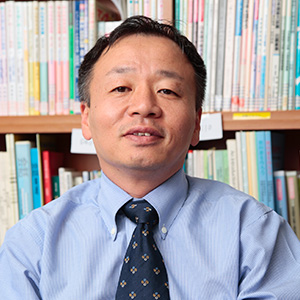
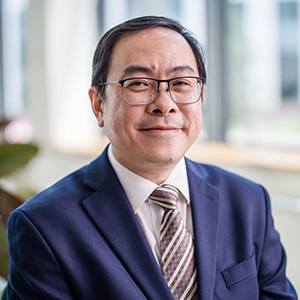
Matius Ho
Panelist

Matius Ho

Co-Founder and Executive Director, Leimena Institute
Profile

He has led the development of the Cross-Cultural Religious Literacy program, which aims to strengthen social cohesion in a diverse society. He has been invited to speak on religious literacy and social cohesion at various international forums across 20 countries. He authored the chapter on Indonesia in The Routledge Handbook of Religious Literacy, Pluralism, and Global Engagement (2021). Previously, he worked as a technology and management consultant at Accenture in Indonesia and Singapore. He holds bachelor's and master's degrees from the University of Wisconsin–Madison (USA). The Henry Martyn Institute: International Centre for Research, Interfaith Relations and Reconciliation (HMI) in Hyderabad, India—established in 1930—awarded him the honorary degree of Doctor of Divinity for his contributions towards building a peaceful and harmonious society.

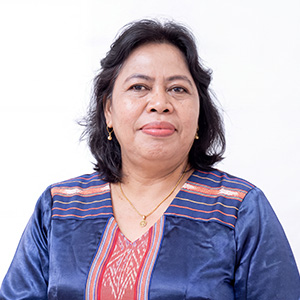
Dr. Sarlota Singerin
Panelist

Dr. Sarlota Singerin

Director of the Maluku Provincial Education and Culture Office

Profile

Dr. Sarlota Singerin is originally from the Maluku Province, Indonesia. She studied Physics Education at Pattimura University before earning a Master's degree in Educational Management from Satya Wacana Christian University and a Doctorate in Educational Management from Semarang State University. Specializing in educational administration and teacher development, she has been actively engaged in teaching and research at Pattimura University, while also contributing to school leadership training, educational reform, and human resource development. She has served in various professional capacities, including as an assessor for the National Accreditation Board for Higher Education (BAN-PT) and as a member of the Education Commission of the Maluku Protestant Church. Since 2026, she has been serving as Head of the Maluku Provincial Education Office. In recent years, she has also promoted educational approaches that respect religious diversity and has been collaborated for CCRL (Cross-Cultural Religious Literacy) initiatives organized by the Sasakawa Peace Foundation and the Leimena Institute.

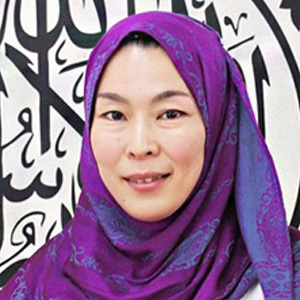
Miwa Asadi
Panelist

Miwa Asadi

Secretary General, Shizuoka Muslim Association

Profile

Miwa Asadi holds a master’s degree in public administration from Portland State University. While studying in the United States, she encountered Islam and chose to convert. After returning to Japan, she was involved from the outset in the establishment of the Shizuoka Muslim Association in 2010, together with her husband, Yasin, and others. In 2013, she founded i.SOLUTIONS to broaden the scope of Muslim-related initiatives and became its representative. She also serves as Shizuoka Prefecture’s Fujinokuni Tourism Promotion Advisor for Muslim affairs and has advised on halal accommodations and hospitality in tourism and food service. As Secretary General of the Shizuoka Muslim Association, she works to promote understanding of Islam and foster multicultural coexistence by connecting Muslims with local communities. She lives in Shizuoka City.

Seon-gil Kim
Panelist

Seon-gil Kim

Representative Director, Kobe Foreigners Friendship Center (KFC)

Profile

Born in Kobe’s Nagata Ward, Seon-gil Kim studied civil engineering at university and became involved in issues concerning the human rights and education of Zainichi Koreans while still a student. After graduating, he worked for a private company and began volunteering in a Kawasaki community with a large Zainichi Korean population while assigned to Tokyo. Around 1990, he joined the social welfare corporation Seikyusha, where he took part in negotiations with local governments concerning the rights of Zainichi Koreans. Following the Great Hanshin-Awaji Earthquake in 1995, he returned to Kobe and began supporting foreign residents and migrants. In 1997, he established the Kobe Foreigners Friendship Center (KFC). Its activities support foreign residents across generations, including a meal gathering for older adults, Japanese-language learning, programs for children, and multilingual care services. In 2015, KFC received the Japan Foundation Award for Global Citizenship.

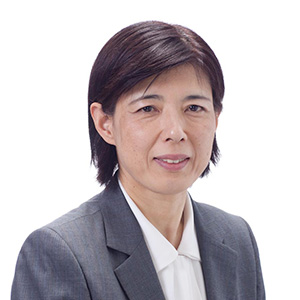
Nobuko Kayashima
Opening Remarks

Nobuko Kayashima

Executive Managing Director, Sasakawa Peace Foundation

Profile

After graduating from the Faculty of Letters at Kyoto University, she joined the Japan International Cooperation Agency (JICA), where she focused on educational development programs. Over the course of her career, she held several senior leadership positions, including Senior Vice President, Director General of the Human Development Department, Director of the JICA Research Institute, and Chief Representative of the Bangladesh Office. She pursued further studies at the UNESCO International Institute for Educational Planning and completed the DEA program at Paris V University, later earning a Ph.D. from the Graduate School of International Development at Nagoya University.
She has played a pivotal role in designing and implementing Japan's international education cooperation initiatives, while also contributing to academic research on educational development and the internationalization of higher education. Her work has been widely published in academic books and journals.
Since 2025, she has served as Executive Director of the Sasakawa Peace Foundation, where she leads strategic dialogue and exchange programs with Asia, supports peacebuilding efforts, and oversees Japan-China exchange initiatives.
She concurrently serves as Senior Research Advisor at the JICA Ogata Sadako Research Institute for Peace and Development, Director of the Honda Foundation, Director of the Japan Educational Exchanges and Services, Director of Care International Japan, and Councilor of the Broadcast Program International Exchange Center, among others.

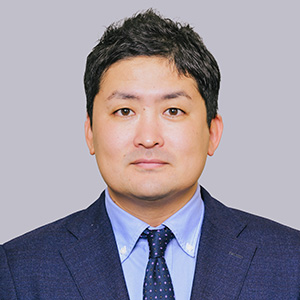
Jin Fujimoto
MODERATOR

Jin Fujimoto

Program Officer/Researcher, Peacebuilding Program, Sasakawa Peace Foundation

Profile

Jin Fujimoto specializes in contemporary Indonesian studies, focusing on religion and social issues in Indonesia, particularly interfaith dialogue, religious extremism, public diplomacy, and customary law (adat). After graduating from Meiji University’s School of Political Science and Economics, he completed a master’s program at the Center for Religious and Cross-cultural Studies (CRCS), Universitas Gadjah Mada. He has worked as a journalist for the Jakarta Shimbun, a Japanese-language newspaper in Indonesia, as well as at the Japan Foundation Jakarta Japanese Cultural Center, an international cooperation NGO, and the Japan International Cooperation Center (JICE). He joined the Sasakawa Peace Foundation in 2024. He currently works on the “Reconciliation and Religious Education in Former Conflict-Affected Areas” program and an initiative on community mediation in Indonesia’s Papua region.

Latest Events

pagetop