Peacebuilding Program Seminars
International Symposium on

Women’s Leadership for Peace and Security

Organized by: Sasakawa Peace Foundation and Georgetown Institute for Women, Peace and Security
 
The indispensable contributions of women to the cessation of armed conflict and sustainable peace have been demonstrated repeatedly across history, including in Northern Ireland and Liberia. This historical experineces were elevated to a global policy priority through the adoption of United Nations Security Council Resolution 1325 in October 2000, marking the culmination of decades of international advocacy since the 1995 Beijing World Conference on Women. Together with nine subsequent resolutions, the Women, Peace and Security (WPS) Agenda is grounded in robust theoretical and empirical evidence—such as the demonstrated correlation between women’s participation and the durability of peace agreements, and the association between gender equality and reduced risks of conflict relapse. The Agenda has been propelled forward by diverse actors, including the United Nations, Member States, and civil society organizations, resulting in high level diplomatic engagement, the formulation of national and regional action plans, and on the ground implementation in conflict affected settings.

In peace processes, following earlier milestones, women negotiators and leaders in Colombia and the Philippines played decisive roles in concluding comprehensive peace agreements. Their engagement has infused peace processes—traditionally dominated by state and military actors—with a more horizontal, inclusive approach to decision making. At a time when women and children constitute more than 70 percent of conflict affected populations, these leaders have brought the perspectives of victims and communities into security policy spaces, enabling a more accurate assessment of the human costs of conflict and forging pragmatic pathways toward lasting peace.

Yet twenty five years after the adoption of Resolution 1325, the world continues to grapple with escalating conflicts. Amid intensified geopolitical rivalry, rapid shifts in the international order, and unprecedented militarization, the core vision of the WPS Agenda—achieving sustainable peace through the meaningful participation of women in peace and security decision making—is under severe strain. Compounding these challenges is a growing global backlash against the principle of gender equality itself, often intertwined with the resurgence of authoritarian governance.

Leadership studies have long identified qualities frequently exhibited by women in political and organizational leadership—such as empathy, care oriented leadership, and a commitment to democratic values—while recognizing that these attributes can be shared across genders. The notable success of Women heads of states of government in navigating the COVID 19 crisis remains a vivid illustration of these strengths. Even within increasingly complex and volatile security environments, women leaders across the world continue to demonstrate these attributes. In Japan, where its first female prime minister was elected for the first time in history, important questions arise regarding the organizational and cultural barriers confronting women leaders as they assume significant responsibilities, and how their distinct leadership may contribute to global stability and peace in the years ahead.

________________________________________
Key Questions
  1. What specific leadership traits and strategies have characterized the historical successes of women leaders in peace negotiations?
  2. In what ways have women leaders challenged, reshaped, or broadened conventional understandings of “security” within the WPS framework?
  3. How have women’s movements and coalitions supported peacebuilding processes and amplified women’s leadership?
  4. Which institutional and structural conditions have proven conducive to effective participation of women as leaders in peacebuilding and security? What are the best practices for enabling women to enter into larger leadership roles in these areas? 
  5. What are the best strategies for dealing with the existing cultural and sociopolitical barriers—including the dominant hypermasculine global leadership culture—that face women in prominent leadership positions in their efforts to advance peace and security?
Registration

This seminar will be held on-site only.
If you wish to participate, please register from this page by 10:00 on Wednesday, March 4 (JST).
Please note that registration will close once the venue reaches full capacity.

*When registering, please make sure to enter your email address correctly.

*After registration, you will receive a temporary registration confirmation email. Please click the registration completion link in the email within 24 hours to finalize your registration.

*If you do not receive the email, please check your spam or junk mail folder.

*The information you provide will be used for future invitations to seminars and lectures hosted or supported by SPF.
Contact
Peacebuilding Program, Sasakawa Peace Foundation
E-mail: peacebuilding@spf.or.jp
Tel: +81-3-5157-5181

Media Inquiries:
Public Relations Division
E-mail: spfpr@spf.or.jp
Tel: +81-3-5157-5395
*For members of the media who plan to record video, please contact PR in advance.

Program

16:00-16:05 JST Opening Remark
Dr. Kayashima Nobuko
 Executive Director,
 The Sasakawa Peace Foundation
16:05-17:20 JST Session1: “Women’s Leadership in the Peace Process”
Speakers:
Dr. Monica McWilliams
 Negotiator and Signatory to the Belfast/
 Good Friday Agreement
Dr. Miriam Coronel-Ferrer
 Former Chairperson,
 Philippine Government Peace Panel
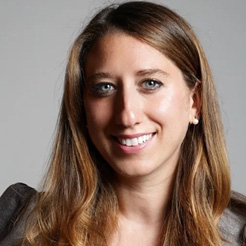
Dr. Rachael George
 Research Fellow,
 Georgetown Institute for Women, Peace and Security

Moderator:
Ms. Maho Nakayama
 Director and Senior Program Officer,
 Peacebuilding Support Group,
 The Sasakawa Peace Foundation
17:20-18:00 JST Session2: “Women’s Political Leadership in a Changing International Peace and Security Environment”
Speaker:
Ambassador Melanne Verveer
 Executive Director,
 Georgetown Institute of Women, Peace and Security

Interviewer:
Dr. Roya Akhavan
 Research Fellow,
 International Christian University /
 Principal, FemLead Consulting
18:00 JST Closing
*The event program is subject to change.

Speakers

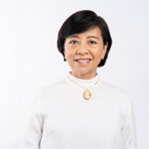
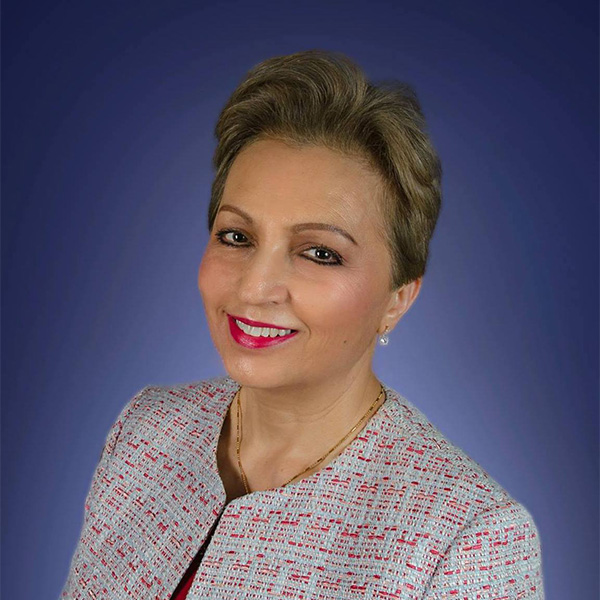
Dr. Nobuko Kayashima
Opening Remark

Dr. Nobuko Kayashima

Executive Director, Sasakawa Peace Foundation

Profile

Born in Kyoto in 1959, she graduated from the Faculty of Letters at Kyoto University and joined the Japan International Cooperation Agency (JICA), where she focused on educational development programs. Over the course of her career, she held several senior leadership positions, including Senior Vice President, Director General of the Human Development Department, Director of the JICA Research Institute, and Chief Representative of the Bangladesh Office. She pursued further studies at the UNESCO International Institute for Educational Planning and completed the DEA program at Paris V University, later earning a Ph.D. from the Graduate School of International Development at Nagoya University.
She has played a pivotal role in designing and implementing Japan’s international education cooperation initiatives, while also contributing to academic research on educational development and the internationalization of higher education. Her work has been widely published in academic books and journals.
Since 2025, she has served as Executive Director of the Sasakawa Peace Foundation, where she leads strategic dialogue and exchange programs with Asia, supports peacebuilding efforts, and oversees Japan-China exchange initiatives.
She concurrently serves as Senior Research Advisor at the JICA Ogata Sadako Research Institute for Peace and Development, Director of the Honda Foundation, Director of the Japan Educational Exchanges and Services, Director of Care International Japan, and Councilor of the Broadcast Program International Exchange Center, among others.

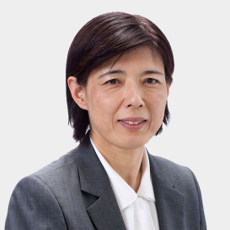
Dr. Monica McWilliams
Program1 speaker

Dr. Monica McWilliams

Negotiator and Signatory to the Belfast/Good Friday Agreement

Profile

Monica McWilliams is a signatory to the 1998 Good Friday Agreement, as leader of the Northern Ireland Women’s Coalition, a political party she co-founded to take part in the multi party peace negotiations. Following the Peace Agreement, she was elected to the Northern Ireland Legislative Assembly and later appointed Chief Commissioner of the Human Rights Commission where she drafted the advice on a Bill of Rights as required by the peace accord.
She currently serves on the Independent Reporting Commission for the disbandment of paramilitary groups in Northern Ireland as well as the Board of Operation Kenova, overseeing the investigation into offences by state and non-state actors during the thirty-year conflict. She is a patron of WAVE, the trauma centre for victims and survivors, and Politics in Action in Schools. Monica was chairperson of the INGO Interpeace and has worked with women leaders in a range of conflict societies from Colombia to Myanmar. She is Emeritus Professor at Ulster University where she published extensively on violence against women in its Transitional Justice Institute. She is Honorary Professor of Practice at Queen’s University, an alumnus of the University of Michigan and a member of the Royal Irish Academy. She is the recipient of the JF Kennedy Library ‘Profiles in Courage’ award and several honorary doctorates. Her memoir ‘Stand Up, Speak Out’, published in 2021, charts her activism on civil rights, women’s rights, peace, and equality.

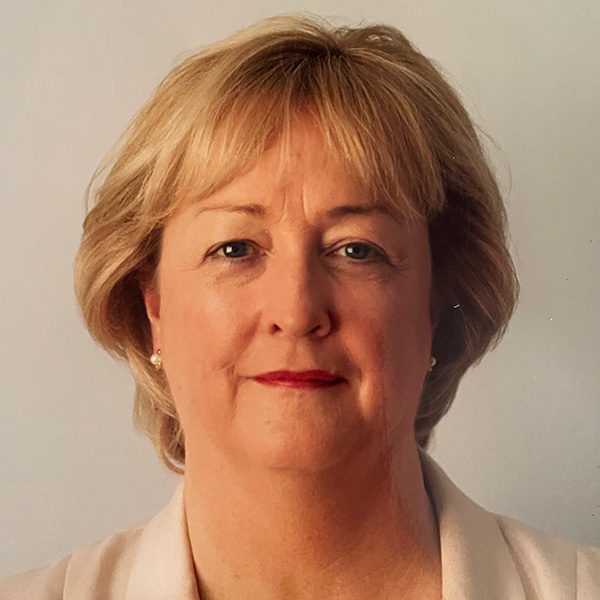
Dr. Miriam Coronel-Ferrer
Program1 speaker

Dr. Miriam Coronel-Ferrer

Former Chairperson, Philippine Government Peace Panel

Profile

Miriam Coronel Ferrer is a founding member of the Southeast Asian Women Peace Mediators. She was a member of the UN Standby Team of Mediators for three years where she did mediation support work for UN missions in countries like Afghanistan, Maldives, Iraq, and Georgia. Previously, she headed the government panel that negotiated and signed the 2014 Comprehensive Agreement on the Bangsamoro (CAB) with the Moro Islamic Liberation Front. In 2015, she received the Hilary Rodham Clinton Award for Advancing Women in Peace and Security.

A retired professor of politics at the University of the Philippines (UP), she once served as director of the Third World Studies Center and convener of UP’s Program on Peace, Democratization and Human Rights. She had also served as visiting professor in several Asian universities.

Currently, she sits as a member of the board of trustees of the International Crisis Group and Interpeace. She is a member of the advisory boards of the Global Network of Women Peacebuilders in New York, the Peace Treaty Initiative of the Institute for Integrated Transitions in Barcelona, and the Negotiations Strategies Institute at Harvard University.

Prof. Ferrer has published several books and academic journal articles on democratization, civil society, human rights and peace processes in the Philippines and Southeast Asia. She was founding co-chair of the Non-State Actors Working Group of the International Campaign to Ban Landmines from 1999-2004, and was one of 27 Filipinas among the 1,000 Women for the Nobel Peace Prize nominated in 2005.

An active peace advocate in her country, she co-led the civil society-initiated drafting of the National Action Plan (NAP) on UN Security Council Resolution 1325. The Philippine NAP was formally adopted by the government in March 2010.

As the chair of the government panel, Prof. Ferrer became the first woman in the world to sign as chief negotiator a major peace agreement with a non-state armed group. She continued in this capacity to oversee the CAB’s implementation until the end of the term of President Simeon Benigno Aquino III in June 2016.

Dr. Rachael George
Program1 speaker

Dr. Rachael George

Research Fellow, Georgetown Institute for Women, Peace and Security

Profile

Dr. Rachel A. George is a Research Fellow at the Georgetown Institute for Women, Peace and Security where she leads a research portfolio on women’s participation, development and peace. Previously, she served as Lecturer at Stanford University, a Lecturing Fellow at Duke University’s Sanford School of Public Policy and Visiting Assistant Professor at Duke Kunshan University. She was also Director for Education Content at the Council on Foreign Relations and a Research Fellow at the Overseas Development Institute (ODI) in London. She has worked with partners including the World Bank, the OECD, UNDP, UN Women, The UN Counterterrorism Executive Directorate, and others, and her work has been published in a variety of books and journals including in Foreign Policy, Just Security, The Washington Quarterly, and Human Rights Review. She holds a BA in Politics from Princeton University, an MA in Middle East Studies from Harvard University, and PhD in International Relations from the London School of Economics & Political Science.

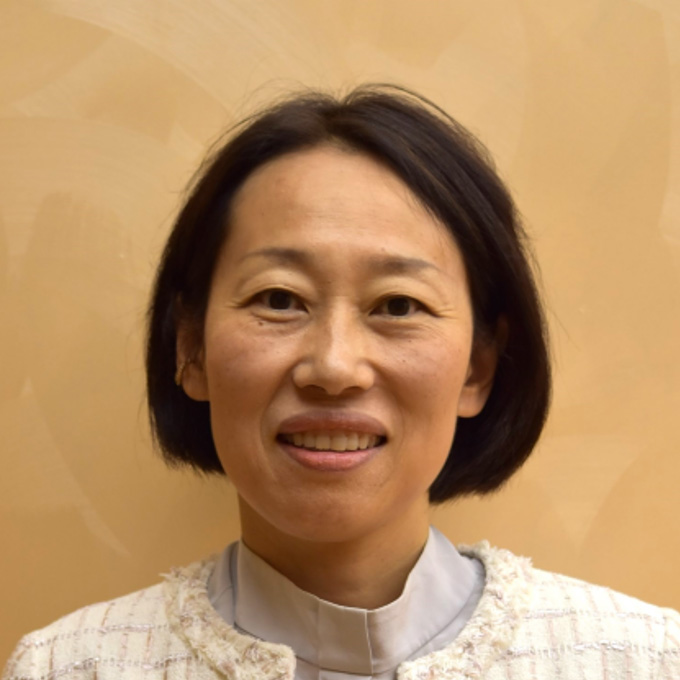
Ms. Maho Nakayama
Program1 Moderator

Ms. Maho Nakayama

Director and Senior Program Officer, Peacebuilding Program, Sasakawa Peace Foundation

Profile

Joined The Japan Foundation in 1996, gained experience in designing and managing programs for intellectual/arts exchange, and promoting Japanese studies abroad, with regional focus on Southeast and South Asia. From 2001-2005 served as an Assistant Director of the Japan Foundation Jakarta Cultural Center, and from 2007-2008 as an assistant to the President. Joined the Sasakawa Peace Foundation in 2008, and designed Foundation’s program for peace building and conflict resolution in Southern Thailand. After serving as Director of the Asia Peace Initiatives Department, she has served as Director of the Peacebuilding Program since 2022.

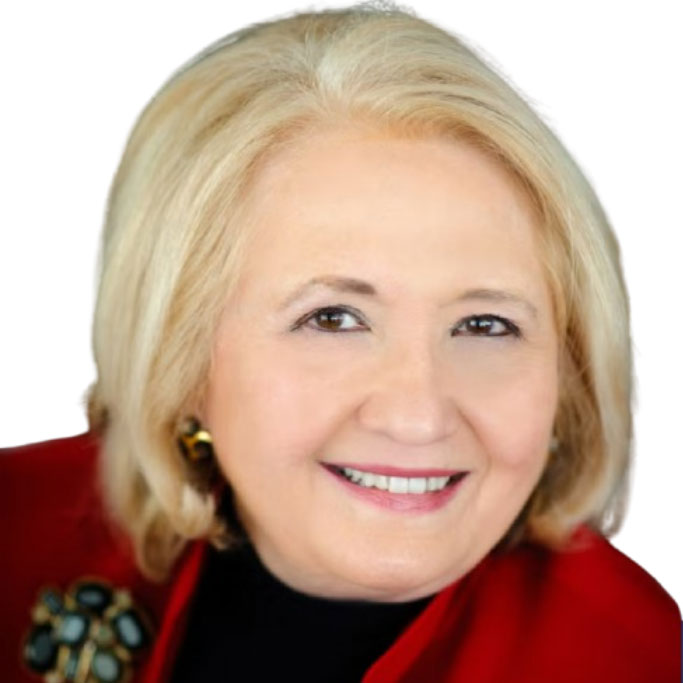
Ambassador Melanne Verveer
Program2 speaker

Ambassador Melanne Verveer

Executive Director, Georgetown Institute for Women, Peace and Security

Profile

A lifelong advocate for women's rights and empowerment, Ambassador Verveer served as Assistant to President Clinton and Chief of Staff to First Lady Hillary Clinton, with whom she co-founded Vital Voices Global Partnership. In 2009, President Obama appointed her as the first-ever U.S. Ambassador-at-Large for Global Women's Issues. In this role, she visited more than 60 countries to advance women's political and economic participation. She currently leads the Georgetown Institute, nurturing the next generation of global leaders.

Dr. Roya Akhavan
Program2 Interviewer

Dr. Roya Akhavan

Research Fellow, International Christian University / Principal, FemLead Consulting

Profile

Dr. Roya Akhavan is currently a Research Fellow at the Peace Research Institute, International Christian University. As Professor Emeritus of St. Cloud State University, she has a record of award-winning leadership in academic and corporate settings and widely cited research in national and international journals. Dr. Akhavan has lived and worked in four different cultures, Persian, American, Japanese, and Chinese. She is an author/speaker on world peace, gender equality, and spirituality in the 21st century. Her recent work includes two books, Peace for Our Planet: A New Approach (2017) and The Trumpet Blast: Removing the Veil from the Advent of the Promised One (2022). In 2023, she founded FemLead Consulting, a firm dedicated to advancing feminine leadership through cutting-edge research and training.

Latest Events

pagetop