Sasakawa Peace Foundation

日本語
  • About SPF
    • About Us
      • About Us
      • History
      • Program Policy and Five Priority Goals
      • Board Members
      • Diversity and Inclusion
      • Financial Position
      • Honorary Chair's Message Archive
      • Activities Before 2017
    • President's Message
    • Integrated Report
    • Access
    • Idea Submission
    • Careers
    • Contact Us
  • Experts
  • Programs
    • Japan-U.S. and Security Studies Unit
    • General Affairs and Networking Program
    • National Security and Japan-U.S. Program
    • Strategy and Deterrence Program
    • Asia and Middle East Unit
    • Strategic Dialogue and Exchange Program
    • Peacebuilding Program
    • Social Innovation Program
    • Sasakawa Japan-China Friendship Program
    • Ocean Policy Research Institute
    • Division of Ocean Vision and Action
    • Division of Island Nations
    • Scholarship Unit
    • Sasakawa Scholarship Program
  • Research & Analysis
    • Reports and Publications
    • Essays and Commentary
    • SPF Now Interviews
    • Videos
    • Podcasts
    • Browse by Regions
    • Regions
    • Americas
    • Northeast Asia
    • Southeast Asia
    • South Asia
    • Middle East
    • Oceania
    • Europe and Eurasia
    • Arctic
    • Africa
    • Satellite Sites
    • International Information Network Analysis
    • SPF China Observer
    • Asia Women Impact Fund
    • The OPRI Center of Island Studies
    • The Friends of WMU, Japan
    • SPF Insights into Japan–U.S. Relations
    • From the Oceans
    • Asia Peacebuilding Initiatives (APBI)
    • History of the Sasakawa Japan-China Friendship Program
      (Japanese language)
    • Japan-China Relations Data Graph (Japanese language)
    • Third Pole Project
  • News
    • News
    • Press Releases
    • SPF Newsletter
    • Media Coverage
  • Events
Social Innovation Program

Solving Social Issues Through Entrepreneurship Vol.10

Tofee Nuts: The Growth of a Cambodian Local Food Brand Fueled by Resilience

Written by Etsuko Ito, Program Officer, Social Innovation Program


March 23, 2026

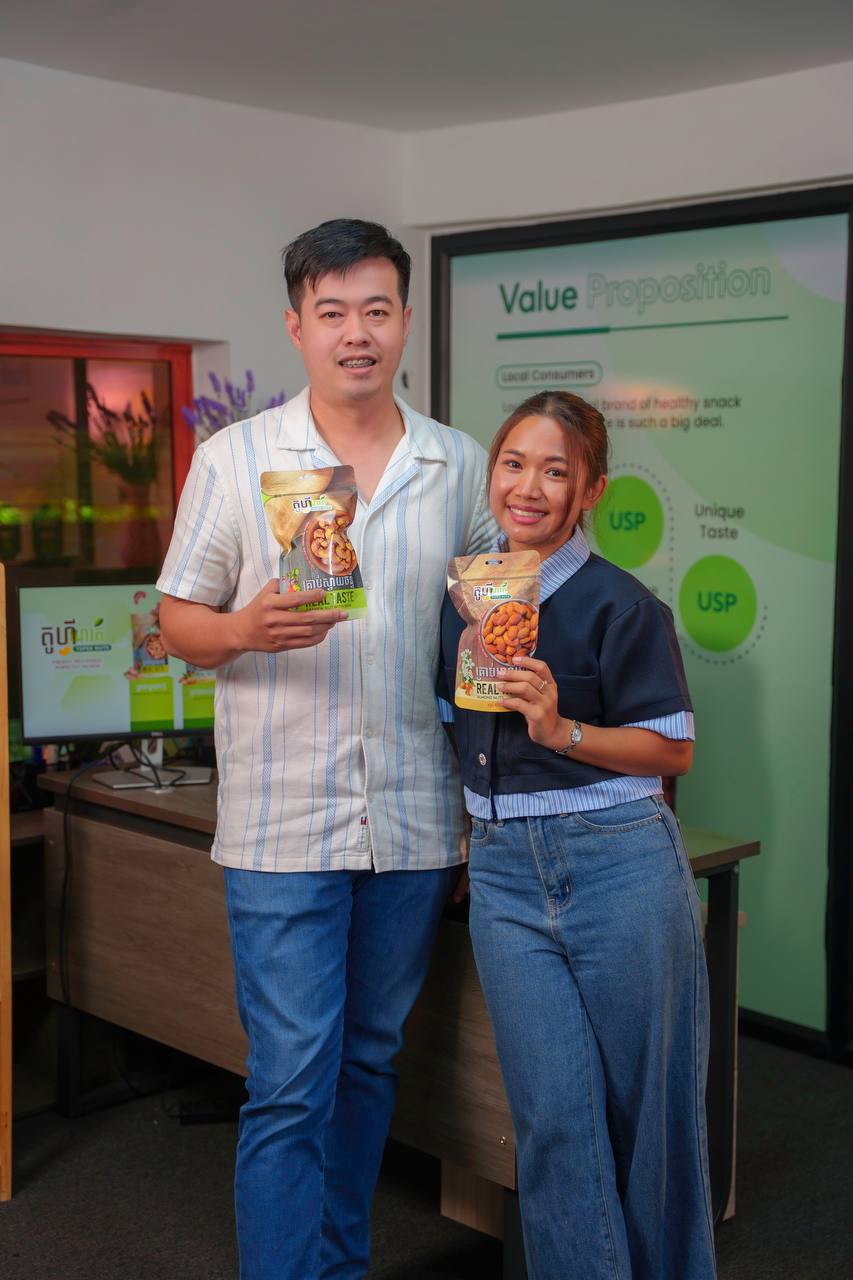
Mr. Tailim Heang and Ms. Chanthy Thun, co-founders of Khema Nutrinut Co., Ltd—known under the brand name Tofee Nuts (Photo: provided by Cnai)

Since 2022, the Sasakawa Peace Foundation has been operating the “Cnai Accelerator Program” in Cambodia. This program is modeled after the Santhit Accelerator Program, which we developed and rolled out jointly with a Myanmar-based venture capital firm, Emerging Markets Entrepreneurs (EME) in 2021. Both programs incorporate the incubation curriculum of Village Capital, a globally renowned early-stage venture capital firm. 
  
“Cnai” – meaning “innovation” in Khmer – is a program which incorporates a gender lens, and is committed to creating an equitable learning environment where female entrepreneurs can participate on equal footing with male counterparts. Each phase entails the selection of a cohort of entrepreneurs, who receive funding and guidance towards the expansion of their businesses with ongoing support being provided by program partners. 

 Since the end of 2024, the program has been in its third phase. In addition to our initial partnership with ADB Frontier, we have collaborated with other partners such as Khmer Enterprise, a Cambodian government agency, Harvest III, USAID funded project (second cohort only), and CAPRED (Cambodia–Australia Partnership for Resilient Economic Development). These partnerships have further enhanced the community building capacity and overall strength of the curriculum.

This time, we interviewed Tailim Heang and Chanthy Thun, co-founders of Khema Nutrinut Co., Ltd—known under the brand name Tofee Nuts—one of the finalists of the 3rd Cnai Accelerator Program. 

Founded in 2021, Tofee Nuts is a rapidly growing Cambodian startup that manufactures and sells processed foods, primarily cashew nuts produced in Cambodia. The company now works with more than 500 retail partners nationwide, including major Cambodian retail chains such as Makro, AEON, 7-Eleven, and Lucky Market, and has built a production capacity of 50 tons per year, positioning itself as one of the most dynamic players in Cambodia’s food industry. 

However, their journey has been far from easy. We spoke with them about the struggles that led them to entrepreneurship, the challenges of scaling the business, and—especially for Chanthy—the realities of building a company as a young female entrepreneur. 

―― What inspired you to establish Tofee Nuts, and what was the background behind its founding?

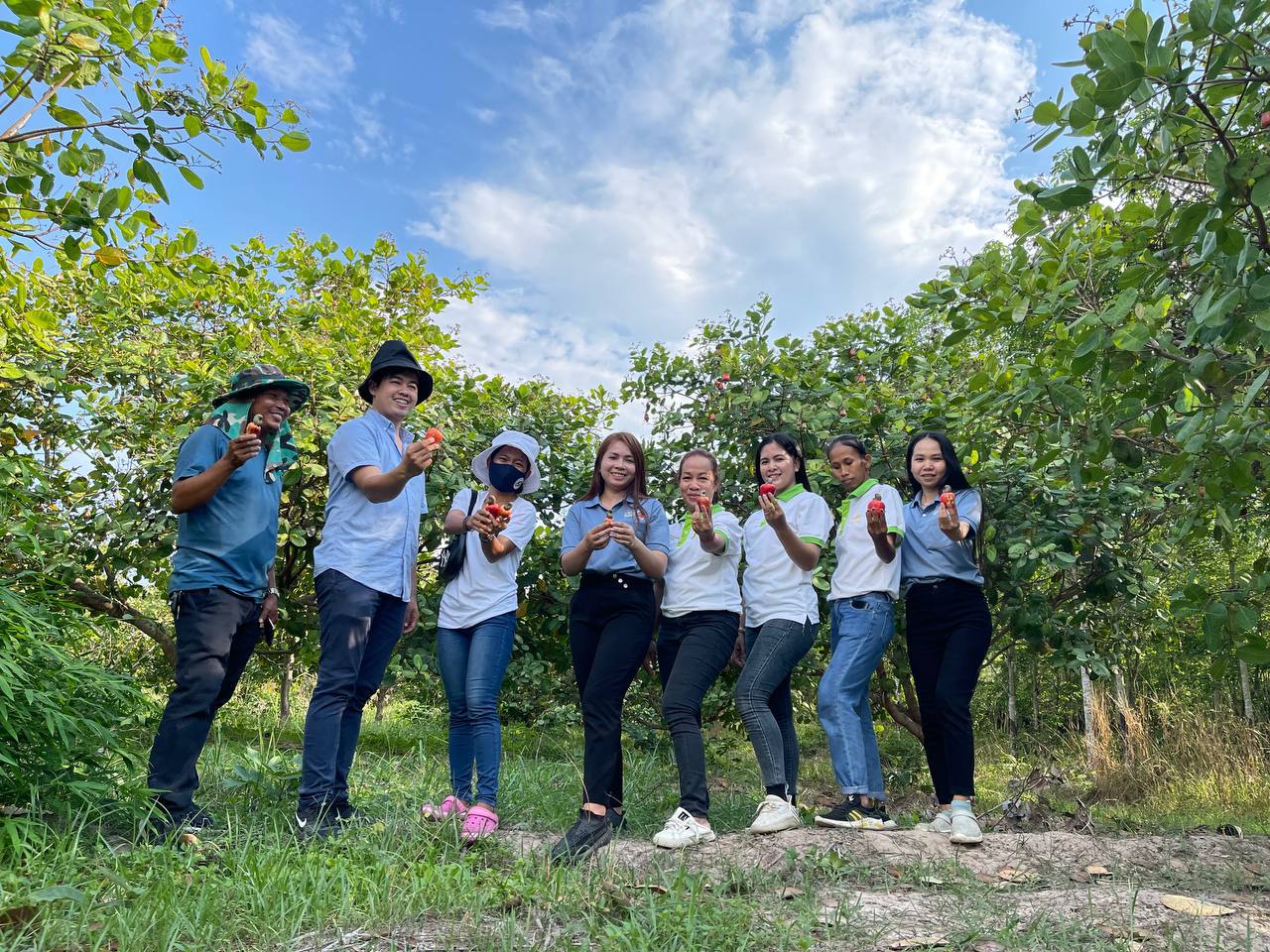
Cashew farm with local farmers (Photo: provided by Cnai Accelerator)

(Tailim) I studied marketing at a university in the Philippines and decided early on that I wanted to become an entrepreneur. My first business was selling Cambodian organic coconut oil. But because I lacked capital, I wasn’t able to invest in marketing, and at that time coconut oil was not widely used in Cambodia. As a result, the business didn’t take off. I then shifted toward food products and started selling snacks. Among them, cashew nuts showed the most potential.

Cambodia is the world’s second-largest producer of cashews after Côte d’Ivoire, yet 95% of its raw cashews are exported to Vietnam without being processed locally. 
I felt it was a major issue that, despite having the raw materials, we were not creating value within our own country. 

We experimented endlessly with flavors and packaging—chocolate, chili, garlic chili, and more. But maintaining sales over time was difficult, and ultimately we returned to a simple original flavor, which became our core product. 

(Chanthy) My career was originally in a very different sector—health and education. For more than ten years, I worked at an NGO supporting children living with HIV and other severe illnesses. It was meaningful work, but emotionally very difficult, especially as many children passed away each year. 

During COVID-19, when schools were closed, I used my hospitality background to open a café. It was then, through my cousin, that I met Tailim. When we realized that my family owned a cashew farm, we immediately found common ground and began discussing the potential of a cashew-based business. 

―― What challenges did you face in the early days?

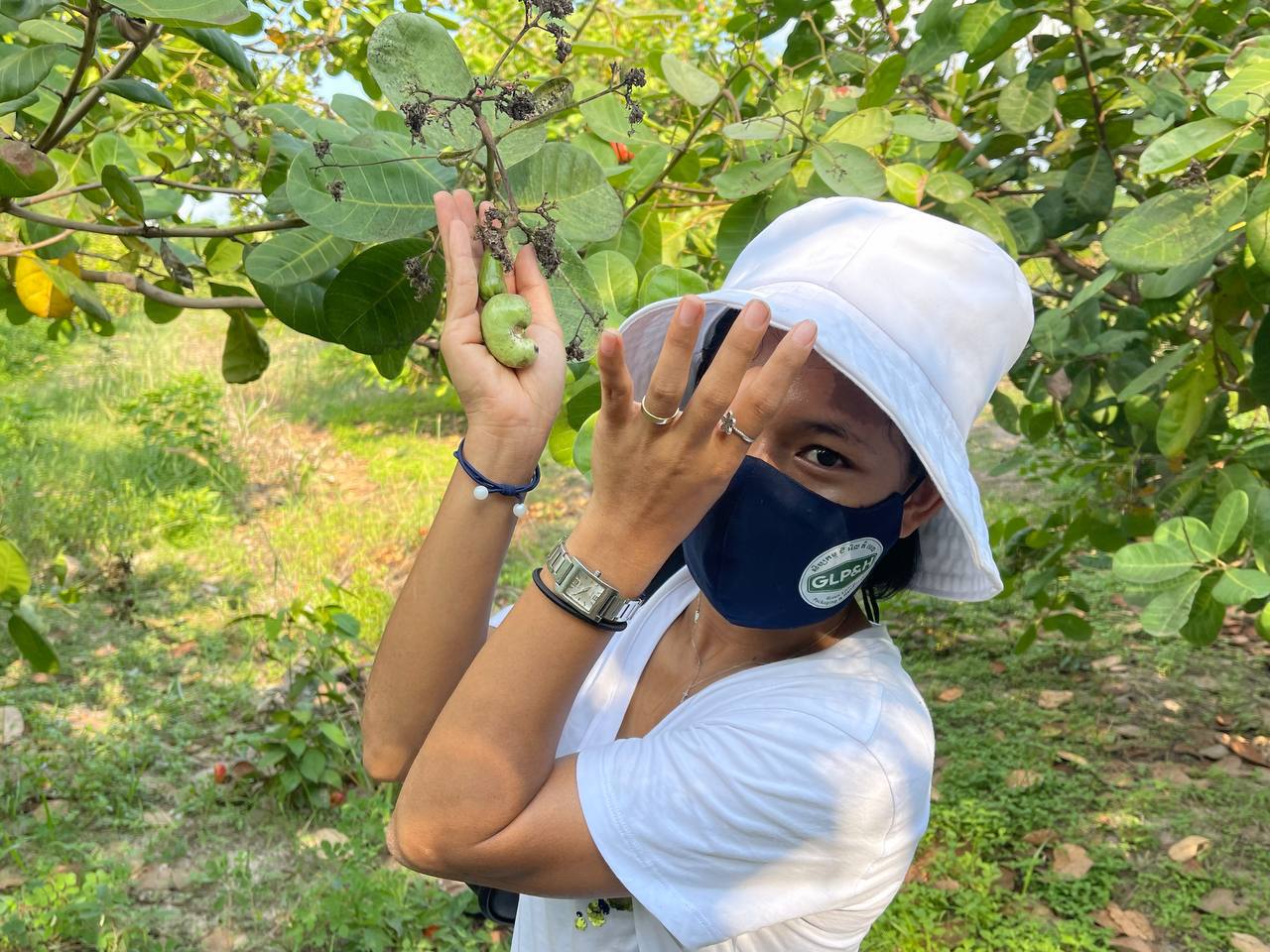
Cashew nuts produced at their contracted farm (Photo: provided by Cnai Accelerator)

(Chanthy) We didn’t have enough capital, so we had no choice but to reinvest each sale into developing the next product. Since we had no collateral, we couldn’t get a bank loan. My family also didn’t understand the business at first and encouraged me to return home. Looking back, those days were incredibly tough. 

Because we had absolutely no money, we took raw cashews home after work and shelled them by hand. The roasting process uses oil, so sometimes the skin on my face and hands became irritated or burned. We handled everything ourselves—packaging, sales, accounting, HR, seasoning, roasting, and delivery. 
Even so, I truly believe that those difficult times are what made our growth today possible. 

(Tailim) Cashew processing requires upfront capital because we need to purchase raw materials from farmers. But cash flow was tight, and in 2023, we had no choice but to close the business temporarily. Some of our customers asked, “Why are you shutting down when your products are so good?” That support encouraged us. 
We told ourselves, “We survived COVID—surely we can try again,” and in 2024, we restarted the business with our own savings. 

―― What led you to join the Cnai Accelerator Program, and what learnings left the strongest impression?

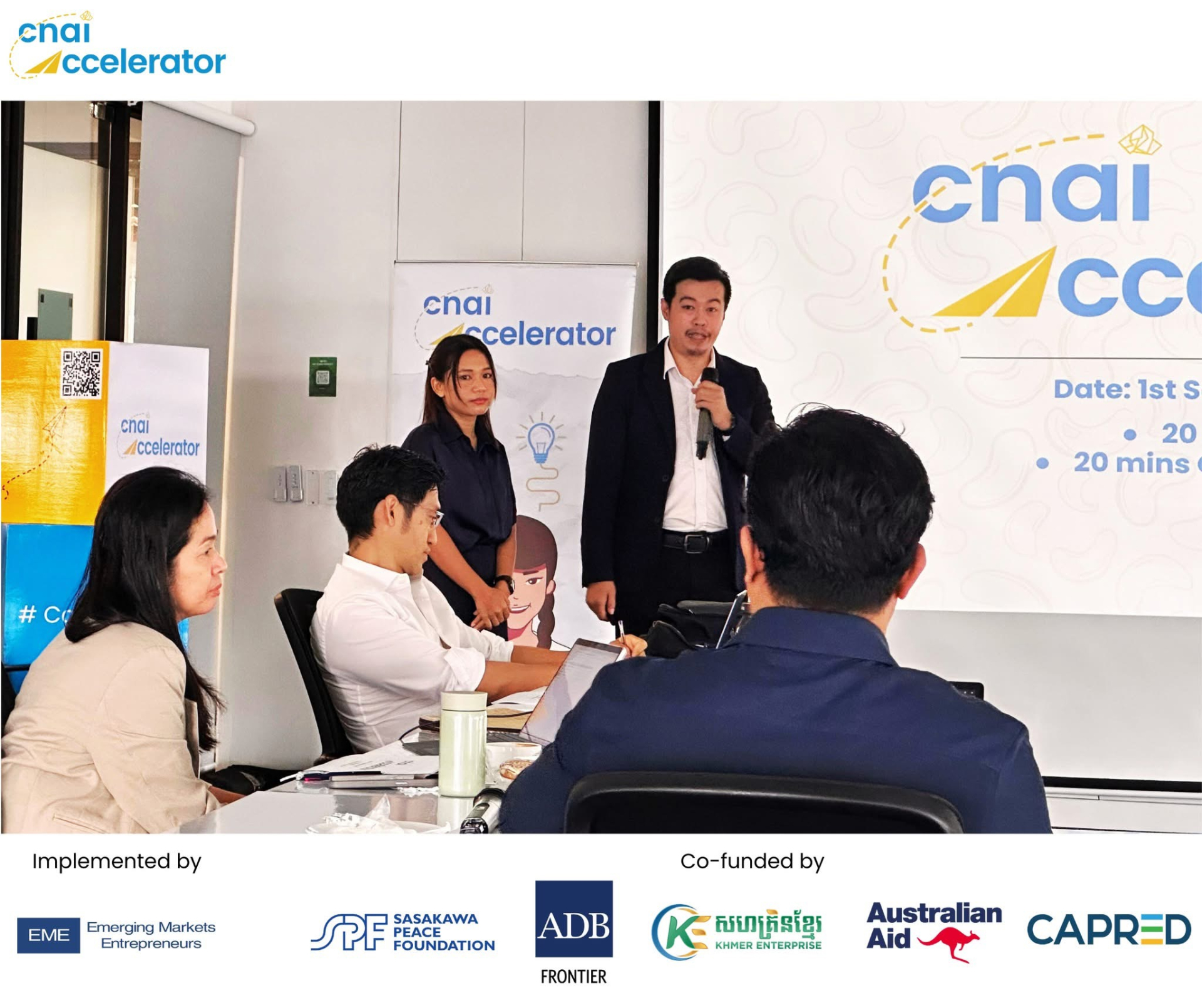
Pitching at the Cnai selection committee(Photo: provided by Cnai Accelerator)

(Tailim) After restarting the business in 2024, we applied to multiple accelerator programs to gain both knowledge and funding. We discovered Cnai through a Facebook post. Cnai turned out to be the most rigorous and impactful program we had ever joined. Until then, our focus had only been on “how to make and sell products.” 
But through the program, we learned essential elements such as corporate governance, marketing strategy, financial management, team building, and OKRs. 

(Chanthy) There were nights when we worked late into the evening on assignments. Cnai wasn’t just a program to obtain funding—it was a place where we grew as entrepreneurs. One mentor told us, “Your product is good, but your prices are too low. Believe in your value and raise the price.” 
We followed that advice, raised our prices, and rather than losing customers, our sales increased. 

We also learned a lot about becoming better managers. I used to expect performance equal to or greater than the salary paid and sometimes let frustration show when staff didn’t meet expectations. But that isn’t good management, and Cnai helped us grow beyond that. 

(Tailim)Our company is legally registered as Khema Nutrinut Co., Ltd., but we operate under the brand Tofee Nuts. We used to be called GLPH, but customers had trouble remembering the name and it didn’t clearly communicate our market positioning—even though the product quality was well-received. 

With Cnai’s support, we undertook a full rebranding to create a name that is memorable and appealing both to Khmer consumers and international markets. 
‘Tofee’ comes from Chanthy’s nickname. We intentionally use just one ‘f’ to reflect local linguistic preferences, and the final nine-letter brand name felt well-balanced and easy to remember.

―― Did you learn anything new about gender inclusion through Cnai?

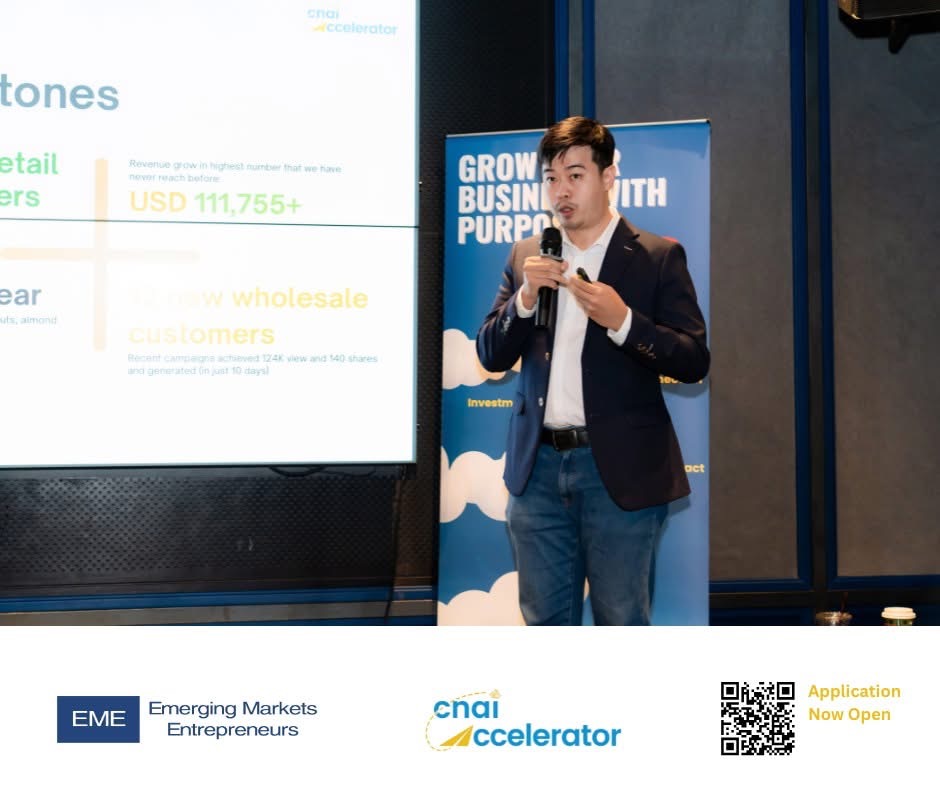
Tailim presenting at the closing ceremony of the Cnai Cohort 3 (Photo: provided by Cnai Accelerator)

(Chanthy) Yes. Through the program and the Japanese instructor’s sessions, we deepened our understanding of gender equality and developed new internal policies including; Clear restroom-use guidelines ; A workplace environment where staff feel safe and respected ; A rest space with snacks and coffee for women experiencing premenstrual discomfort.

We also employ people with diverse backgrounds such as returnees affected by border conflict with Thailand, youth who could not complete high school and a mother with a newborn child.  We want our workplace to be open, supportive, and a place where people can learn skills and grow. 

―― As a young female entrepreneur in Cambodia, have you faced challenges?

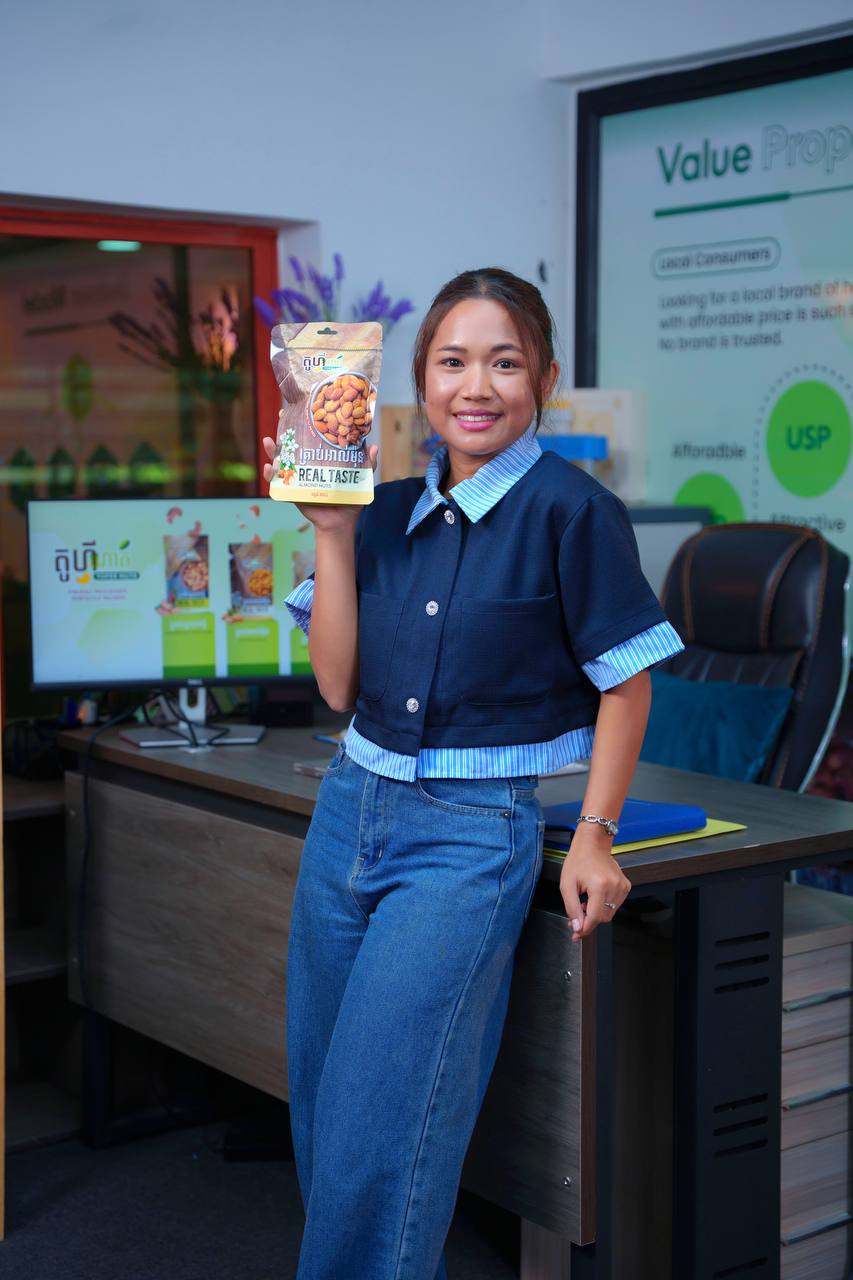
Ms. Chanthy (Photo: provided by Cnai Accelerator)

(Chanthy) Absolutely. Many times. I’ve been excluded from business discussions because I am a woman. Some new customers initially refused to talk to me, assuming I was “just a staff member.” But with experience, my confidence grew, and now many key positions at our company—QA, accounting, HR, and taste development—are held by women. 

図形 

―― What are the next steps for Solo Landscapes?

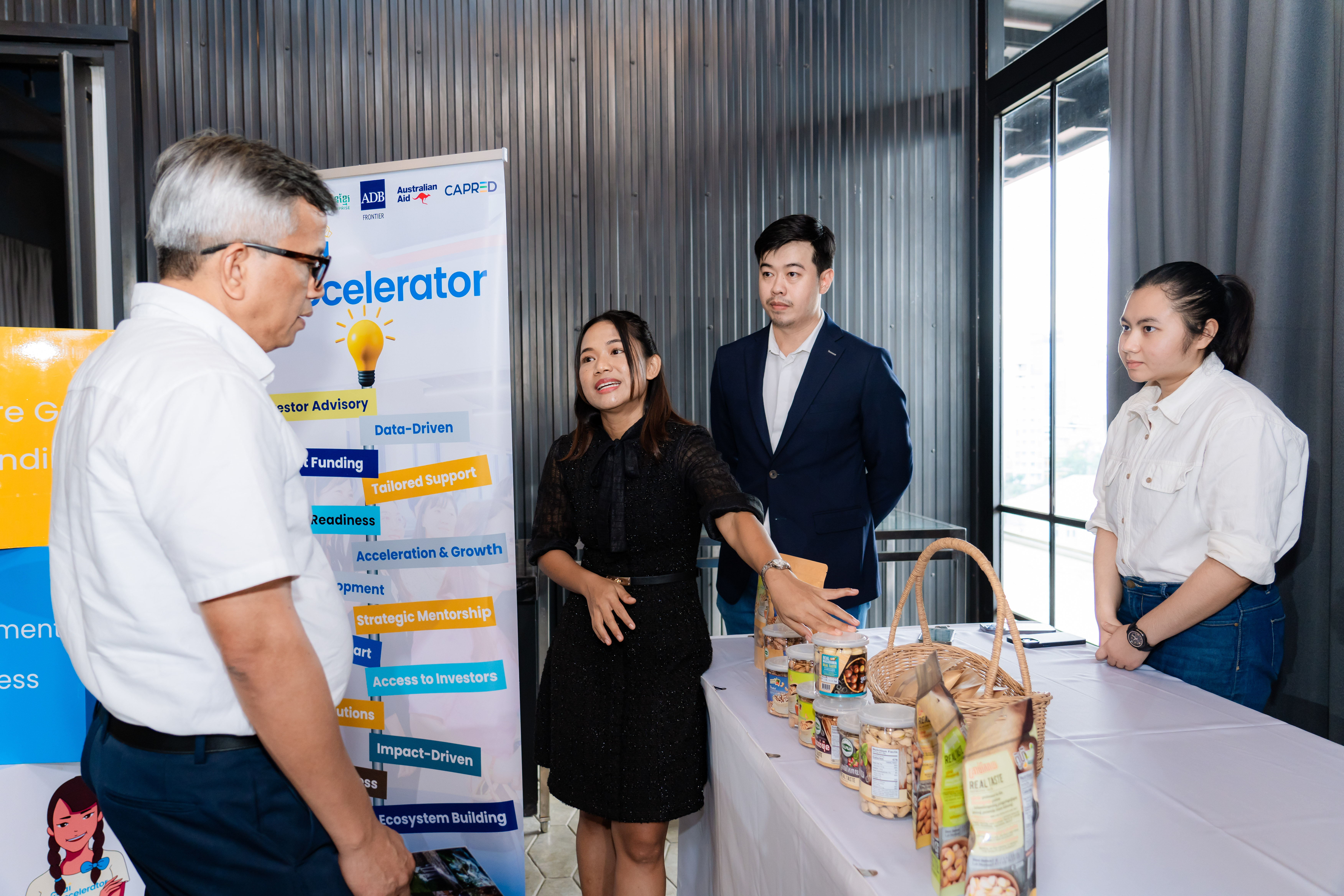
Showcasing their cashew products (Photo: Provided by Cnai Accelerator)

(Taillim) Our biggest goal now is to expand production. Thanks to the Cnai grant, our production area has already been enlarged, and we’re preparing to scale up with additional machinery and production lines. 

We also plan to begin full-scale exports in 2026. While our products are now available through over 500 sales channels in Cambodia, we want Cambodian cashews to reach the world. That has always been one of our dreams. 

We are currently targeting USD 350,000 in fundraising, and we continue to speak with various investors. But we are not looking for money alone—we want a partner who can think strategically with us. To accelerate our growth, we need not only funding but also guidance and shared vision. 

(Chanthy) Strengthening relationships with farmers is also a priority. Many cashew farmers work as family units and often bring small children to the fields. Because my mother was a teacher, I bring books, clothes, food, and toys when visiting farms so children can play while their parents work.Small acts of care build strong trust. Farmers become loyal partners who want to produce good raw materials for us, and soon their neighbors and friends say, “We want to work with you too.” That’s how our warm, supportive supply chain has grown. 

―― Editor's Postscript

What stood out most in speaking with Tailim and Chanthy was their ability to transform setbacks into strength—an unmistakable resilience shaped by experience. Their temporary closure, far from being a defeat, gave them clarity and resolve for the next stage of growth. 

Their stories of the early days were striking. With little capital or manpower, they did everything by hand. Yet those demanding moments laid the foundation for the remarkable growth they are now achieving. 

 
For Chanthy, the challenges she faced as a young female entrepreneur sharpened her awareness of gender dynamics in business and inspired concrete actions—policies, systems, and leadership practices that are now embedded in the company’s culture. 


Tofee Nuts has grown its revenue roughly fivefold compared to before joining Cnai. But their progress cannot be measured by numbers alone. The true engine of their growth lies in the trust they have built with farmers, their attentiveness to the realities of the field, and the relationships they nurture day by day. Their unwavering commitment to people—not just processes—defines their mission and anchors their growth. With such sincerity and strength at their core, their journey will undoubtedly continue to expand in meaningful ways. 


Social Innovation Program
Share

Related Articles

Latest News

Social Innovation Program

Event Report: Impact Measurement and Management (IMM) for Gender Lens Investing (GLI)

2X Global, Brightlight Group, and the Sasakawa Peace Foundation hosted an Impact Measurement & Management (IMM) workshop designed for LPs and GPs to dive deeper into the IMM for gender lens investing and GLI+ strategy. We explored ways to build a GLI IMM framework, including designing and framing, integrating gender lens into the investment process, impact rating and risk analysis, manager engagement, and reporting.

March 25, 2024
Social Innovation Program

Event Report: Mainstreaming Gender Lens Investing in Northeast Asia

Gender Lens Investing (GLI), which evaluates potential value and risk while consciously incorporating a gender perspective into investment decisions, is gaining traction around the world as a ‘smart investment technique.’ Even investors who are not familiar with impact investing are starting to explore the potential of GLI. On the other hand, GLI is relatively underdeveloped in the Northeast Asia region.

January 11, 2023
Social Innovation Program

Event Report: Building Back Better by Empowering Women Entrepreneurs

Women entrepreneurs are reportedly finding it more difficult to access marketplaces and funding as a result of the Covid-19 pandemic. What kind of help does "Building Back Better" require from entrepreneur support organizations and investors for women entrepreneurs?

January 11, 2023
Browse Latest News

pagetop

Video Title

Footer

Sasakawa Peace Foundation

  • About SPF
  • News
  • Experts
  • Events
  • Programs
  • Access
  • Research & Analysis
  • Contact Us

Latest Updates

Receive regular updates about news, events, and research from the Sasakawa Peace Foundation

Sign Up to Our Newsletter

Satellite Sites

  • From the Oceans
  • The Friends of WMU Japan
  • Asia Women Impact Fund
  • Insights into Japan–U.S. Relations
  • International Information Network Analysis (IINA)
  • The OPRI Center of Island Studies
  • SPF China Observer
  • Asia Peacebuilding Initiatives (APBI)
  • History of the Sasakawa Japan-China Friendship Program (Japanese language)
  • Japan-China Relations Data Graph (Japanese language)
  • Third Pole Project
  • PRIVACY POLICY
  • SITE POLICY
  • SOCIAL MEDIA POLICY
  • SITE MAP
  • WEB ACCESSIBILITY POLICY

Copyright © 2021 The Sasakawa Peace Foundation. All Rights Reserved.