Sasakawa Peace Foundation

日本語
  • About SPF
    • About Us
      • About Us
      • History
      • Program Policy and Five Priority Goals
      • Board Members
      • Diversity and Inclusion
      • Financial Position
      • Honorary Chair's Message Archive
      • Activities Before 2017
    • President's Message
    • Integrated Report
    • Access
    • Idea Submission
    • Careers
    • Contact Us
  • Experts
  • Programs
    • Japan-U.S. and Security Studies Unit
    • General Affairs and Networking Program
    • National Security and Japan-U.S. Program
    • Strategy and Deterrence Program
    • Asia and Middle East Unit
    • Strategic Dialogue and Exchange Program
    • Peacebuilding Program
    • Social Innovation Program
    • Sasakawa Japan-China Friendship Program
    • Ocean Policy Research Institute
    • Division of Ocean Vision and Action
    • Division of Island Nations
    • Scholarship Unit
    • Sasakawa Scholarship Program
  • Research & Analysis
    • Reports and Publications
    • Essays and Commentary
    • SPF Now Interviews
    • Videos
    • Podcasts
    • Browse by Regions
    • Regions
    • Americas
    • Northeast Asia
    • Southeast Asia
    • South Asia
    • Middle East
    • Oceania
    • Europe and Eurasia
    • Arctic
    • Africa
    • Satellite Sites
    • International Information Network Analysis
    • SPF China Observer
    • Asia Women Impact Fund
    • The OPRI Center of Island Studies
    • The Friends of WMU, Japan
    • SPF Insights into Japan–U.S. Relations
    • From the Oceans
    • Asia Peacebuilding Initiatives (APBI)
    • History of the Sasakawa Japan-China Friendship Program
      (Japanese language)
    • Japan-China Relations Data Graph (Japanese language)
    • Third Pole Project
  • News
    • News
    • Press Releases
    • SPF Newsletter
    • Media Coverage
  • Events
Strategic Dialogue and Exchange Program News

【Report】Seminar on Promoting Japan-Brazil Mutual Understanding

Looking Beyond 130 Years of Friendship


February 19, 2026
Since the signing of the “Japan-Brazil Treaty of Friendship, Commerce and Navigation” in 1908, the immigrant ship, the Kasato Maru, arrived at the Port of Santos in São Paulo, Brazil, bringing many Japanese migrants to the country. The year 2025 marked the 130th anniversary of diplomatic relations between Japan and Brazil.
 
Against this backdrop, the Strategic Dialogue and Exchange Program, Sasakawa Peace Foundation (SPF), has invited Nikkei Brazilian politicians, including members of the Federal Chamber of Deputies and the São Paulo City Council, for a one-week exchange program in Japan. As part of this program, a public seminar was held on Friday, January 30, 2026. The seminar highlighted the significant contributions that Nikkei communities have made to the development of both Brazilian and Japanese societies. It also served as a valuable opportunity to underscore the importance of mutual exchange between Japan and Brazil.

Opening Remarks

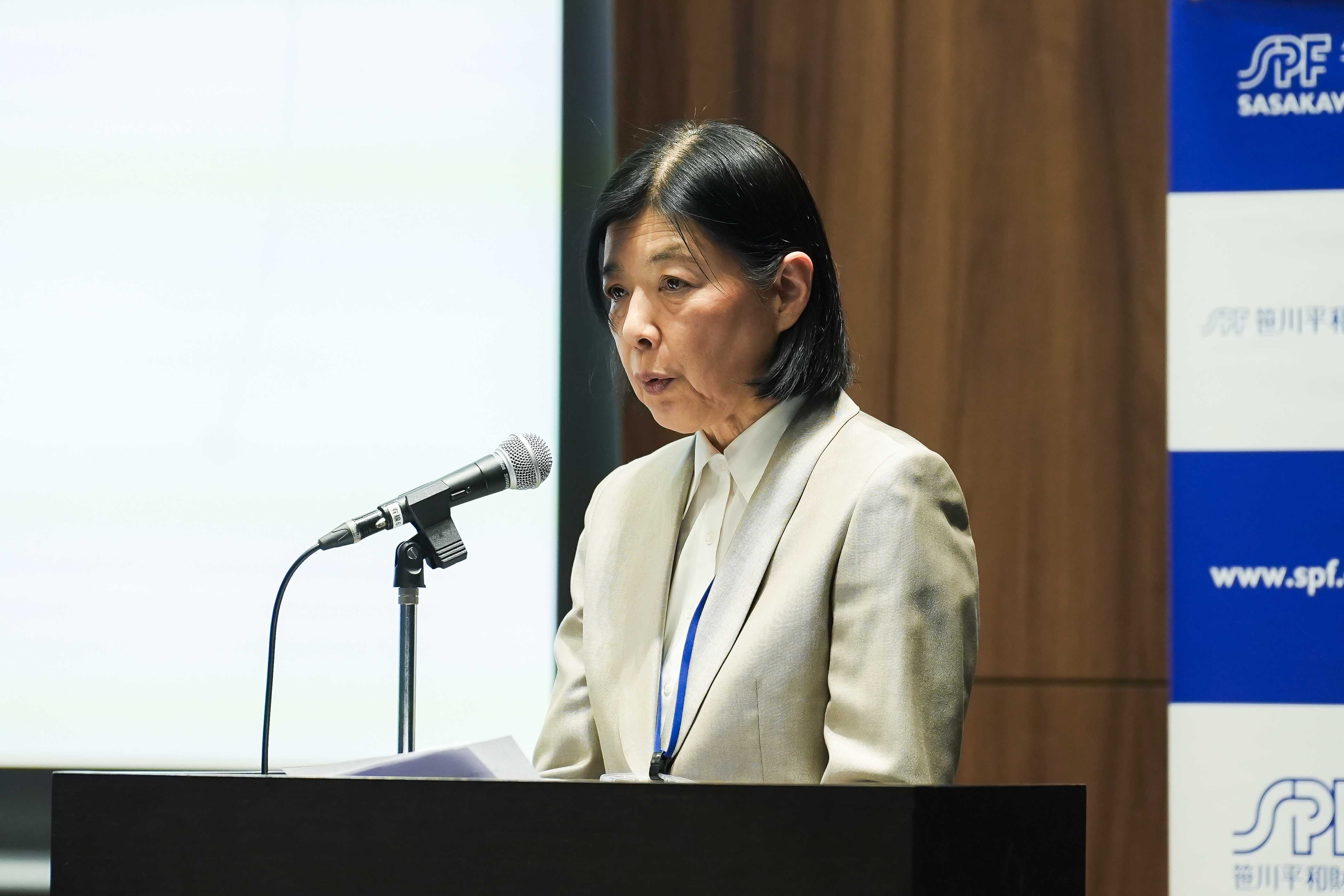
Dr. Nobuko Kayashima (Executive Director, SPF)

It was emphasized that the purpose of this seminar is to develop the cordial relationship between Japan and Brazil and to pass it on to the next generation and she spoke on the importance of connecting with as many stakeholders as possible to ensure peace and security in today’s world, marked by conflict and an unstable security environment. The year 2025 marks the 130th anniversary of diplomatic relations between Japan and Brazil, and a variety of exchanges have taken place between the two countries, including a visit to Brazil by the Imperial Family and a visit by the President of Brazil to Japan. SPF joined this initiative and is working on a new project from 2025 to ensure that the friendship between the two countries will continue beyond its 130 years and into the next generation.

Guest Remarks

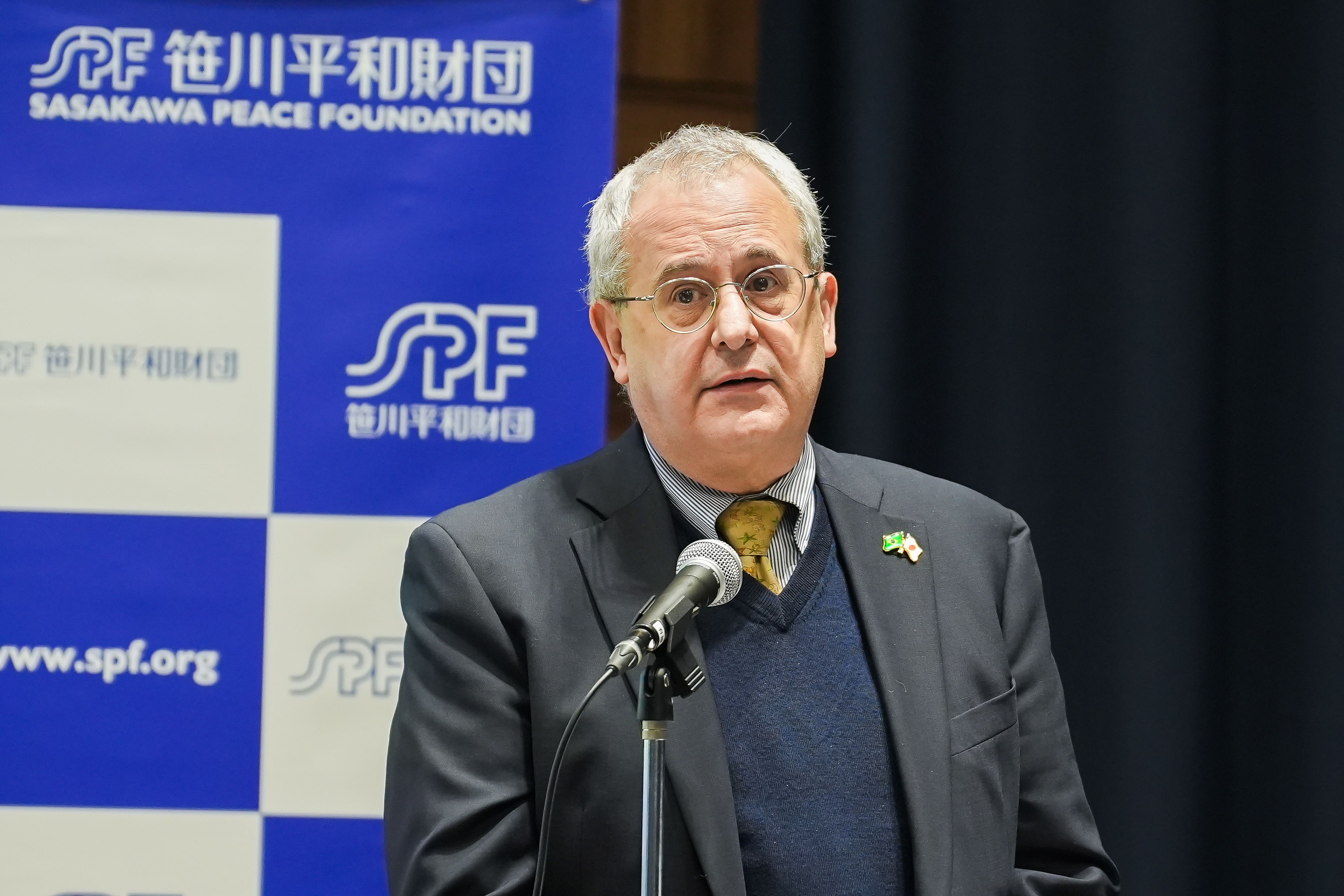
H.E. Octávio Henrique Dias Garcia Côrtes (Ambassador, Embassy of Brazil in Japan)

Over the course of 130 years of diplomatic relations, Brazil and Japan have experienced significant transformations, which have been reflected in various forms of interaction between the two countries, and the results have been crucial in the modernization of Brazil's agriculture, fisheries, and industry. He expressed his sincere hope that the values of humanity and a sense of community of the Nikkei community, passed down from generation to generation and successfully assimilated by Brazilians, would inspire the world to face the challenges of an era marked by division and conflict.

Section 1: Lectures

In the first section of this seminar, Brazilian experts living in Japan gave lectures emphasizing the importance of Japan-Brazil exchange, including perspectives on politics, diplomacy, and the Nikkei community.

Lecture 1: "Brazilian Politics and Japanese Diplomacy in an Era of Crisis — How Should We Position Japan-Brazil Relations?"

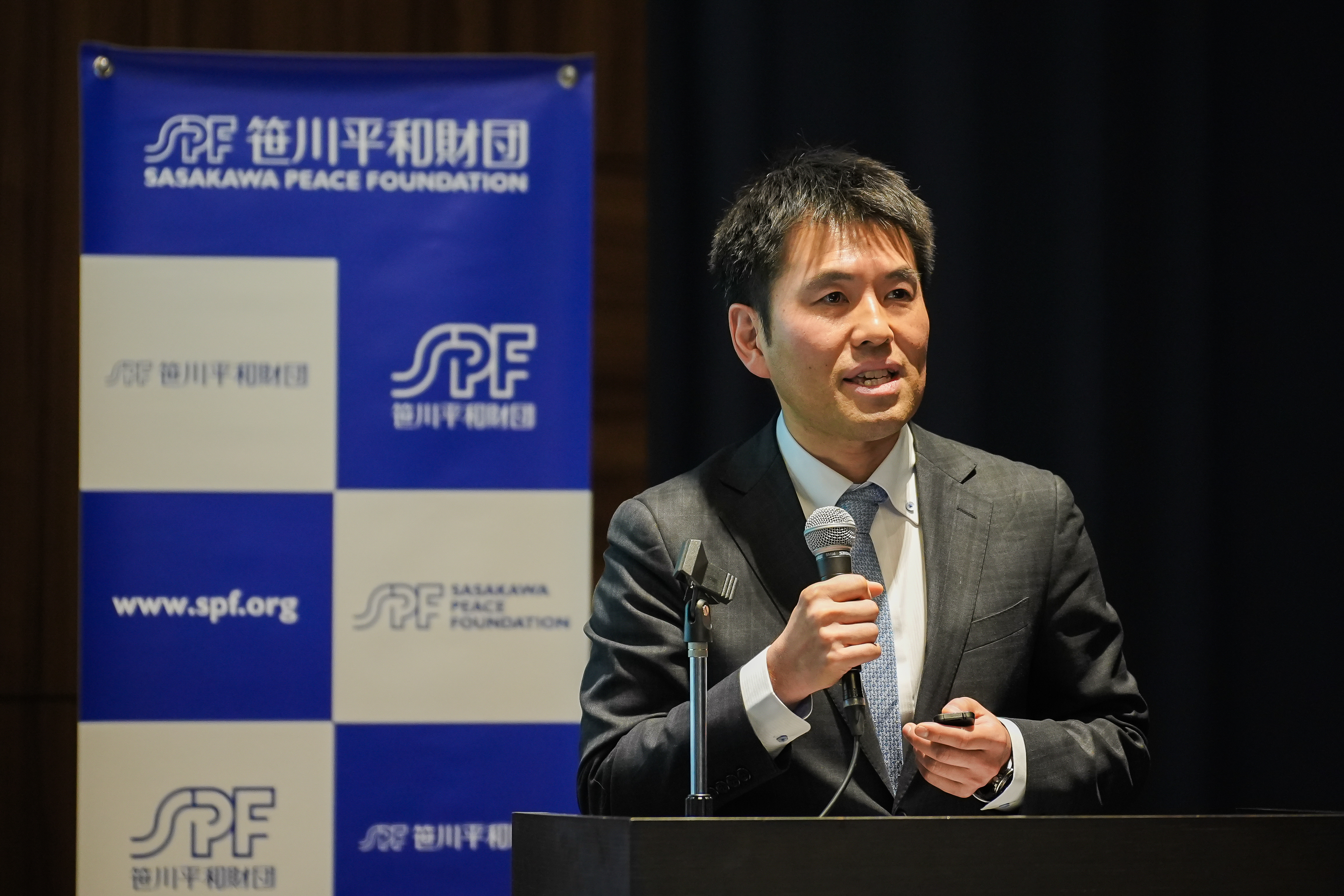
Dr. Shuichiro Masukata (Associate Professor, Faculty of Law, Keio University)

In an era of recurring crises, it was emphasized that Japan and Brazil cannot absorb their aftermath by themselves through bilateral efforts alone, and that Japan-Brazil relations should be the “cornerstone of cooperation” to make multilateralism operational. He suggested that by leveraging Japan's capital, finance, technology, and systems with Brazil's food, resources, and climate, and complementing these with India's economic growth and technology in areas where Japan and Brazil lack capacity, the three countries could make cooperation work successfully. It was highlighted that 2026 is an election year in Brazil and it was emphasized that overseas voting will function not as a “blank” but as a “circuit that moves politics.” The professor stated that what Brazil and Japan need is not ideological victory or defeat, but the creation of realistic lines of governance, and the art of governance that aims to simultaneously achieve "order" and "progress," as stated on the Brazilian flag, is what is required today. He concluded with the message that “Being Nikkei is not a symbol but an asset that connects the two public spheres.”

Lecture 2: "Collaboration and Contributions of Brazilian Nikkei in Japanese Society"

Mr. Kotaro Hayata (Brazil-born lawyer)

Through his work as legal counsel for the Brazilian Consulate, Mr. Hayata addressed the diverse Brazilian community and the activities of Brazilians living in Japan from legal, educational, business, and cultural perspectives, stating that “Brazil-Japan relations are not only expressed in official documents, but also in schools, families, people, and society.” While analyzing Brazilians in Japan into four social groups and citing Brazilians who have achieved full integration into Japanese society, he also explained the challenges the community faces in Japanese society, including linguistic barriers and closed ecosystems. Amid these challenges, he emphasized that Brazilians living in Japan are an essential link between the two societies, functioning as an invisible bridge between the two countries today. He expressed his hope and expectations that Brazilians living in Japan will play an active role in building a new future for Japan-Brazil relations and for both countries’ societies.

Section 2: Panel Discussion

The second section of the seminar featured a panel discussion by Brazilian Nikkei politicians and opinion leaders on the role of Nikkei politicians in Japan-Brazil relations and their activities as Nikkei in Brazil.

“The Role of Nikkei Brazilian Politicians and Expectations from Both Japan and Brazil”

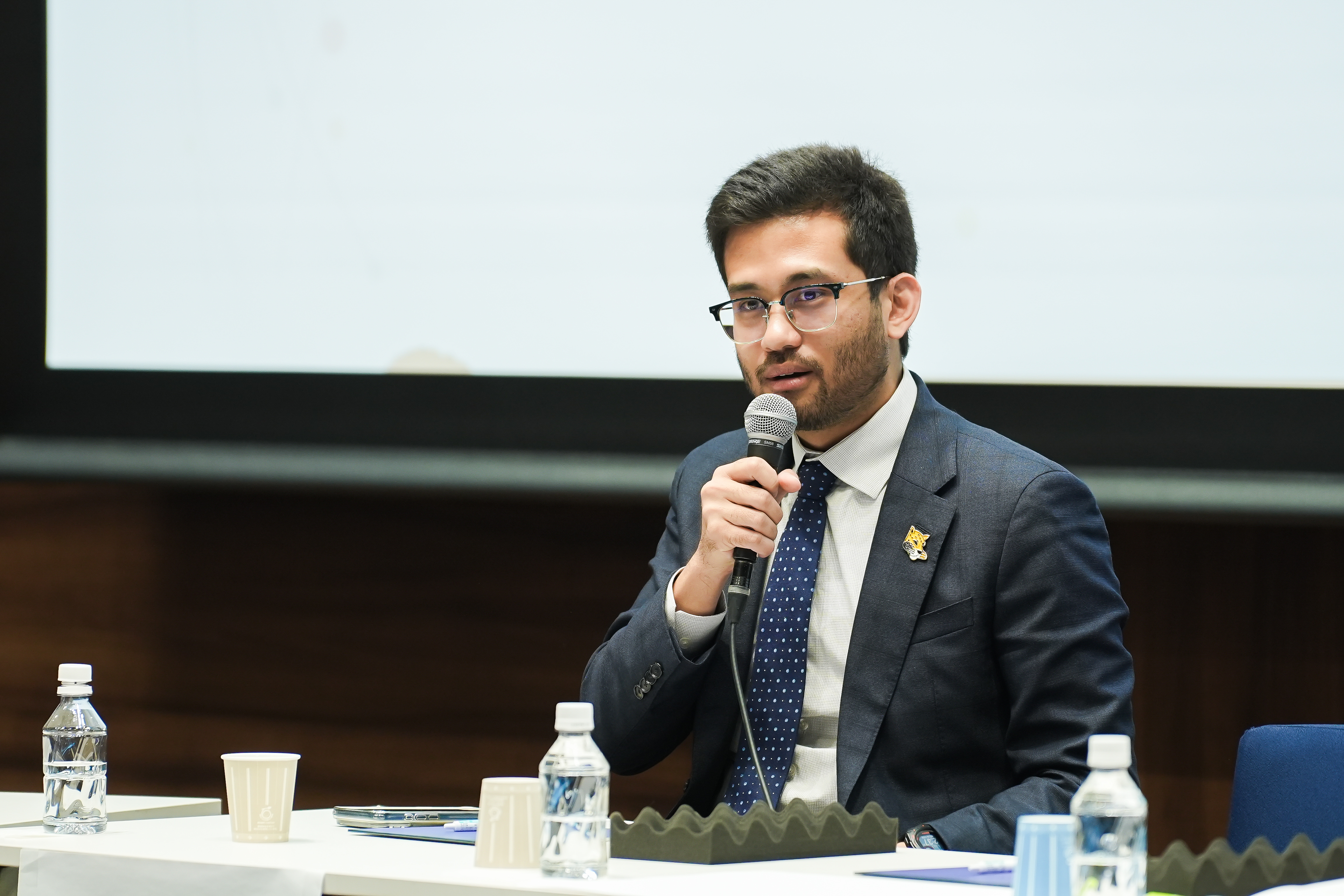
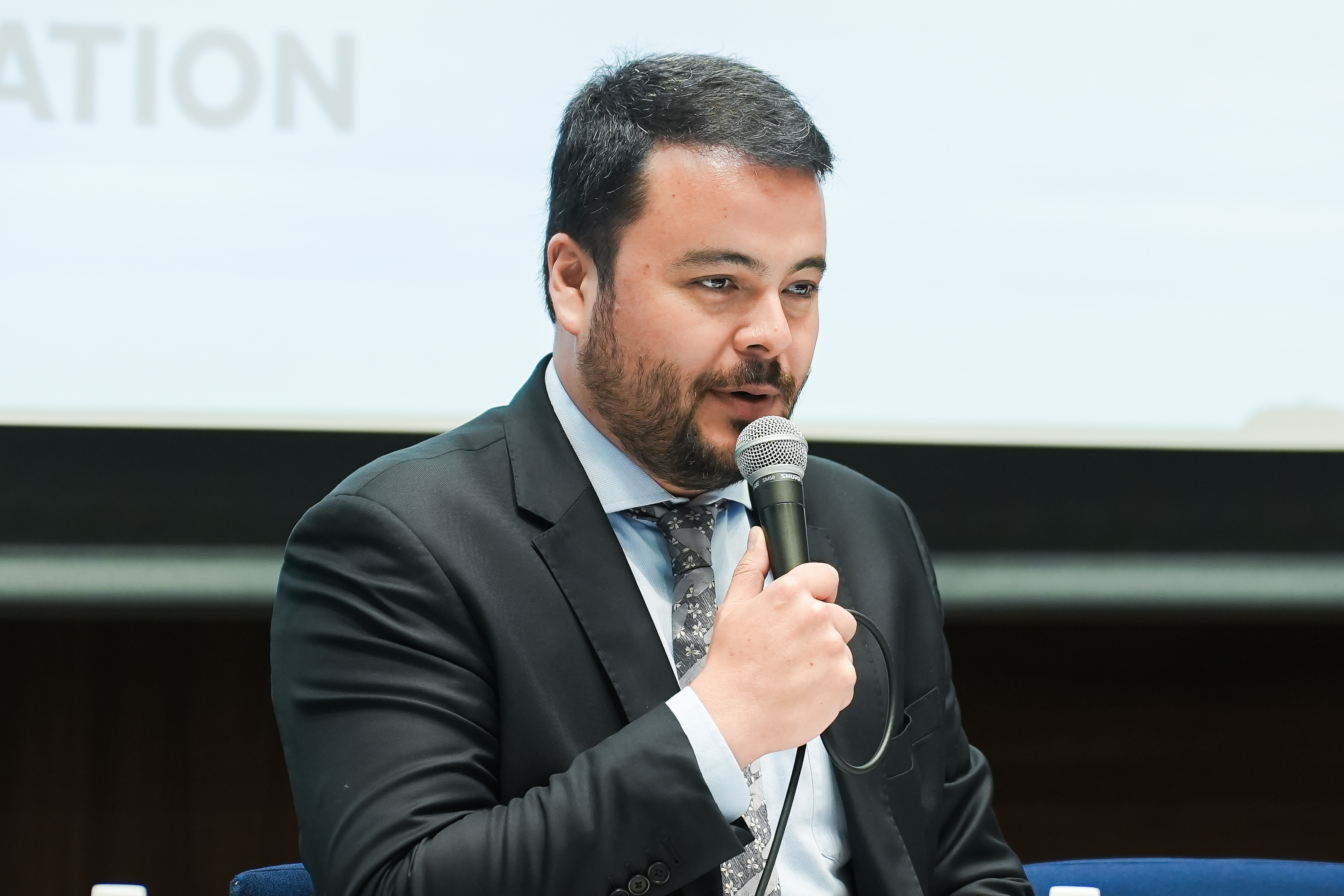
Mr. Kim Kataguiri, Brazil’s Federal Chamber of Deputies

Mr. Kataguiri emphasized the small number of Nikkei representatives in Brazil’s political scene and expressed his willingness to become a bridge between the two countries, as it is his responsibility and mission to continue the relationship with his ancestors and not to lose cultural and personal exchanges, carrying on Japanese traditions and education. In addition to Japan's judicial system and public security, he highlighted that Brazil, which has suffered from growing numbers of natural disasters each year, has a lot to learn from Japan's infrastructure as well. He also suggested that Japan could learn from Brazil's ability to improvise, creativity, and its capacity to deal with the unexpected.
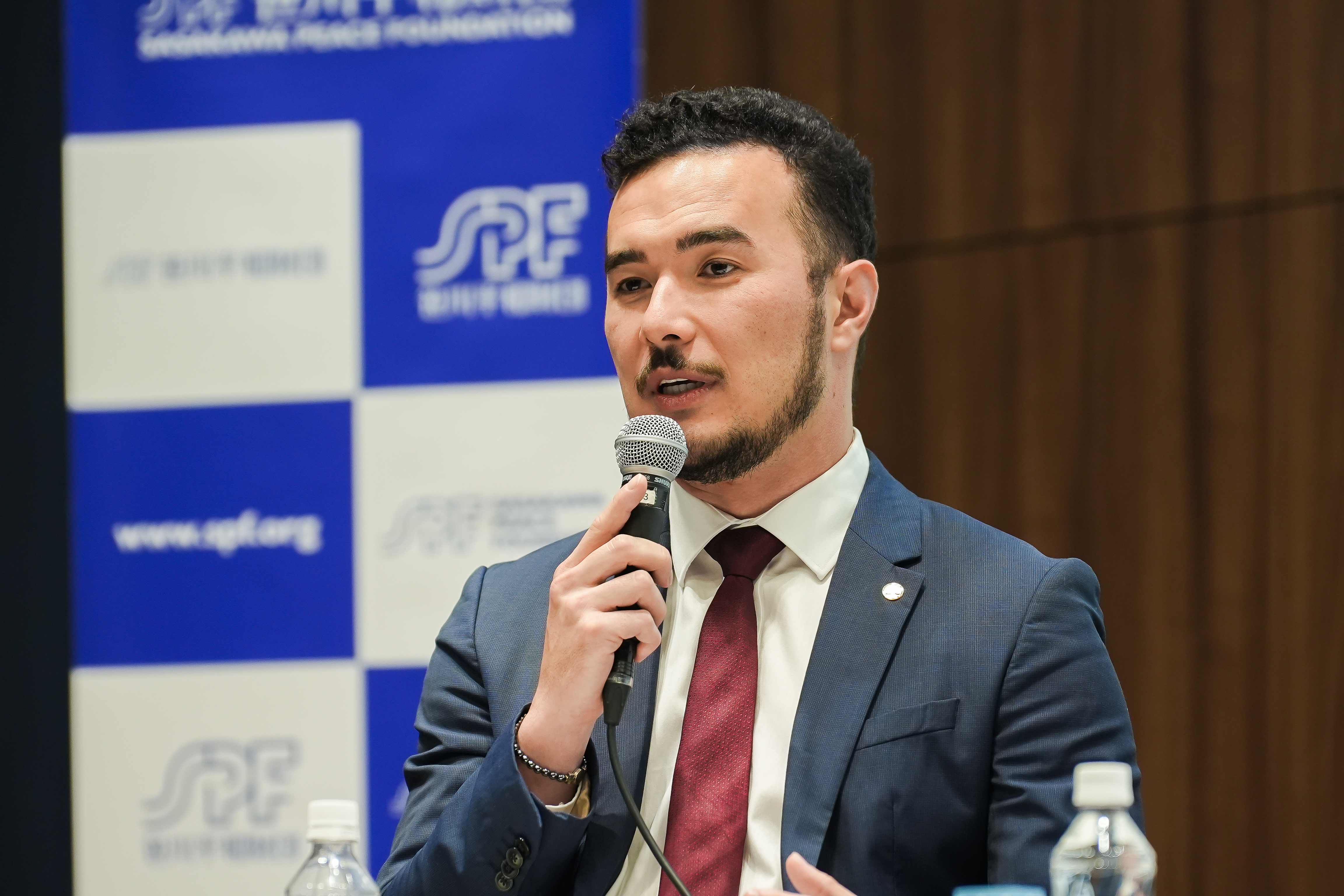
Mr. Pedro Aihara, Brazil’s Federal Chamber of Deputies

Although the relationship between Japan and Brazil began with Japanese immigration, the importance of cooperation between the two countries, rather than being dependent on the help of one or the other, was emphasized in today's globalized world. Mr. Aihara stated that in a global society, not only the principles of one's own country but bilateral cooperation should be emphasized, and that Brazil can and deserves to become Japan’s laboratory for the technological growth of both Japan and Brazil, leveraging past contributions to the agricultural sector by the Japanese government and others, as well as the abundant resources and excellent researchers in Brazil.

“The Activities of Nikkei Leaders in São Paulo”

Moderator: Mr. Claudio Kurita, Director of Brazilian Society of Japanese Culture (Bunkyo)

As city councilors of São Paulo, where the largest Nikkei community in Brazil resides, they introduced their activities to support Brazilian society and the Nikkei community in Brazil.
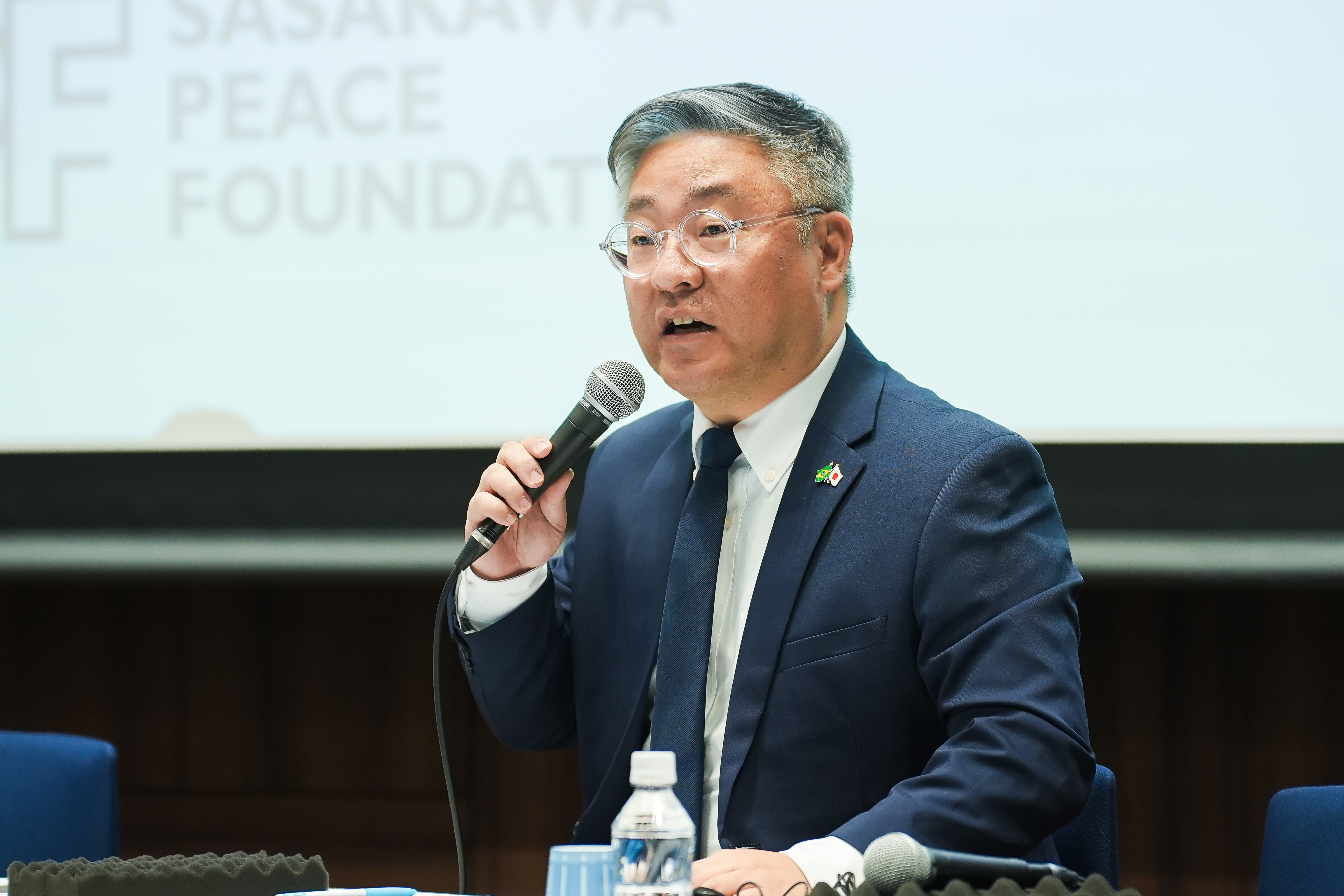
Mr. George Hato, São Paulo City Council

Council member Mr. Hato mentioned the city's efforts to address the issue of obesity, which 33% of Brazilian children currently suffer from, by adjusting school lunches and preventing the sale of ultra-processed foods. They are also working with Japanese companies to develop human resources and create employment opportunities, as an attempt to grow the economy and promote development.
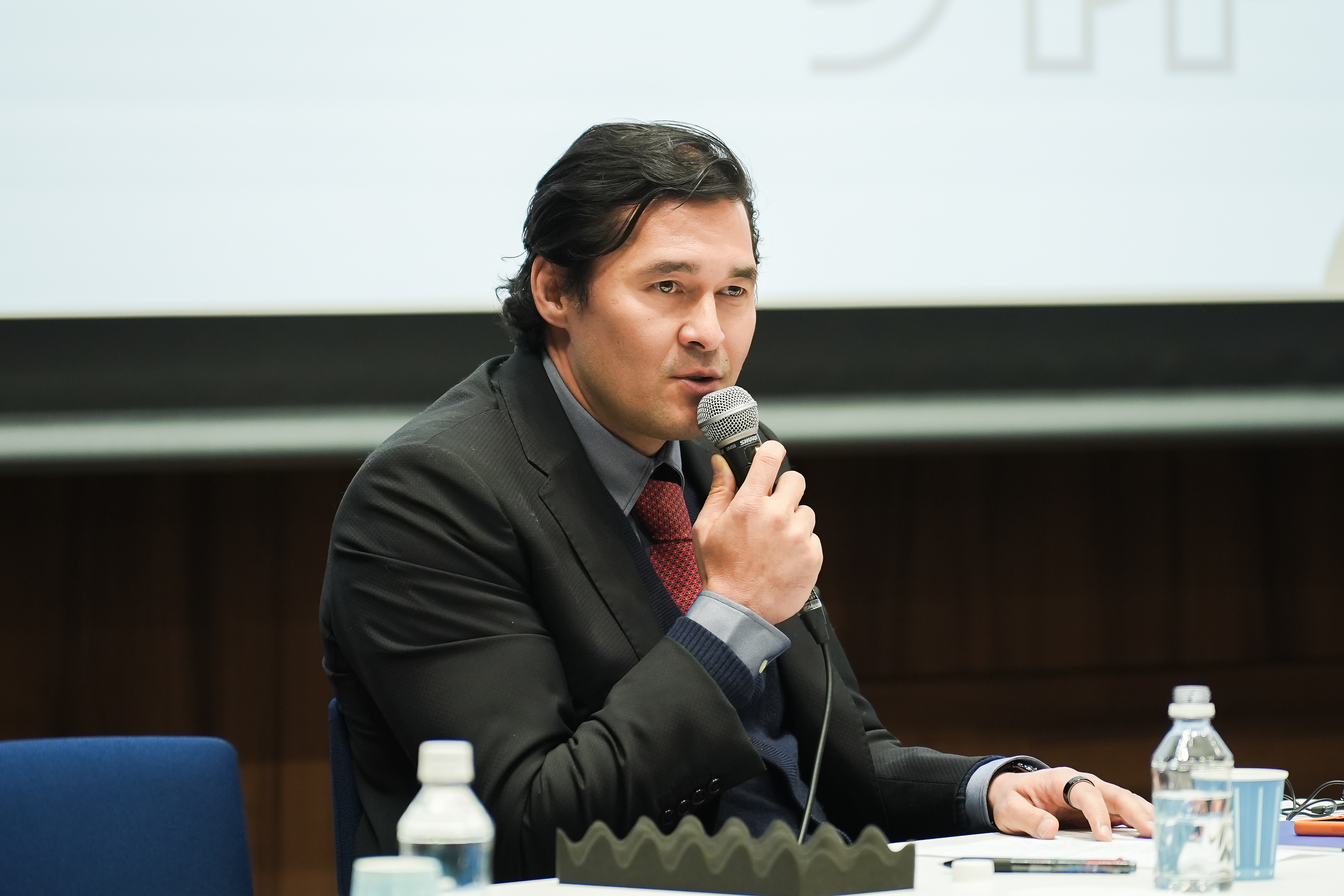
Mr. Rodrigo Hayashi Goulart, São Paulo City Council

Council member Mr. Goulart mentioned the importance of participating in activities and events in the Nikkei community as a young leader and expressed his desire to continue passing on Nikkei culture to the next generation, whose interest in the history of their origins has declined in recent years, and to nurture young inheritors who will not lose or forget the teachings and traditions passed down from their ancestors. He also stated that being Nikkei is a bridge, and that there was a time when the Nikkei community elected representatives to work for the Nikkei community exclusively, but in Brazilian society, where there are many different communities of mixed race, it is increasingly important for Nikkei leaders to work as Brazilian politicians and serve beyond their own community.

Closing Remarks

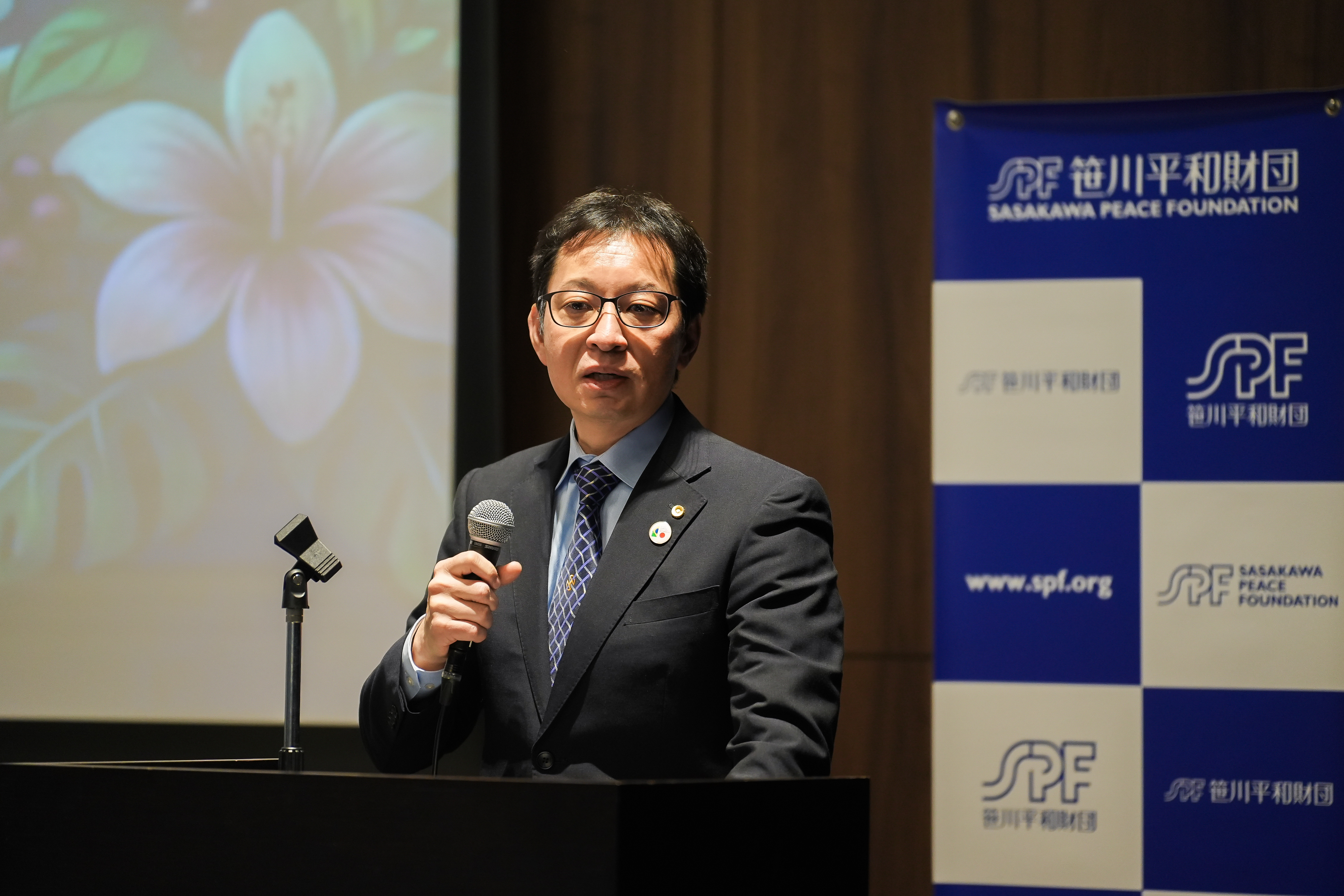
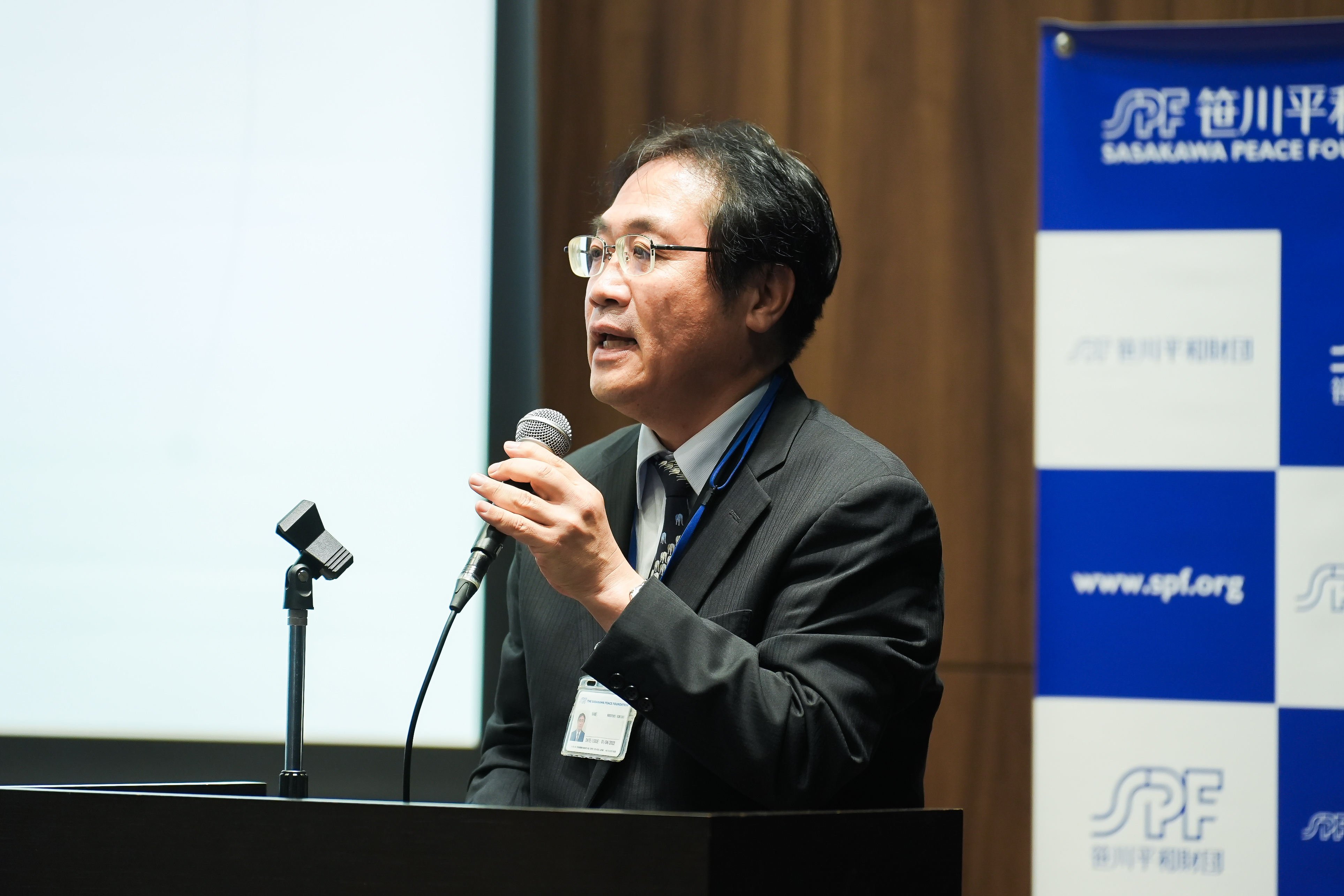
Mr. Nobuyuki Konishi (Director, Strategic Dialogue and Exchange Program, SPF)

Using Nikkei as an open door, he expressed his gratitude to all the speakers at the seminar for their efforts to build an opportunity to strengthen mutual understanding and exchange between Japan and Brazil through face-to-face dialogue with politicians and opinion leaders. Following Brazil, SPF will continue to promote mutual understanding with Peru, Argentina, and Paraguay, in line with our mission to contribute to world peace and security.
 
SPF will continue to develop activities aimed at building ties between the Japanese and Latin American Nikkei communities, focusing on the next generation.

Contact Information:
Contact person: Ms. Kaoru Kajigayama
Strategic Dialogue and Exchange Program,
Sasakawa Peace Foundation
E-mail: asia@spf.or.jp

Strategic Dialogue and Exchange Program News
Share

Related Articles

Latest News

Strategic Dialogue and Exchange Program

【Report】Seminar on Promoting Japan-Brazil Mutual Understanding: Looking Beyond 130 Years of Friendship

The Strategic Dialogue and Exchange Program, Sasakawa Peace Foundation(SPF), has invited Nikkei Brazilian politicians, including members of the Federal Chamber of Deputies and São Paulo City Council, for a one week exchange program in Japan. As part of this program, a public seminar was held on Friday, January 30, 2026. The seminar highlighted the significant contributions that Nikkei communities have made to the development of both Brazilian and Japanese societies. It also served as a valuable opportunity to further deepen the importance of mutual exchange between Japan and Brazil.

February 19, 2026
Strategic Dialogue and Exchange Program

【Report】SPF Invitation Program for Young Brazilian Nikkei Politicians

The Sasakawa Peace Foundation (SPF), as a private organization, has been promoting “Track 1.5 diplomacy,” which fosters international exchange among policymakers. Since FY 2025, SPF has been advancing initiatives to deepen mutual understanding and strengthen collaboration between Nikkei communities in South America and Japan through exchange programs involving politicians and other key figures.

February 19, 2026
Strategic Dialogue and Exchange Program

Event Report: Cross-Asian Dialogue on Rural Development Co-hosted with Nalanda University, Asian Confluence and Musubi-Te Foundation

Strategic Dialogue and Exchange Program of the Sasakawa Peace Foundation co-hosted the workshop entitled “Cross-Asian Dialogue on Rural Development” with Nalanda University, Asian Confluence and Musubi-Te Foundation at Nalanda University in Bihar, India

December 19, 2025
Browse Latest News

pagetop

Video Title

Footer

Sasakawa Peace Foundation

  • About SPF
  • News
  • Experts
  • Events
  • Programs
  • Access
  • Research & Analysis
  • Contact Us

Latest Updates

Receive regular updates about news, events, and research from the Sasakawa Peace Foundation

Sign Up to Our Newsletter

Satellite Sites

  • From the Oceans
  • The Friends of WMU Japan
  • Asia Women Impact Fund
  • Insights into Japan–U.S. Relations
  • International Information Network Analysis (IINA)
  • The OPRI Center of Island Studies
  • SPF China Observer
  • Asia Peacebuilding Initiatives (APBI)
  • History of the Sasakawa Japan-China Friendship Program (Japanese language)
  • Japan-China Relations Data Graph (Japanese language)
  • Third Pole Project
  • PRIVACY POLICY
  • SITE POLICY
  • SOCIAL MEDIA POLICY
  • SITE MAP
  • WEB ACCESSIBILITY POLICY

Copyright © 2021 The Sasakawa Peace Foundation. All Rights Reserved.