




Part 1 of this series pointed out differences between President Trump and his lieutenants, on the one hand, and the military in general, on the other, regarding the use of the military for domestic security missions: the former tends to favor such use, while the latter is more cautious. It is also a difference in attitude toward how the military, the largest and most powerful organization in the country, confronts people with guns at the ready, which may lead to a conception that the military stands against civil society. In considering this issue, which is directly related to the relationship between civil society and the military in the United States, we must understand the unique American institutions behind it. It is important, then, to understand the historical context by reviewing the issues stemming from American history, especially the Revolutionary War and the Civil War.
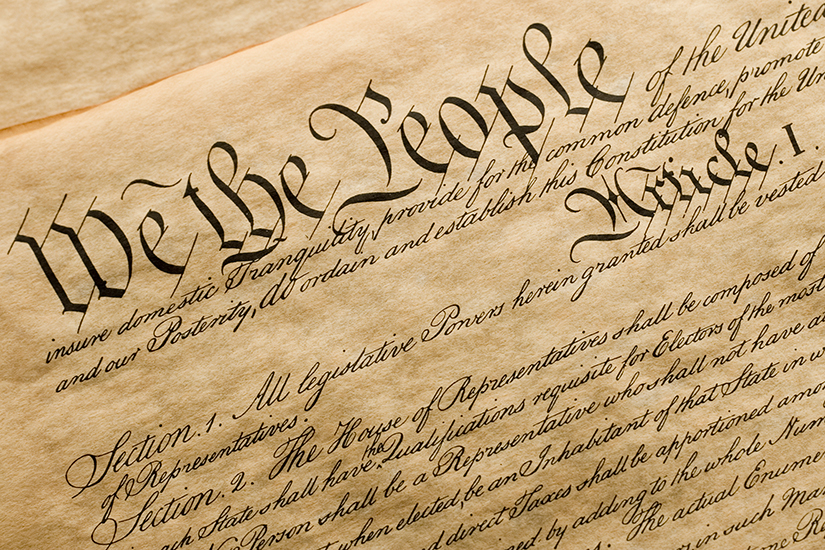
In this regard, the first thing to be aware of is the origin of the Posse Comitatus Act of 1878. The law allows sheriffs to mobilize civilians with arms to participate in law enforcement activities, such as the pursuit and arrest of violent offenders, while prohibiting federal troops from participating in such law enforcement activities.
The second that needs to be mentioned is the historical background of the constitutional right of citizens to bear arms. Without a society in which citizens are expected to keep arms, the institution of posse comitatus itself would not be possible in the first place.
Third, the relationship between federal and state authority and between the Federal Forces and the National Guards must also be understood. This is because, without this, we would miss the implications of what the Trump administration is doing in terms of federal forces stepping into the authority of the states.
The Institution of Posse Comitatus (Civil Police) and the Federal Army
In the latter half of the first Trump administration, tensions between government leaders and the Department of Defense increased over the involvement of federal troops in domestic law enforcement operations. As protests escalated following the killing of an African American man, George Floyd, by a white police officer in Minneapolis in May 2020, then-Defense Secretary Esper made it clear that he "would not support" President Trump's policy of mobilizing federal troops to suppress the protests, infuriating the president[1]. Esper is a career military officer who graduated from the United States Military Academy in 1986 and served in the military for 21 years until his retirement in 2007 with the rank of lieutenant colonel. One of the factors behind his public opposition to the president was his familiarity with the Posse Comitatus Act of 1878, which prohibited federal military involvement in law enforcement activitie[2].
Posse comitatus is Latin for “force of the county,” a concept from English common law adopted in the United States[3], and specifically refers to a group of civilians whom a sheriff mobilizes for law enforcement[4]. As often seen in Westerns, a sheriff will recruit (armed) citizens to pursue felons, which is the posse comitatus, or simply posse in films. The Posse Comitatus Act of 1878 stipulates that it is illegal, “except in cases and under circumstances expressly authorized by the Constitution or Act of Congress, (to) willfully uses any part of the Army, the Navy, the Marine Corps, the Air Force, or the Space Force (author's note: including National Guard units under the command of the President in addition to federal troops) as a posse comitatus or otherwise to execute the laws.”[5] It is generally understood that federal troops should not be allowed to participate in law enforcement except in emergency situations such as rebellion or civil war[6].
It is important to note that the year 1878, when this law was passed, followed 1877, the year in which Reconstruction after the Civil War ended. The defeated southern states were occupied by Union troops from the end of the war in 1865 until 1877. Ulysses S. Grant, commander of the Union Army and postwar president during Reconstruction, admitted in a January 1875 speech that "(in occupying the South), the Army (was) not composed of lawyers, capable of judging at a moment's notice of just how far they can go in the maintenance of law and order,” implying that the governance under military rule was problematic[7]. For the southern states, the Posse Comitatus Act was also a guarantee that they would not be subjected to a similar occupation after the end of federal military rule. The Trump administration's frequent attempts to use federal troops or federally commanded National Guard units to provide security are a violation of American traditions that respect state freedom and abhor federal interference.
Traditions Endorsing Citizen Possession of Arms
Both the United Kingdom and the United States have a tradition of endorsing the arming of citizens. The United Kingdom, although a monarchy, recognizes the right of its citizens to be armed to stand up to tyrants[8]. The Second Amendment to the U.S. Constitution provides that, "A well regulated Militia, being necessary to the security of a free State, the right of the people to keep and bear Arms, shall not be infringed."[9] It was thought that even after the founding of the United States of America, the danger of tyranny could not be ruled out, and that it would be necessary for citizens to arm themselves to be able to fight in self-defense.
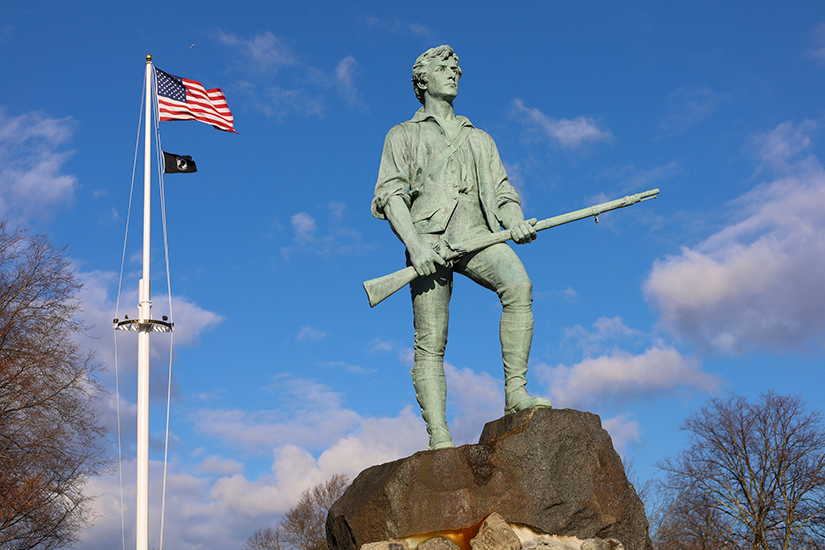
The American Revolution itself was fought by a volunteer army of civilians. After armed clashes between colonial and British forces seeking independence began in earnest in 1775 at Lexington and Concord, a suburb of Boston, militias were activated, particularly in the New England region of the northeastern United States. Most of the militia members were relatively wealthy small farmers who were called “minutemen” because, on a normal day, they were engaged in farm work with their guns by their sides and were ready in “a minute” when called upon by their commanders. Although not proficient in regular combat on open terrain due to a lack of serious military drills, the militia’s familiarity with the terrain and shooting skills from extensive hunting experience gave them a high capacity for guerrilla combat in mountainous and forested areas, allowing them to toy with regular troops dispatched from Britain. It is hard to imagine this from a Japanese perspective, but in the U.S., the right of citizens to bear arms is held in high respect. It is in the spirit of the founding of the United States, in which relatively wealthy citizens took up arms and fought for their independence from the British mainland, as well as in the legitimate British tradition of resisting tyranny.
Federal and State Government/Federal Forces and National Guards
Having experienced more than 1,000 years of centralized rule, one of the unfamiliar aspects of the U.S. structure from a Japanese perspective is the relationship between the Union (the United States) and the individual states. The composition differs from that of Japan as a state, in which prefectures are subordinate structures. Given the history of the United States, which was founded by the 13 states that had been British colonies, the U.S. is better thought of as a federation formed by the states. Because of this, there has been a kind of tension between federal authority and the authority of the states since the founding of the United States.
Over the course of U.S. history, the authority of the presidency and Congress has gradually expanded. Nevertheless, there are many matters that fall under the authority of the states. As noted above, the right of citizens to bear arms is guaranteed by the U.S. Constitution, but regulations on how guns may be licensed and carried vary from state to state. The state of Massachusetts, where the author resided for a time, is highly regulated and requires a state permit to possess and a license to handle weapons, while the neighboring state of Maine does not even have a state permit or license system.
In terms of the sense of belonging to a state and to the United States on the part of individual citizens, the latter has gradually become stronger. The epitaph prepared by Thomas Jefferson, the third president of the United States, reads, "Here was buried Thomas Jefferson, Author of the Declaration of American Independence [and] of the statute of Virginia for religious freedom and Father of the University of Virginia.” He never mentions his career as President of the United States. For Jefferson, it was probably not important enough to inscribe it on his tombstone.
Incidentally, the English word "the United States of America" in Jefferson's time was grammatically plural. It can be said that the expression reflects an emphasis on the individual states. After 1865, when the North led by Abraham Lincoln won the Civil War and prevented the division of the Union, "United States" came to be treated as singular[10]. It has changed from the loose concept of a collection of states to a more tightly united federal state.
On the other hand, there is a clear boundary between federal (presidential) and state (gubernatorial) authority under the Constitution, and there is particularly strong resistance to excessive federal intervention in state authority. This relationship also applies between Federal Forces and National Guard units. In fact, there is no difference between the federal Army Corps and the National Guard units in terms of equipment, organization, or even the timing of deployment in an emergency situation. However, although National Guard units are under the supervision of the governor in peacetime and act under gubernatorial orders in, for example, maintaining public order or providing disaster relief, federal troops are not allowed to enter states (for the purpose of carrying out their duties). The title of Dave Roos' article, "The 1878 Act That Barred Federal Troops from States,” cited in the introduction to explain the Posse Comitatus Act, suggests that there is no room for federal troops on state turf[11]. As noted at the beginning of this section, considering the history of the founding of the United States, granting certain freedoms and powers to the states is at the heart of its democracy. The fact that the Trump administration often appears to downplay the authority of the states has implications challenging this notion.
Conclusion
The Posse Comitatus Act, mentioned at the beginning of this article, is an institution born of the trauma of the occupation and rule of the Southern states by the Union, that is, the Union Army, after the defeat of the Southern states in the Civil War. However, given that the military is not a law enforcement organization in the first place, and that soldiers are not trained for police work, the spirit of this law seems justified[12]. A schema in which the people are oppressed by formidable state power does not fit well with democracy. The Trump administration's frequent attempts to deploy federal troops to maintain security is a violation of American democratic traditions and, if taken too far, could even divide the country.
In this regard, the Japanese Self-Defense Forces have actually experienced the serious implications of using the military to suppress demonstrations. This came in 1960, when the Defense Agency and the Self-Defense Forces were called upon to suppress demonstrations as the Anpo protests escalated and intensified. Ahead of President Eisenhower's scheduled visit to Japan on June 19 of the same year, demonstrations against the revision of the Japan-U.S. Security Treaty (Anpo) grew, with hundreds of thousands of demonstrators gathering around the National Diet Building. On the June 15th, Michiko Kanba, a student at the University of Tokyo, who was participating in the demonstration, was crushed to death in a clash with riot police. Around this time, Prime Minister Nobusuke Kishi called for the mobilization of the Self-Defense Forces for security purposes, but this did not happen, partly because the Defense Agency and Self-Defense Forces and police officials, including Defense Agency Director-General Munenori Akagi, strongly opposed the deployment. In response to the Prime Minister's request, Director Akagi is recorded as having responded, "If the Self-Defense Forces (to be deployed) take up arms, they will kill Japanese people. The backlash will grow and demonstrations will spread across the country and become uncontrollable. If they go unarmed, they will be crushed by the demonstrators"[13]. The SDF was forced to choose between using weapons and becoming an enemy of the people, or not using them and being crushed and losing the public's trust.
Since the inauguration of the first Trump administration, the United States appears to have become increasingly divided. Nevertheless, the division is only a political conflict over conservative and liberal policies. If the easy use of federal troops leads to incidents that result in the deaths of protesters or security forces, it would escalate the conflict between the military and the people, and between the federal government and the states, and there is an undeniable risk that it could escalate to the use of arms. The background and spirit in which the Posse Comitatus Act was passed should be appreciated.
(2026/05/01)
Notes
- 1 「トランプ氏、エスパー国防長官を解任 人種差別抗議デモ鎮圧で対立 アメリカ大統領選」(“Trump Dismisses Secretary of Defense Esper: Disagreement over Suppression of Antiracism Demonstrations – American Presidential Election”), Tokyo Shimbun, November 10, 2020. (Japanese)
- 2 In the United States, where the author served and acted as an observer during his active duty Self-Defense Forces service, there is no shortage of examples of U.S. military personnel showing caution in domestic activities, including disaster relief. Some even claimed that the threshold for sending federal troops was too high, as National Guard units were in short supply due to deployment to the war in Iraq when responding to Hurricane Katrina, which struck the southeastern U.S. in 2005.
- 3 The U.S. has codified into law the British common law concept of the posse comitatus.
- 4 Dave Roos, "The 1878 Act that barred federal troops from states," History (by A&E Networks), September 3, 2025.
- 5 Joseph Nunn, "The Posse Comitatus Act Explained," Brennan Center for Justice, October 14, 2021 (updated September 29, 2025).
- 6 Dave Roos, op. cit.
- 7 Speech by President Ulysses S. Grant, "January 13, 1875:. Message Regarding Intervention in Louisiana," University of Virginia, Miller Center, accessed on February 15, 2026.
- 8 Of the 13 rights of citizens stipulated in Part II of the British Bill of Rights, enacted in 1689, paragraph 7 states that "the subjects which are Protestants may have arms for their defence suitable to their conditions and as allowed by law."
- 9 「合衆国憲法日本語抄訳」(Japanese Translation of the U.S. Constitution), Kobe University, accessed February 25, 2026 (Japanese)
- 10 Williamson Murray says that “before 1861 Americans said ‘the United States are’; after 1865 they said ‘the United States is’” in his “The Industrialization of War” in Geoffrey Parker’s (edit), The Cambridge History of Warfare, Cambridge University Press, 2005, p.238.
- 11 Dave Roos, op. cit.
- 12 Ulysses S. grant, op. cit.
- 13 水島朝穂「反戦デモは『グレーゾーン事態』か?―――2020年陸幕記者会見資料と『60年安保と治安出動』」(Mizushima, Asaho, “Are Antiwar Demonstrations ‘a State of Exception’ --- 2020 Ground Staff Office Press Conference Materials and the ‘1960 Anpo Demonstrations and Security Actions’”), 『平和憲法のメッセージ』(“The Message of the Peace Constitution”), April 18, 2022 (Japanese)