




Strategizing Japan-India Space Cooperation
Space utilization is an important means of ensuring strategic autonomy for India, and the country is accelerating its entry into the use of space for both security and commercial purposes. In 2023, the lunar probe Chandrayaan-3 successfully landed on the south pole of the moon, becoming the first country in the world to reach that area. India is also working on developing its own space station (BAS: Bharatiya Antariksh Station) concept and exploring deep space through distant observations using the astronomical satellite “AstroSat”, while establishing itself as one of the major actors in space following the United States and China.
This progress in India's space development has also brought about a new phase in its cooperative relationship with Japan. The Lunar Polar Exploration (LUPEX) Mission, which is being carried out by the Indian Space Research Organization (ISRO) and the Japan Aerospace Exploration Agency (JAXA)[1] is particularly noteworthy: its purpose is to investigate water resources in the lunar south pole, and is considered an important joint mission that will help build the foundation for future lunar surface activities. Prime Minister Modi previously stated that "the LUPEX mission will further strengthen our cooperation in space,[2]" indicating that this joint venture is expected to accelerate technological cooperation between the two countries, and contribute to the development of an order through international space exploration.
Going forward, the two countries have identified space technology cooperation as a key area in their "India - Japan Joint Vision for the Next Decade,"[3] and are expected to strengthen cooperation in both civilian and security fields, such as Space Situational Awareness (SSA) and AI application research. As the space domain takes on dual-use capabilities, such comprehensive cooperation will further strengthen the strategic trust between Japan and India - two countries who share fundamental values.
The growing strategic significance of Japan-India space cooperation can be contextualized by China's recent activity and policy in space. Since 2015, China has promoted Military-Civil Fusion policy as a national strategy, rapidly expanding its military capabilities in space through the military adoption of civilian technologies[4]. China is believed to possess the capabilities to attack other countries' peaceful space systems, such as anti-satellite weapons, high-powered lasers, and robotic arms[5], and is recognized as a potential threat in space. For Japan and India, which share the fundamental values of democracy and the rule of law, ensuring the stable and sustainable use of space is a shared strategic interest. Against a backdrop of growing concern over China's space dominance, it is conceivable that Japan and India’s strategic partnership in space may further strengthen. Such developments are expected to be consequential for the Indo-Pacific.

FOIP Extending to Space
For Japan, the "Free and Open Indo-Pacific" (FOIP) is a strategic concept at the core of its foreign and security policy, a comprehensive and normative vision that promotes a stable and sustainable order in the region through the rule of law, openness, transparency, and collaboration. In his speech in 2023, then Prime Minister Kishida positioned India as an essential strategic partner in realizing FOIP, and also spoke to issues related to the global commons and the use of satellites in Maritime Domain Awareness (MDA)[6]. These remarks suggest that space assets could play an important role in the implementation of FOIP, and help introduce a norm of incorporating space perspectives into FOIP discussions.
In fact, the space sector is becoming an important area of cooperation that will ensure the effectiveness of FOIP. Space technology is expanding its role as a means of providing the global commons in the Indo-Pacific region, including monitoring the effect of climate change using Earth observation satellites, early warning of natural disasters, continuous maritime surveillance, and the development of communications infrastructure. In particular, strengthening SSA and promoting information sharing are essential not only to reduce the risk of collisions between space assets, but also to increase the predictability and transparency of space activities. Such efforts, as well as ensuring freedom of navigation at sea, can serve to stabilize the regional order and the development of civilian activities.
Furthermore, the geographical and functional connectivity of FOIP is expanding to Africa via the Indian Ocean. At the 9th Tokyo International Conference on African Development (TICAD 9) in 2025, then Prime Minister Ishiba presented the “Economic Region Initiative of Indian Ocean-Africa” – an initiative in which Japan would work with partner countries, such as India, to contribute to regional integration and industrial development in Africa[7]. Within this TICAD framework, expectations are also growing for the continued use of space technology to accelerate African development in areas such as improving agricultural productivity, resource management, urban planning, and the development of disaster prevention systems. While this connectivity does not formally change the geographic scope of FOIP, it can be welcomed as an attempt to practically deploy its principles in Africa, with India as a strategic node. If Japan-India collaboration continues to develop through the global commons of space, it is expected to become a model of cooperation that more broadly and concretely illustrates the normative vision of FOIP.

Japan’s Space Strategy and Order Formation
Currently, with the Japan-U.S. alliance as its cornerstone, Japan is promoting cooperation in the field of space across security, industrial development, and science and technology, while also developing a multi-layered space policy that combines bilateral cooperation with countries that share its values with multilateral frameworks, including the United Nations.
In addition to its ongoing cooperation with India, Japan is also deepening its space cooperation with the European Union (EU) and Canada. Japan is advancing dialogue on SSA and the use of satellite data with the EU. Additionally, it is strengthening cooperation in the fields of lunar exploration and space robotics with Canada. These efforts aim to enhance resilience through information sharing and complementary capabilities amid the growing risk of disruption and attacks on space assets[8]. The construction of such an international multi-layered network is an important foundation for ensuring the safe and stable use of space.
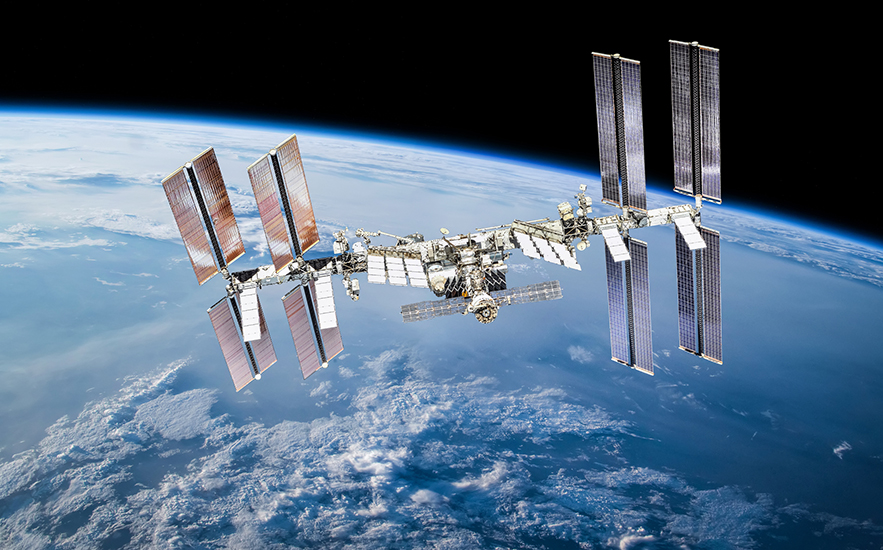
Furthermore, competition and cooperation regarding the moon and deep space are intensifying within the international community. Japan is participating in the U.S.-led Artemis program and is making major contributions through lunar surface activities and the development of pressurized rovers. As efforts are underway to shape a new space order in the post-ISS (International Space Station) era, Japan will be expected to play a responsible and leading role together with other partner nations, leveraging the technological capabilities it has cultivated to date and its involvement in the formation of international norms[9].
In this context, India, which is promoting lunar and deep space exploration as a national strategy, is an extremely important partner for Japan that shares a similar vision for exploration[10]. Japan has strengths in high-precision space observation technology and satellite data analysis capabilities, and has earned an international reputation for its precision engineering and reliable spacecraft development. Meanwhile, India is increasing its presence in the commercial market with its relatively low-cost, high-frequency launch capabilities. The technological complementarities between the two countries and their shared recognition that space is a global commons for peaceful and sustainable use will serve as an important foundation for the formation of a new space order that includes deep space exploration.
Japan-India space cooperation, is becoming a new frontier in the formation of an order. It is expected not only to support regional order in the Indo-Pacific, but also to influence the development of norms for international cooperation in space as a global commons. FOIP is expanding from the oceans to space, and its effectiveness will likely be accelerated through growing space cooperation. Japan-India cooperation will continue to grow as a strategic nodal point that bridges regional order and space order.
(2026/03/24)
Notes
- 1 JAXA, “Lunar Polar Exploration Mission,“ accessed February 8, 2026.
- 2 “PM Modi welcomes ISRO-JAXA collaboration for Chandrayaan-5 LUPEX mission,” DD News, August 29, 2025.
- 3 Ministry of External Affairs, “India - Japan Joint Vision for the Next Decade: Eight Directions to Steer the Special Strategic and Global Partnership,” August 29, 2025.
- 4 Fatoumata Diallo, “China’s Military-Civil Fusion in Space: Strategic Transformations and Implications for Europe,” The EuroHub4Sino project, June 30, 2025.
- 5 Mikayla Easley, “China practicing on-orbit ‘dogfighting’ tactics with space assets, Gen. Guetlein says,” The Defense Scoop, March 18, 2025.
- 6 Cabinet Public Affairs Office, “Policy Speech by Prime Minister KISHIDA Fumio at the Indian Council of World Affairs (ICWA),” March 20, 2023.
- 7 MOFA, “Announcement of “Economic Region Initiative of Indian Ocean-Africa”,” August 20, 2025.
- 8 Markus Holmgren, “The role of space technologies in power politics: Mitigating strategic dependencies through space resilience,” FIIA Briefing Paper, June 2023.
- 9 Japan currently regards space debris management as a common issue for the international community through the Committee on the Peaceful Uses of Outer Space (COPUOS).Japan has stressed its efforts to develop technologies for addressing the issue, and has also establisheddomestic laws and guidelines as norms and rules. Furthermore, Japan has confirmed that it will take the lead in rule-making discussions at the United Nations in order to appeal to the international community the importance of the sustainable and stable use of outer space (Permanent Mission of Japan to the United Nations, ”Statement by Mr. IRIYA Takayuki, Minister, Permanent Mission of Japan to the United Nations at the Meeting of the Fourth Committee, 80th Session of the United Nations General Assembly on agenda item 48: International cooperation in the peaceful uses of outer space,” October 30, 2025.
- 10 News Desk, “India-Japan Space Partnership to Foster Innovation and Industry Collaboration: PM Modi,” Defence Star, August 29, 2025.