




One year has passed since Russia and North Korea officially acknowledged the deployment of North Korean troops to the war in Ukraine. While most attention has been directed to North Korea’s role in sustaining Russia’s war effort, this involvement has also reinforced the Kim Jong Un regime and poses growing risks to Indo-Pacific security.
Pyongyang has demonstrated a conspicuous commitment to Russia. Since October 2024, more than 20,000 North Korean troops are reported to have been deployed to the battlefield, alongside substantial provision of labor and munitions. In return, the Kim regime has derived substantial and tangible military and economic benefits. This paper examines the gains accrued by the regime through its involvement in the war and assesses the broader implications for Indo-Pacific security.
Military Benefits
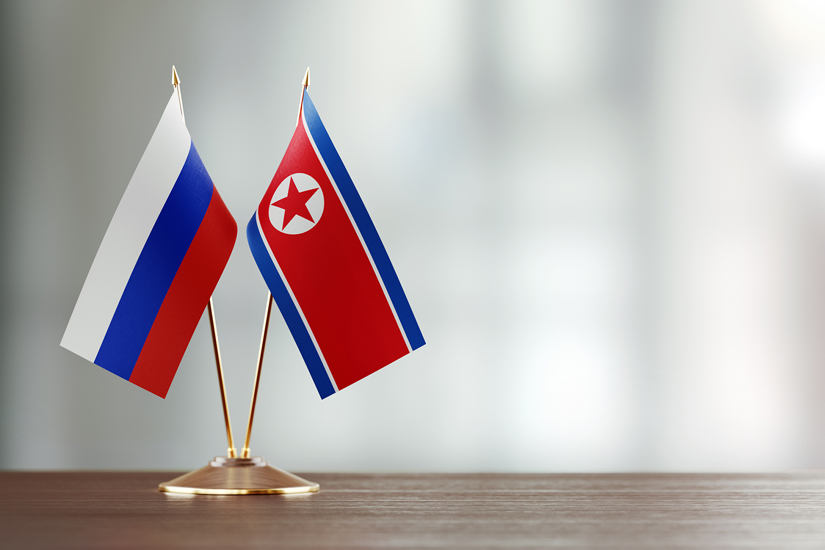
Pyongyang is acquiring invaluable combat experience of the evolving modern warfare in Ukraine, while simultaneously building corresponding capabilities.[1] In a deepening quid pro quo arrangement, Russia is providing military equipment and technological support to North Korea. While the full scope remains unconfirmed, credible assessments point to transfers spanning satellite, missile, air defense, and potentially submarine capabilities, strengthening warfighting capacity that international sanctions had long constrained.[2] Most notably, North Korea’s drone capabilities appear to be advancing rapidly, raising particular concern.
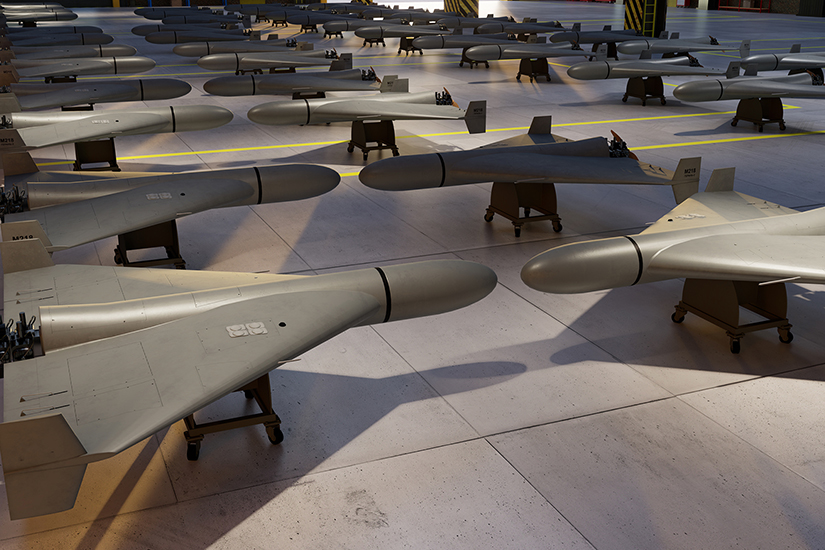
It has long been Kim’s ambition to develop unmanned aerial capabilities. Russia reportedly gifted him six drones during his visit to Vladivostok in 2023,[3] and as North Korea deepens its involvement in the war in Ukraine, it has capitalized on this relationship to bring this ambition closer to reality. According to satellite imagery and intelligence assessments, approximately 12,000 North Korean workers are believed to be operating at the Yelabuga production facility within the Alabuga Special Economic Zone in Tatarstan, Russia, which manufactures Russia’s Geran-1 and Geran-2 one-way attack drones based on Iran’s Shahed design.[4]
Russia is also reportedly supporting North Korea’s domestic production of similar Shahed-derived systems.[5] Exposure to Russia’s wartime drone production experience and technological assistance is thereby advancing North Korea’s broader unmanned aerial systems (UAS) and unmanned combat aerial vehicle (UCAV) development and production capabilities. The Korea Institute for Defense Analyses assesses that North Korea has entered a phase of mass production, with manufacturing centered at the Banghyon Aircraft Factory and an additional, unidentified facility in the Pyongyang–Pyeongseong area.[6] North Korea is believed to possess at least two Saetbyol-4 Unmanned Aerial Vehicles (UAVs), alongside a minimum of six Saetbyol-9 UAVs and six Kumsong-series tactical attack drones.[7] While these numbers remain modest and some systems likely remain at the prototype stage, their significance lies less in current inventory size than in the trajectory they represent: North Korea is moving toward a more diversified UAS capability spanning reconnaissance, surveillance, and strike roles.
At the same time, North Korean military forces are accumulating real-world UAV operational data—an experience not readily available to U.S. allies in the Indo-Pacific. Effectively adapting to Russian tactics, North Korean forces now operate in small, dispersed units to reduce vulnerability to persistent drone threats and counter enemy drones, while building proficiency in drone-enabled reconnaissance and strikes and potentially in longer-range capabilities.[8] Moreover, Pyongyang is systematically incorporating these wartime lessons into its doctrine and force development.[9] A recent combined-arms drill in March 2026 further illustrates this trend: drones conducted real-time reconnaissance and strikes, enabling the Cheonma-20, equipped with active protection, and a remote-controlled weapon station, to deliver anti-armor fires, supported by rear-echelon ambush units and follow-on infantry.[10]
Economic Benefits
North Korea’s deepening security ties with Russia have delivered substantial economic benefits and new avenues for sanctions evasion, emboldening Pyongyang’s military ambitions. After more than three years of border closures due to the COVID-19 pandemic, compounded by international sanctions and natural disasters, North Korea’s sluggish economy has recently shown signs of recovery. The Bank of Korea estimates that the North’s economy grew by 3.7 percent in 2024, its largest expansion in eight years. While domestic economic initiatives, such as the Five-Year Plan for National Economic Development (2021–2025) and the more targeted “20×10” regional development policy, have played a role, expanding economic cooperation with Russia has also been a key contributing factor.[11]
China continues to overwhelmingly dominate North Korea’s trade, accounting for around 98%. Russia, however, is increasingly positioning itself as a complementary key partner, providing refined petroleum, grain, fertilizer, and foreign currency inflows.[12] North Korea has reportedly earned between USD 7.67–14.4 billion through troop deployments and munitions provision to Russia between August 2023 and December 2025, possibly exceeding half of its estimated 2024 GDP of USD 26.6 billion.[13] This represents a substantial inflow for one of the world’s most heavily sanctioned economies, potentially undermining the effectiveness of international sanctions.
Empirical indicators point to a marked increase in production activity across North Korea’s heavy, chemical, and defense industrial sectors, with a sharp uptick in nighttime illumination at artillery shell and small arms production facilities, which may be driven by increased involvement in Russia’s war with Ukraine.[14] North Korea’s improved economic conditions and growing confidence were reflected in Kim’s speech at the Ninth Party Congress in February 2026, where he lauded his country’s remarkable progress despite what he described as “barbaric” sanctions by hostile forces, and asserted that its overall situation, and international standing, had fundamentally changed.[15]
In past windfalls, whether from sanctions evasion, illicit arms sales, or cyberheists, Pyongyang has channeled resources into weapons programs and regime consolidation, as opposed to other areas such as civilian welfare. It is thus likely that whatever economic gains are earned by increased military cooperation with Russia would follow the same path.
Challenges to Indo-Pacific Security
As its partnership with Russia deepens, North Korea is accumulating military and economic benefits that have direct implications for Indo-Pacific security—growing leverage and easing economic pressure are reducing Pyongyang’s incentive to engage diplomatically, while broadening its range of coercive options and strengthening its confidence in employing them.
Partnership with Russia has measurably diversified Pyongyang’s foreign policy options and increased its strategic leverage. The evidence is already visible on the diplomatic front: at the 15th Supreme People’s Assembly on March 23, Kim officially designated South Korea as “the most hostile nation,” despite repeated diplomatic overtures from the South Korean government under President Lee Jae-myung.[16] Kim Yo-jong, sister of Kim Jong Un and a department head of General Affairs in the ruling Workers’ Party of Korea, also issued a categorical rejection of Japanese Prime Minister Takaichi Sanae’s stated intention to pursue a Japan–North Korea summit. For a regime with expanded economic and military options, diplomatic engagement with Seoul and Tokyo carries diminishing returns. The consequences of their diversification may spill over more broadly, including into the cyber domain. As North Korea grows less dependent on cyberheists as a financial lifeline under sanctions, it may enjoy increased latitude to direct its cyber capabilities toward more disruptive ends, including espionage, attacks on critical infrastructure, and malicious influence campaigns, potentially in coordination with Russia and other authoritarian partners.[17]
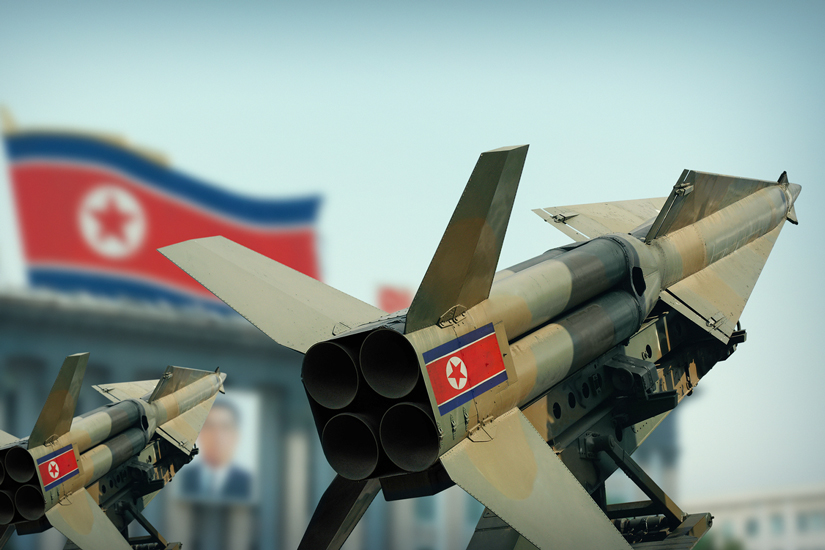
North Korea’s military posture presents an additional set of challenges for regional security. To offset its conventional disadvantages vis-à-vis the U.S. and its regional allies, Pyongyang has doubled down on asymmetric capabilities. Alongside strengthening nuclear capabilities—North Korea’s ultimate hedge against regime change and a potential instrument of preemptive coercion —unmanned systems provide a relatively low-cost and operationally flexible tool to degrade and coerce superior conventional forces below the threshold of nuclear escalation.[18] Battlefield experience and technological transfers from its partnership with Russia are accelerating North Korea’s shift toward more operationally credible unmanned capabilities, complicating deterrence and defense on the Korean Peninsula and across the Indo-Pacific. The ‘mixed salvo’ concept, drone swarms saturating air defenses, followed by coordinated ballistic missile strikes has moved from theoretical concern to observable practice as demonstrated in the ongoing Russia–Ukraine war and the Iran war. North Korea’s expanding drone capabilities and missile arsenal suggest that this approach is increasingly factoring into Pyongyang’s broader military calculus.[19]
While deterrence by U.S. and regional allied forces should not be understated,[20] these combined capabilities could nonetheless enable Pyongyang to inflict greater operational strain and disruption not only on South Korea but also on U.S. military bases in the region, particularly those in close geographic proximity in a potential contingency on the Korean Peninsula. U.S. installations in Japan, increasingly restructured as “warfighting headquarters,”[21] and the seven United Nations Command rear bases—key logistics and reinforcement hubs for peninsula contingencies—would likely figure among the earliest targets. If North Korea succeeds in operationalizing long-range loitering munition systems comparable to the Shahed-136, which multiple credible reports suggest are currently under development, it could eventually place every major U.S. base in Japan within strike range. Russia’s suspected provision of overhead surveillance and intelligence-sharing to Iran offers a further warning sign. Should similar support be extended to Pyongyang, which cannot be ruled out given the deepening partnership, it would significantly enhance North Korea’s targeting accuracy against U.S. allied assets. Low-cost unmanned systems give North Korea a credible means of prolonging conflict through cumulative attrition, imposing disproportionate costs on technologically superior but resource-intensive Indo-Pacific adversaries.
Conclusion
North Korea is not a new threat, but an evolving one, now accelerating in pace and expanding in capability through wartime experience and deepening strategic alignment with Russia. The Russia–North Korea partnership has moved well beyond rhetoric; both states share a deeper objective of countering U.S. sphere of influence and undermining its regional alliances, a convergence likely to deepen regardless of how the war in Ukraine concludes. Whether Pyongyang can fully translate current battlefield experience into a scalable and sustainable operational capability in the Indo-Pacific context remains uncertain, the overall trajectory points toward a more capable and increasingly unpredictable Pyongyang. Diplomatic options must remain on the table for regional neighbors, but they must be pursued with full recognition of the strategic realities now shaping the Korean Peninsula and the broader Indo-Pacific security environment.
(2026/05/01)
Notes
- 1 Office of the Director of National Intelligence. Annual Threat Assessment of the U.S. Intelligence Community, 2026. Washington, DC: ODNI, 2026.
- 2 Multilateral Sanctions Monitoring Team. “Unlawful Military Cooperation including Arms Transfers between North Korea and Russia,” May 29, 2025.; Sutton, H.I. “Russian Nuclear Submarine Technology Will Make North Korean Threat More Palpable,” 38 North, November 5, 2025, Stimson Center.
- 3 Bremer, Ifang. “Russia gifts drones and supplies to North Korea in likely sanctions violation,” NK News, September 17, 2023.
- 4 Bermudez Jr., Joseph S., Victor Cha and Jennifer Jun. “A Closer Look at the Yelabuga UAV Factory,” Beyond Parallel, Center for Strategic and International Studies, March 9, 2026.
- 5 Zadorozhnyy, Tim. “Russia to help North Korea produce Shahed-type drones, Ukraine's spy chief says,” The Kyiv Independent, June 10, 2025.
- 6 Jeon, Kyung-joo, and Hongsuk Kim. “The Increasing Threat of North Korean Drones through Russia–North Korea Cooperation,” ROK Angle: Korea's Defense Policy, Issue 286. Korea Institute for Defense Analyses, December 2025.
- 7 Williams, Martyn. “Current Status of North Korea’s Drone Program,” 38 North, September 25, 2025, Stimson Center.; Bermudez Jr., Joseph S., Victor Cha and Jennifer Jun. “North Korean UAVs at Panghyon,” Beyond Parallel, Center for Strategic and International Studies, March 3, 2026.
- 8 Jeon & Kim. 2025.
- 9 Cha, Du-hyeon, Beomchul Shin, Ho-ryeong Lee, Ki-bum Han, Won-gon Park, and Uk Yang. “Bukhan-ui Anbo Wiheop Bunseok [Analysis of North Korea’s Security Threats],” Asan Report, January 13, 2026.
- 10 Park, Boram. “N. Korea’s Kim oversees combined drill involving new main battle tanks,” Yonhap News. March 20, 2026.
- 11 Oh, Seok-min. “N. Korean economy logs fastest growth in 8 years in 2024: BOK,” Yonhap News. August 29, 2025.
- 12 Choi, Jangho, Dawool Kim, Yoojeong Choi, and Bumhwan Kim. “North Korea’s New Domestic and International Economic Strategies in the Post-Polycrisis Era,” Policy Analyses, No. 25-06. Korea Institute for International Economic Policy, December 30, 2025.
- 13 The report’s estimates reflect the dollar-equivalent value of troop deployments and munitions exports, rather than actual cash transfers. Im, Soo-ho. “The Economic Effects of North Korea’s Troop Deployment to Russia and Exports of Military Supplies,” Strategic Report, No. 374. Institute for National Security Strategy, March 13, 2026.
- 14 Kim, Kyoochul & Jinwook Nam. “North Korea–Russia Alignment: Impacts on the North Korean Economy and Implications,” KDI research monograph, No. 2025-02. Korea Development Institute, December 31, 2025.
- 15 Kim, Jong Un. “Joseonlodongdang je9chadaehoeeseo han gaehoesa [Opening Speech at the 9th Congress of the Workers’ Party of Korea],” Rodong Sinmun, February 20, 2026.
- 16 Park, Boram. “(2nd LD) N. Korea’s Kim formally calls S. Korea ‘most hostile’ nation,” Yonhap News. March 24, 2026.
- 17 See, Fox, Julian, Katelyn Radack, Jae Seung Shim, Rebecca Spencer and Victor D. Cha. “Chapter 3: Technology and Cybersecurity.” in The Black Box: Demystifying the Study of Korean Unification and North Korea, Victor D. Cha, Columbia University Press, 2024; Gen Digital. “Alliances of convenience: How APTs are beginning to work together,” November 19, 2025; Kim, Sungjin. “Bukhan Saibeo Gonggyeok Byeonhwa-e Ttareun Hyanghu Jeonmang-gwa Daeeung [Future Prospects and Responses to Changes in North Korea’s Cyber Attacks],” KDI Bukhan Gyeongje Review (North Korea Economic Review), Vol. 27, No. 10, October 2025.
- 18 Van Diepen, Vann H. “North Korea Tests New Theater Launch Platforms as Party Congress Continues Nuclear/Missile Buildup,” 38 North, April 15, 2026, Stimson Center; Shin, Beomchul. “Bukhan 9cha dangdaehoe gunsa bunya pyeongga mit sisajeom [Assessment and Implications of the Military Sector at North Korea’s 9th Party Congress],” Sejong Institute, February 27, 2026.
- 19 Corrado, Jonathan, Chelsie Alexandre, and Anton Ponomarenko. “North Korea’s Deadly Drone Bonanza Is Coming to a Peninsula Near You,” War on the Rocks, July 22, 2025.; Reddy, Shreyas. “Kim Jong Un oversees drone tests, calls UAV development ‘top priority’ for DPRK,” NK News, September 19, 2025.
- 20 Office of the Director of National Intelligence, 2026.
- 21 Yates, Tisha. “USFJ, 5 AF Separate Leadership Roles During Change of Command Ceremony,” U.S. Pacific Air Forces, March 25, 2026.