




The Trump administration has caused more clamor than ever through its moves in the leadership appointments within the Department of Defense and the military establishment, carried out in unsettling ways involving “firings,” “ousters” and “early retirements.” These dismissal dramas are all manifestations of the discordant relationship between the administration and military leaders, but they can be classified into three categories. The first of these are the ousters of individuals from minority backgrounds who are considered overly privileged and promoted to the top ranks of the military by policies that promote DEI (diversity, equity, and inclusion). The second are personnel measures to remove government officials and highest-ranking military officers who are reluctant to engage the military in domestic security missions. The third comes when a person is considered to lack loyalty to the administration because he or she disagrees with the Trump-centered administration on other individual policies and strategies, or is not responsive enough to the administration’s wishes.
This article as the first of two will observe the relationship between politicians and military leaders in the Trump administration, or in other words, between the government and the military, to see what changes are taking place and what implications these changes have. The second article that follows this will delve into the issues handled in the second category raised in this article, that is, the discussion regarding the employment of National Guard under federal command or federal troops, i.e. regular army and its reserve, to domestic security missions. We take up this point in the second article because an overview of the historical context of this issue provides clues to understanding the unique relationship between American civil society and the military.
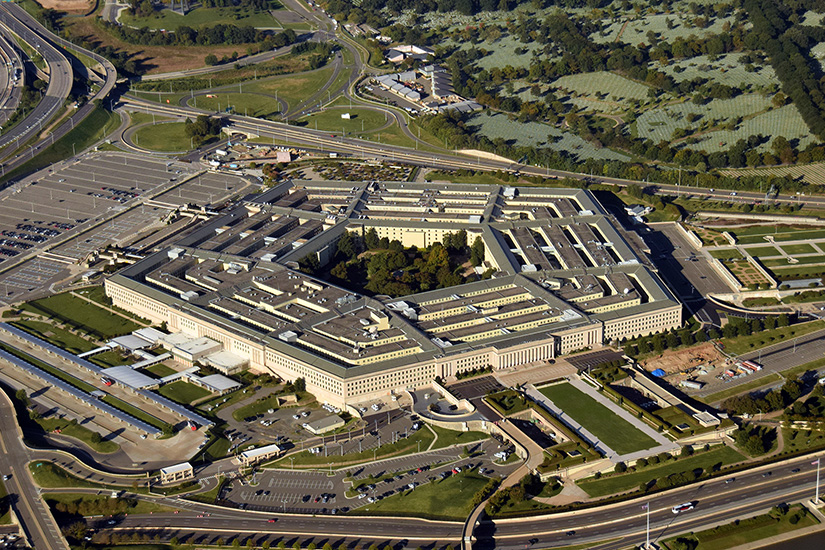
The Backlash Against Preferential Treatment of Minorities in Furtherance of DEI
In particular, the first category mentioned above stands out because it is the most frequently reported and because it represents personnel action taken against top-ranking officers in the military. We saw such moves even on January 21, the day after the president’s inauguration. Admiral Linda Fagan, appointed the first female commander of the Coast Guard under the Biden administration, was removed from her post[1]. The reasons given for the dismissal included failure to manage borders and an overemphasis on diversity, equity, and inclusion (DEI).
Admiral Fagan was the first woman to hold top positions in the six branches of the U.S. military: Army, Navy, Air Force, Marine Corps, Space Force, and Coast Guard. On February 21, Admiral Lisa Franchetti, the first woman to hold the post of head of the Navy's uniformed services, or Chief of Naval Operations, was relieved of her post before the halfway point of her four-year term[2]. Air Force General Charles Brown, Chairman of the Joint Chiefs of Staff, who was removed from his post the same day, was the first African American Air Force Chief of Staff, selected in the first term of the Trump administration and promoted to Chairman of the Joint Chiefs of Staff, the top military position under the Biden administration[3]. Two women and one African American, making up three minority military leaders, would thus be eliminated as leftovers from the Biden administration's pro-DEI policies.
Differing Attitudes Toward the Use of the Military for Domestic Security
The second pattern forms part of the cases where differences of opinion on individual policies and strategies are the cause of terminations. In particular, these come amid differences of opinion on the merits and permissibility of assigning the military to domestic security duties. For President Trump, this also represents a return to the problems that manifested themselves during the uprisings over discrimination against African Americans[4] in the second half of his first administration.
To begin with, there is strong resistance in American society against the military using force domestically, with the exception of National Guard units, which are under the command of state governors and are allowed to engage in domestic missions. We will leave the discussion surrounding this issue, especially such details as its historical context, to the second article of this series. In general, the military itself, beginning with military leaders including civilian Pentagon officials, has been extremely cautious in this respect. For example, former Secretary of Defense Mark Esper, who entered the administration midway through Trump's first term, consistently opposed the use of the military to quell protests that were turning violent[5]. The reason behind this is a recognition that domestic security is the mission of law enforcement agencies such as the police and coast guard, and that "the option to use active-duty forces" who are charged with national defense "in a law enforcement role should only be used as a matter of last resort"[6]. By contrast, President Trump seemed to be seriously considering the use of force by the military at the time, and asked Chairman of the Joint Chiefs of Staff Milley, "Can't you just shoot them, just shoot them in the legs or something?"[7]. It is clear that there are significant differences in perspective over the use of the military for domestic security purposes in the US government. These events led to a deterioration of relations with Trump, and Esper was dismissed at the end of the administration[8], while Milley faced, being removed from dignitary protection[9] shortly after the start of the second Trump administration.
In late February, shortly after the start of the second Trump administration, Secretary of Defense Hegseth announced that the top legal officers of the Army, Navy, and Air Force would be removed from their posts[10]. The reasons for this are not clear, but it is not difficult to imagine that the intention is to facilitate policy implementation by installing legal officers who will interpret more loosely the legal restrictions under which the military acts. One of the goals would be to lower as much as possible the threshold for using the military for domestic law enforcement activities. In fact, President Trump, at a September 30 gathering of U.S. military leaders at Marine Corps Base Quantico, revealed his intention to use the deployment of troops to the nation's cities as a "training ground for the military."[11]
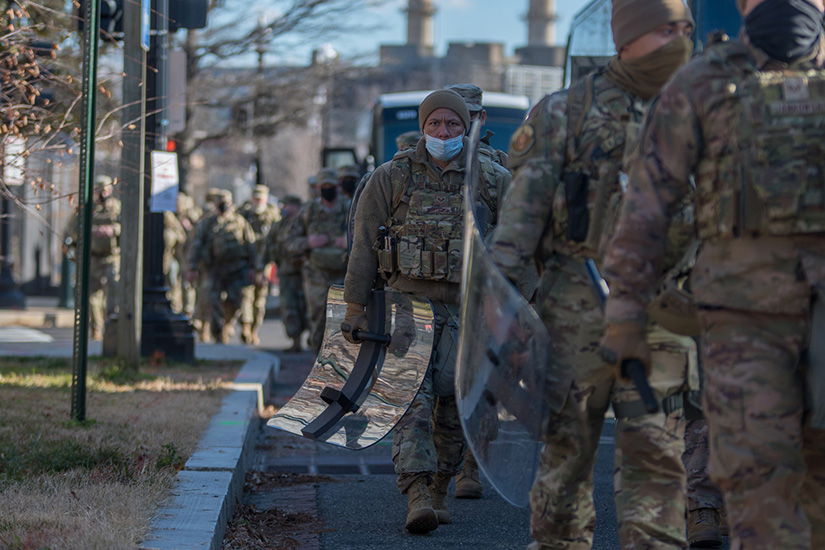
When Differences on Individual Policies Are Viewed as a Lack of Loyalty
The two patterns of dismissal drama described so far have been driven by issues that are unique to the Trump administration. On the other hand, it is not surprising that there are differences in views on individual policies and strategies between political leaders and military leaders in the first place, and under the primacy of politics over the military, that is, civilian control, it is not unusual for military leaders to be dismissed or for senior military officers to resign their posts and express opposition to a policy.
A recent example in the U.S. is the cold treatment of then Army Chief of Staff General Eric Shinseki by Secretary of Defense Rumsfeld and Deputy Secretary of Defense Wolfowitz during the Bush administration. The incident was incited by a Senate hearing just prior to the start of the war in Iraq where Shinseki said that "hundreds of thousands of troops" would be needed to rule Iraq after it was taken. In an immediate press release, Deputy Secretary Wolfowitz rubbished the idea as "wildly off the mark.” For the Secretary and Deputy Secretary, who aimed to operate blitzkrieg-style with as small a force as possible (around 100,000 troops), General Shinseki was seen as challenging that policy. As can be seen from the subsequent situation of the war in Iraq, Shinseki's point was ultimately validated. However, although he was not dismissed, not only did he become a lame duck when his successor was named 18 months before his retirement, but the Secretary and Deputy Secretary were absent from his retirement ceremony, contrary to customary practice[12].
What stands out in Trump's second administration is the story of the dismissal of the head of intelligence at the Pentagon. Secretary of Defense Hegseth announced on August 22 that Defense Intelligence Agency (DIA) Director Jeffrey Kruse, Air Force Lieutenant General, had been removed from his post[13]. The dismissal was reportedly over his assessment of the U.S. military’s June 21 bombing of Iran's nuclear facilities that year. The DIA's assessment of the operation, which the president himself praised on social media as "the most successful military strikes in history," was scathing. The media reported an initial assessment from the DIA that the strikes had failed to destroy Iran's nuclear-related program and at best caused a delay of a few months or so[14]. President Trump was furious, with the strategy having been his brainchild, and proclaimed the success of the operation. The incident was reminiscent of the way in which, during World War II, military announcements of war results in Japan were often exaggerated to maintain the public's will to fight[15]. We need to be aware of the danger of the government arbitrarily manipulating information to the public.
Conclusion - Key Points When Observing U.S. Political-Military Relations
The tensions between the political and military branches of government over the appointment of military leaders that we have discussed thus far raise several points that should be kept in mind when observing political-military relations in the United States. To begin with, regarding the first of the three patterns of political-military friction caused by the DEI policies, it is necessary to take into consideration the fact that the Biden administration's appointment of military leaders was considerably on the liberal side of American society. Although Chief of Naval Operations Franchetti, who was dismissed shortly after the Trump administration was inaugurated, was not at the top of the list of candidates for Secretary of Defense Austin, it is said that President Biden himself picked her out from among the other candidates[16]. For Trump and Hegseth, who deride the kind of moralism wielded by DEI proponents, it was indeed a “woke” choice. The dismissal of the Chief of Naval Operations can be seen as a counterattack on the conservative side against the liberal policies of the Biden administration. The second point is that, in general, it is natural for there to be some tension between politics and the military. The roles and characteristics of the two are different, and the values and sense of mission of the political leaders in the former case and the military personnel appointed to the latter are also different. The Prussian military philosopher Clausewitz, in his On War, wrote: "(War) has certainly a grammar of its own, but its logic is not peculiar to itself."[17] In other words, this tension is the relationship between the ends and means of war. It is the role of political leaders to define the logic, that is, the objectives of war. Meanwhile, military leaders concentrate on the grammar, that is, the use of military force as a means to achieve those objectives. What is important here is that both sides share a common understanding of the purpose of war. But this is by no means easy.
Early in the Civil War, Lincoln faced a particular problem[18]. Since the beginning of the war in 1861, Union forces repeatedly invaded Virginia, the state to the south of Washington, and attempted to close in on Richmond, its capital and the capital of the South, but were repulsed each time at the hands of General Robert E. Lee. In the year and a half leading up to the Battle of Gettysburg in July 1863, where the Union armies delivered a decisive defeat to the Confederates, Lincoln removed three commanders. These were George McClellan (dismissed November 7, 1862), Ambrose Burnside (resigned January 26, 1863) and Joseph Hooker (resigned June 28, 1863).
George Meade defeated General Lee at the Battle of Gettysburg on July 1-3, 1863, but failed to capture the Confederate forces because he was late in ordering pursuit. He thus failed to achieve the result that would have led to the destruction of the Confederate forces and end of the war. For Lincoln, the primary mission was to prevent the South from seceding from the United States. The minimum requirement for this was not only to repel the Southern armies, but also to destroy their main forces and compel their return to the United States. This was precisely what General Ulysses S. Grant, who would become the Supreme Commander of the Union Army after the Battle of Gettysburg, understood. Grant and his right-hand man, William Sherman, were deeply aware of the need to also inflict decisive damage to the industrial base and economic capacity of the South, as these were key to continuation of the war. They therefore hastened to the end of the war by destroying not only the military strength of the South but also its economic base[19]. Just as the U.S. had demanded unconditional surrender from Germany and Japan in World War II, there was no option for peace in the middle of the war.
The third point concerns the ethics of American society, which seeks to be inclusive of minorities. It was in 1862, the second year of the Civil War, that President Lincoln issued the Emancipation Proclamation. Since then, it took a century until civil rights for African Americans were secured by law in 1964. This was largely due to the efforts made by civil rights proponents beginning with Dr. Martin Luther King, Jr. from the 1950s. Women's participation in society has followed a similar long path to the present. While the Trump administration has certainly poured cold water on this movement, we would hope that President Trump himself, at heart, does not harbor negative views of minorities.
To begin with, the fact that it was first-term President Trump who selected Chairman of the Joint Chiefs of Staff Brown, who was dismissed in April, as the first African American Air Force Chief of Staff may be viewed as a positive sign. Whether American society will swing back and forth between liberals and conservatives like a pendulum, including on issues surrounding minorities in political-military relations, or whether it will swing in the direction suggested by the Trump administration, is yet to be seen.
(2026/04/24)
Notes
- 1 Idrees Ali, Phil Stewwart and David Shepardson, "Trump removes U.S. Coast Guard chief:. Official Cites DEI Focus," Reuters, January 22, 2025.
- 2 Jon Harper, "Trump fires Franchetti as chief of naval operations," DEFENSESCOOP , February 21, 2025.
- 3 Ibid.
- 4 中村亮「米国防長官、軍動員に反対 デモ巡りトランプ氏と相違」(Nakamura, Ryo, “U.S. Secretary of Defense Opposes Mobilization: Difference of Opinion with Trump over Demonstrations”), Nihon Keizai Shimbun, June 4, 2020. (Japanese)
- 5 Ibid.
- 6 Ibid.
- 7 Michael Martin and Tinbete Ermyas, "Former Pentagon chief Esper says Trump asked about shooting protesters," NPR, May 9, 2022; Gregg Jaff, "In Pursuit of a 'Warrior Ethos,' Hegseth Targets Military's Top Lawyers ," The New York Times, February 22, 2025.
- 8 Rebecca Shbad and Carol E. Lee, “Trump tweets that Defense Secretary Mark Esper has been ‘terminated.’” NBC NEWS, November 10, 2020.
- 9 「米国防長官、トランプ氏の敵に「報復」 元制服組みトップの警護剥奪」(“U.S. Secretary of Defense ‘Retaliates’ Against Trump’s Enemies: Strips Former Top Uniformed Personnel of Security”), Mainichi Shimbun, January 29, 2025. (Japanese)
- 10 Hugo Lowell, "Pete Hegeseth to overhaul US military lawyers in effort to relax rules of war," The Guardian, March 13, 2025.
- 11 Bernd Debusmann and James FitzGerald, "US cities should be military training grounds, Trump tells generals," BBC, October 1, 2025.
- 12 Nicholaus Mills, "The General who Understood Iraq from the Start," Dissent, April 25, 2008.
- 13 Rachel Muller-Heyndyk, "Pentagon fires intelligence agency chief after Iran attack assessment," BBC, August 24, 2025.
- 14 Ibid.
- 15 Such exaggerated reporting by the Japanese military was termed “ daihon-ei happyo," and, after the war, it came to be used to refer to "unreliable information released by the government and influential figures that was only good for their own interests. "Daihon-ei happyo," Kotobank, accessed December 11, 2025.
- 16 Lara Seligman, et.al, "Inside Biden's decision to nominate the first female Joint Chief," Politico, July 21 2023.
- 17 Carl von Clausewitz, On War, trans. & eds. Michael Howard and Peter Parret, Princeton University Press, 1984, p.605.
- 18 For Lincoln, it was a time to seek a commander who could share his goal of destroying the Confederacy and critically damaging the South's ability to conduct the war. McClellan won his first victory over General Lee on the battlefield of Antietam, but failed to follow up with a decisive victory, and was dismissed after being held responsible. His successor, Burnside, resigned, taking responsibility for inflicting heavy losses on his own army due to poor attacks while driving the Confederates back to Fredericksburg. Hooker was instructed by Lincoln to pursue Confederate troops who had invaded the North and bring them to a decisive engagement, but resigned when his request for more base guard troops near Washington was not accepted. Meade became commander three days before the Battle of Gettysburg. Lee's troops mounted a massive infantry assault against the Union forces positioned on the high ground, but they suffered heavy casualties and lost combat power due to fire from the Union positions. Meade, too, failed to understand Lincoln's intention to pursue, that is, the importance of taking this opportunity to strike the Confederate forces hard, and missed the opportunity to do so.
- 19 Samuel Morison, Masami Nishikawa (translation supervisor), The Oxford History of the American People, Volume 3 (Japanese translation), Shueisha Bunko, 1997, pp. 511-517.