



Introduction
The Government of Japan is working to strengthen its maritime cluster[1] through public-private partnerships. The backdrop to this effort is the decline in the international competitiveness of Japan’s maritime cluster. In particular in the shipbuilding industry, Japan’s global market share of shipbuilding orders received has shrunk to approximately 8% and China and the Republic of Korea have the overwhelming advantage. For this reason, the government formulated and announced the Shipbuilding Industry Revitalization Roadmap on December 26, 2025 with the objective of reconstructing Japan’s shipbuilding industry.[2] It strongly emphasizes the perspective of economic security, as in a document released by the Ministry of Land, Infrastructure, Transport and Tourism stating that “as the security environment becomes more complex, intercompany partnerships and reorganization in the entire supply chain and with other companies in the same industry are becoming increasingly important in order to respond to risks that could lead to the loss of Japan’s autonomy and indispensability, such as disruptions in the supply of critical materials and forced technology transfer.”[3] On the other hand, in the domain of traditional security, the focus goes no further than the streamlining of manufacturing and other processes, for example through the introduction of the latest facilities, as the “construction of a vessel and government ship building and repair system.”[4]
This author believes that the fact that a variety of initiatives toward the strengthening of the maritime cluster, including Japan’s shipbuilding industry, are being advanced under this Roadmap should be welcomed, but is concerned that not enough matters have been considered from the perspective of national defense, namely defense from war and armed conflict. Therefore, in this paper, this author would like to present the security risks and then consider how to reconstruct Japan’s shipbuilding industry so that those risks can be mitigated.
Domestic and International Security Risks Pertaining to the Maritime Cluster
As stated at the beginning of this paper, the government’s strengthening of the maritime cluster is largely due to the decline in the global market share of the shipbuilding industry and the changes to the international security environment in recent years.
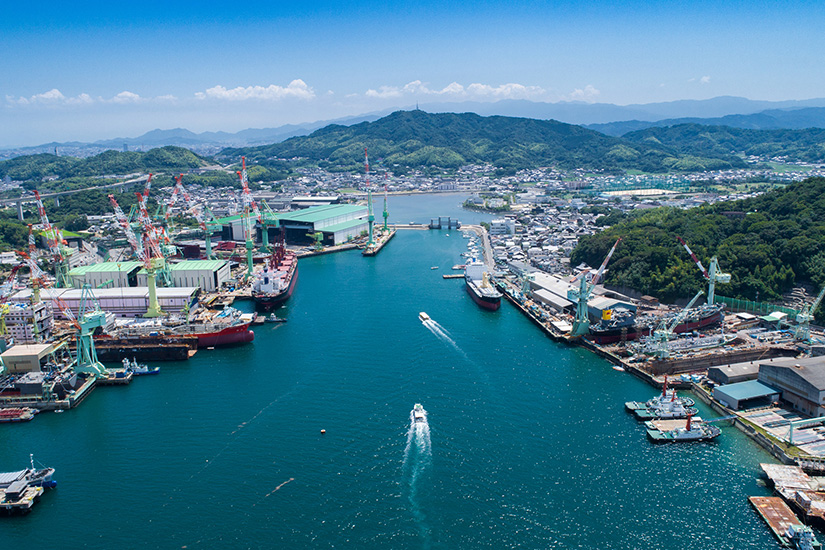
Firstly, this author will confirm the current situation regarding the structural weaknesses of Japan’s shipbuilding industry. Japan’s major shipyards are concentrated around the Seto Inland Sea and in northern Kyushu. Therefore, although the shipyards have resilience with respect to Nankai Trough earthquakes and trench-type earthquakes in the vicinity of the Japan Trench and Kuril Trench, the locations of the shipbuilding industry are excessively concentrated in those places. The only major shipyards on the Sea of Japan are Japan Marine United Corporation’s Maizuru Shipyard and Niigata Shipbuilding & Repair Inc. Furthermore, there are risks such as inferior cost competitiveness and lot order receipt capacity due to the relatively small size of Japan’s shipbuilding companies, inferior development capabilities and customer service capabilities due to a decrease in the number of and dispersion of engineers, an aging workforce and human resource shortages in design work and on sites, not much track record of overseas expansion, and, more specifically, building no new LNG carriers since 2019. In addition to these structural risks, in Japan’s shipbuilding industry, the survival of the maritime cluster is threatened by the massive increase in the size of competitors and enhancement of their quality and technological capabilities due to shipyard integration in China and the Republic of Korea, the strengthening of China’s market dominance due to a rapid increase in the volume of orders it is receiving, and other factors.
Moreover, changes to the environment such as the tariff measures imposed by President Trump and China’s embargo on the export of dual-use goods to Japan are posing the greatest risks to Japan’s shipbuilding industry. The tariff measures by the United States have led to major disruptions to North American import and export routes, rising transportation costs, and a shift of production bases from China to Southeast Asian and other countries. This is generating the reorganization of supply chains as a consequence of changes to global logistics networks. It is highly likely that China’s new ban on the export of dual-use items to entities listed in its Export Control List[5] will have an impact on Japan’s economy as approximately 70% of Japan’s rare-earths depend on supplies from China. These measures by the United States and China are generating reorganization and risks in supply chains as a result of changes to global logistics networks, which is a headwind for Japan’s shipbuilding industry.
Security Issues Faced by Japan’s Shipbuilding Industry
As stated at the beginning of this paper, the global market share of Japan’s shipbuilding industry is declining, and it has fallen under the annual shipbuilding demand from Japanese shipowners, forcing the industry to rely on overseas shipyards. The Shipbuilding Industry Revitalization Roadmap also points out that annual shipbuilding volume declined to approximately nine million gross tons by 2024, the automation of production sites lags behind compared to China and the Republic of Korea, and rising steel prices and human resource shortages are serious problems, so from 2022 onwards 30% to 40% of orders from shipowners went to Chinese manufacturers, meaning that even domestic demand is forced to depend on overseas supply.
In response to this issue, the Roadmap has presented five pillars aimed at doubling annual shipbuilding volume to 18 million gross tons by 2035 and enabling the industry to recover to a global market share of approximately 20%. Furthermore, it has stated that the funding and investment structure will consist of public and private investment on the scale of one trillion yen. The government is to establish a Shipbuilding Industry Revitalization Fund on the scale of a total of 350 billion yen over the next ten years to support automation, labor-saving equipment, and shipyard development in three stages.[6] In response to this, industry reorganization has begun to occur, including investment by the three major shipping companies in a joint ship design company founded by Mitsubishi Heavy Industries (MHI) and Imabari Shipbuilding, the consolidation of the shipbuilding business of Mitsui E&S into Tsuneishi Shipbuilding, and other developments.[7] Moreover, strengthening of the maritime cluster has begun. For example, in January 2026, the largest shipbuilder in Japan, Imabari Shipbuilding, made the second-ranked company in the country, Japan Marine United (JMU), its subsidiary, thereby becoming the shipyard boasting the fourth highest shipbuilding volume in the world (and a domestic market share of over 50%).[8]
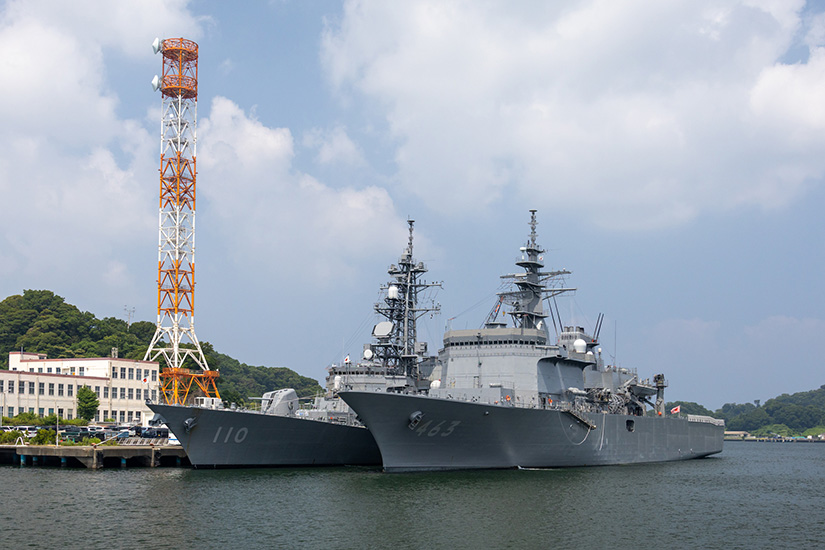
The shipbuilding industry related to maritime security and defense in Japan has also seen a rapid increase in the number of vessels used by the Japan Maritime Self-Defense Force and the Japan Coast Guard in response to the increasingly severe and complex security environment surrounding Japan in recent years. For example, the Japan Maritime Self-Defense Force is building two or three Mogami-class frigates (FFMs) per year, aiming eventually to have 24 vessels, including the “new FFMs,”[9] and it is also building two Aegis system equipped vessels.[10] The Japan Coast Guard is aiming to commission a large patrol vessel (multipurpose), one of the largest patrol boats ever built, with a gross tonnage of approximately 31,000 tons.[11] Furthermore, it plans to develop nine Miyako-class patrol vessels, with completion expected by 2028.[12] Moreover, Japan is also transferring patrol vessels and patrol boats overseas.[13] In addition to this, in 2025, Australia decided to introduce the new FFMs (frigates) based on the Mogami-class frigates of the Japan Maritime Self-Defense Force (a total of 11 vessels at a cost of approximately one trillion yen), and a large project symbolizing Japan-Australia defense cooperation is planned under which the first three vessels will be built by MHI and the remaining vessels will be manufactured by a shipyard in Australia.[14]
Due to these developments, a strong demand for shipbuilding has emerged, and a discussion has begun regarding revival of the so-called state-owned munitions factories called “arsenals.” Specifically, this involves the expansion of capital investment through the utilization of GOCO (Government-Owned, Contractor-Operated), a system under which the government owns the facilities and a private business operator (company) operates them, which has already been employed by the United States and other countries.[15]
Moreover, approximately 77,000 Japanese workers were engaged in the shipbuilding industry as of 2025, and this number is continuing to decline. On the other hand, the number of foreign human resources, which fell during the COVID-19 pandemic, has begun to increase again over the last few years (reaching approximately 15,000 workers as of 2025), and there are signs that the decline in the overall number of workers is coming to a halt.[16]
Reconstruction of Japan’s Shipbuilding Industry
Strengthening of Japan’s maritime cluster from a security perspective is an issue directly connected to the national interest of Japan. The Shipbuilding Industry Revitalization Roadmap announced by the government recently is a policy that was studied in the Strategic Areas Subcommittee (Shipbuilding Working Group) of the Council for Japan’s Growth Strategy, and it does not give much consideration to emergencies or contingencies.[17] Therefore, this author would like to state several recommendations regarding reconstruction of the shipbuilding industry in anticipation of emergencies and contingencies and for the fundamental strengthening of Japan’s defense capabilities. Firstly, based on the balance between the shipbuilding industry and maritime transport vessels, in order to ensure the security of Japan, it is necessary to increase (approximately double) the current ship construction demand presented in the Shipbuilding Industry Revitalization Roadmap (approximately nine million gross tons)[18] to at least the approximately 18 million gross tons which is the shipping tonnage of Japanese shipowners. Furthermore, dispersing the major ports and also the shipyards and ship machinery factories nationwide is also critical for ensuring resilience. This will ensure resilience in construction, repair, and port calls, and will also enable the maintenance of a system for ensuring the construction and repair of the Japan Self-Defense Forces vessels and Japan Coast Guard patrol vessels located throughout the country, as well as the production and storage of (maritime) equipment.
Furthermore, in order to maintain the shipbuilding and repairs related to stable maritime security and defense, early introduction and operation of the GOCO system (arsenals) is required. Increasing the competitiveness of Japan’s shipbuilding industry will enable stable retention of Japan Self-Defense Forces vessels, Japan Coast Guard patrol vessels, Fisheries Agency fisheries surveillance vessels, and other ships. When introducing the GOCO system (arsenals), it is necessary to take into consideration the sourcing, importing, and manufacturing of raw materials and products which do not depend on China, in order to address the problem of export regulations.
Moreover, as a part of the measures to combat the decline in the number of shipbuilding industry workers, the government should provide support for training Japanese workers, such as support for shipbuilding and marine engineering technical schools and making student tuition free, and make continued efforts to secure foreign workers. Furthermore, the Japan Maritime Self-Defense Force has repair and supply facilities in Yokosuka, Kure, Maizuru, Sasebo, and Ominato, which employ uniformed officials, administrative officials, and technical officials. Going forward, it will also be necessary to consider registering these Japan Self-Defense Forces personnel as reserve officers for construction and repair and re-employing them in the shipbuilding industry after their retirement.
Conclusion
In this paper, we have carried out an analysis focused on Japan’s maritime cluster, in particular its shipbuilding industry, from a security perspective. Japan is in the most severe and complex security environment since World War II. In that context, the United States and Israel launched a large-scale military attack on Iran on February 28, 2026, which was still continuing at the time of writing. In retaliation, Iran’s Islamic Revolutionary Guard Corps (IRGC) declared that it would close the Strait of Hormuz, and vessels are currently stranded in the Persian Gulf, including 44 Japan-linked vessels,[19] which presents enormous risks to Japan’s maritime transport and supply chains. While strengthening the shipbuilding industry is certainly required in the context of economic security, given the current geopolitical risks, it is also necessary, for example, to maintain and enhance the quantitative capacity of frigates and patrol vessels capable of protecting merchant ships in emergencies, and to own and secure alternative transportation capabilities and sufficient vessels to continue exports and imports outside of the specified area of sea even if navigation is suspended or stalled in the specified area of sea. The shipbuilding industry must be part of a national strategy capable of responding to emergencies and contingencies in these ways.
For that reason, it is necessary to advance the reconstruction of the industry through government-led, all-Japan public-private cooperation. This is the strengthening of the shipbuilding industry which is being discussed in the Council for Japan’s Growth Strategy, but it is the Acquisition, Technology & Logistics Agency (ATLA), not the Ministry of Defense, which is participating as the related government agency observer in the Shipbuilding Working Group. On the other hand, it remains unclear to what extent the maintenance of shipbuilding and repair related to maritime security and defense will be considered in the Defense Industry Working Group. Furthermore, no subcommittee has been established to address cross-sectoral issues bridging the gap between the Shipbuilding Working Group and the Defense Industry Working Group.[20] This author believes that there are gaps occurring in the consideration of the maintenance of shipbuilding and repairs related to maritime security and defense by the working groups, and that it is important to deepen the discussions without overlooking those gaps, and hopes for discussions about strengthening of the maritime cluster, including from the security perspective, going forward.
(2026/04/16)
Notes
- 1 “Industrial cluster” refers to a group of various industries which are directly or indirectly related to each other, and is so called because of the resemblance of this phenomenon to a cluster of grapes growing close together. Therefore, a group of maritime industries in particular is called a “maritime cluster.” Japan’s maritime cluster is comprised of a broad range of industries with the shipping industry and the shipbuilding industry at their core but also including the ship machinery industry and port and harbor transportation, and in addition legal services, finance, insurance, and so on. “Glossary: maritime cluster,” The Japanese Shipowners’ Association, accessed March 2, 2026.
- 2 Shipbuilding Industry Revitalization Roadmap, Ministry of Land, Infrastructure, Transport and Tourism, December 26, 2025.
- 3 Basic Information and Related Measures, Ministry of Land, Infrastructure, Transport and Tourism, December 26, 2025, p. 23.
- 4 Basic Information and Related Measures, p. 19.
- 5 “China Adds a Total of 40 Japanese Companies and Organizations to its Export Control List and its Watchlist, Bans the Export of Dual-Use Items and Introduces Stricter Screening,” Japan Biz News, Japan External Trade Organization (JETRO), February 26, 2026.
- 6 “Aiming to Secure the Shipbuilding Capacity Necessary for Japan by 2035: Formulation of the Shipbuilding Industry Revitalization Roadmap,” Ministry of Land, Infrastructure, Transport and Tourism, December 26, 2025.
- 7 “Shipbuilding Industry to Become More Resilient Through Reorganization; Process Chart for a Global Market Share of 20%―Ministry of Land, Infrastructure, Transport and Tourism and Cabinet Office,” Jiji.Com, December 26, 2025.
- 8 Basic Information and Related Measures, p. 5.
- 9 Kosuke Takahashi, “Construction Plan for new FFMs which Upgrade the Capabilities of JMSDF Mogami Frigates; Enthusiasm for Securing Australian Frigate Order,” Yahoo! News, July 3, 2025.
- 10 “Signing of a Construction Contract for Aegis System Equipped Vessels,” Ministry of Defense, September 18, 2024.
- 11 Japan Coast Guard, “Overview of the FY2025 Japan Coast Guard-Related Budget Request,” August 2024.
- 12 Japan Coast Guard, “Overview of the FY2025 Japan Coast Guard-Related Budget Request,” p. 10.
- 13 In 2022, Japan provided two large patrol vessels (built by MHI) to the Philippines and it is planning to provide five more. Furthermore, in 2006, Japan provided three patrol boats to the Indonesian Maritime Police through grant aid, and in 2023, it refurbished and provided two fisheries surveillance vessels that were owned by the Fisheries Agency of Japan. In 2023, an agreement was reached to provide one large patrol vessel on loan free of charge. Moreover, in 2025, the provision of two high-speed patrol boats (built by MHI) to the Indonesian Navy has been approved based on Japan’s new framework for security cooperation, Official Security Assistance (OSA).
- 14 Press Conference by Defense Minister Nakatani (August 5, 2025), Ministry of Defense, August 5, 2025.
- 15 “Urgent Recommendations for the Revitalization of Japan’s Shipbuilding Industry,” Special Committee on Marine Transportation and Shipbuilding and Headquarters for the Promotion of Economic Security in the Liberal Democratic Party Policy Research Council, June 19, 2025.
- 16 Basic Information and Related Measures, p. 7.
- 17 “Themes to Be Explored Going Forward (Draft)” (Document 7), Ministry of Land, Infrastructure, Transport and Tourism, December 23, 2025.
- 18 Shipbuilding Industry Revitalization Roadmap, pp. 6-7.
- 19 “Strait of Hormuz Closed; Japan-Linked Vessels Stranded in the Persian Gulf; Shipping Industry Organizations Hold a Meeting to Discuss Countermeasures,” The Nihon Keizai Shimbun, March 4, 2026.
- 20 “Growth Strategy Review Structure,” Secretariat of the Headquarters for Japan’s Growth Strategy, Cabinet Secretariat, December 2025, p. 2.