



An Unusually Warm Welcome
On the evening of December 4, Indian Prime Minister Narendra Modi personally greeted Russian President Vladimir Putin—whom he called a “friend”—at the foot of the aircraft stairs at a Delhi airbase. The two shared a handshake and an embrace before traveling together in the same car to the Prime Minister’s Residence for dinner. While similar scenes of the two sharing a vehicle were observed during the Shanghai Cooperation Organization (SCO) summit in Tianjin, China, in September, it is extremely rare for Modi to personally receive a foreign leader at the airport.[1]
This visit marked Putin’s first trip to India in four years and his first since the start of Russia’s invasion of Ukraine. One might therefore wonder, “Why now?” but in fact, the timing is not surprising. Since 2000—when Putin’s visit to India marked the launch of the India-Russia strategic partnership—the two countries have institutionalized an annual summit format, alternating visits by their leaders. Although face-to-face meetings were suspended in 2020 (due to COVID-19) and in 2022–23 (following the invasion), Modi made a controversial visit to Moscow in 2024—held notably during the NATO Summit in Washington—demonstrating that the annual summit framework remained intact.[2] Given that Modi moved forward with that visit despite the ongoing war, Putin’s return visit to India was more or less a foregone conclusion.

Stalled Indo-US Relations
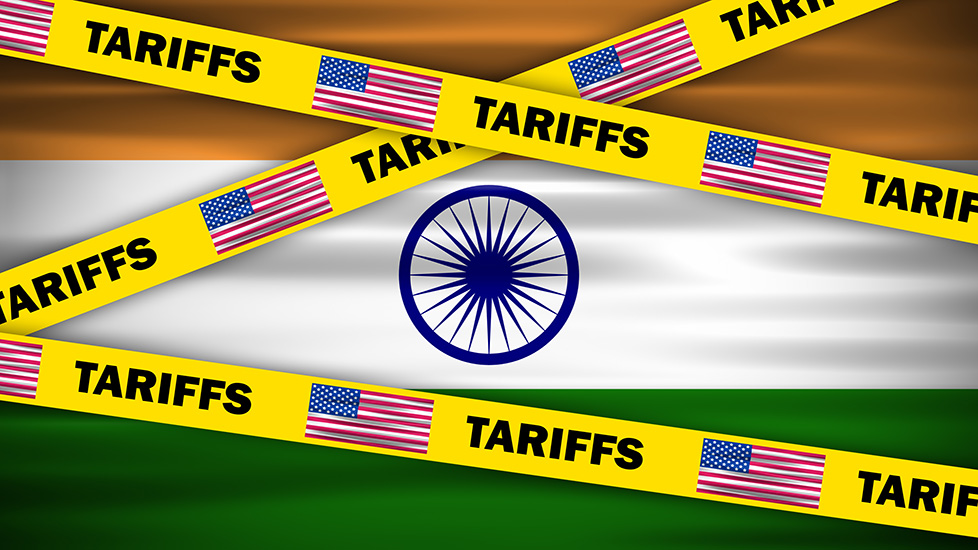
The international environment also played a major role in facilitating Putin’s visit. Tensions in Indo-US relations escalated after India refused to endorse US President Donald Trump’s claim that he had brokered a ceasefire in the May 2025 skirmishes between India and Pakistan. In late July, Trump raised tariffs on Indian imports to 50%, citing India’s continued purchase of Russian crude oil. This was followed by a series of sharp criticisms of India from the Trump administration.[3] As a result, the bilateral trade agreement the two sides had aimed to conclude by autumn 2025—based on their February summit—failed to materialize.[4]
Trump’s remarks during his late‑October meeting with Chinese President Xi Jinping—describing US-China relations as a “G2”—and the postponement of the Quad Summit in Delhi among the United States, Japan, Australia, and India further reinforced the impression that Washington was downplaying India’s strategic value in countering China.
After two decades of steady deepening, Indo-US relations have deteriorated sharply and have remained in a stalemate for over six months. While the Modi government naturally desires a trade and tariff agreement with its largest export market, it has found no opening for improvement.
In these circumstances, India—deeply conscious of its great‑power identity and committed to strategic autonomy—will not simply yield to pressure. Instead, it seeks to advance relations with partners other than the United States. As I argued in my pre‑invasion publication, Russia’s importance to India has been declining in relative terms, but Moscow remains a longstanding friend—serving as a “hedge” when relations with the United States or China sour and as a “lever” to strengthen India’s negotiating position.[5]With the 2020 border clashes making the China threat tangible, and with Trump applying overt pressure on India for his own political ends, it is only natural that New Delhi would find value in playing the “Russia card.”
Modest Tangible Results
This context explains the unusually warm reception for Putin. India clearly intended to signal—both domestically and internationally—that it would not bow to pressure and would maintain its strategic autonomy.[6] For Russia, meanwhile, Modi’s hospitality was a valuable demonstration that Moscow is not isolated globally, especially given India’s status as a key partner for both the West and the Quad. The greatest achievement of the visit was thus symbolic: reaffirming the solidarity of the two leaders amid difficult external circumstances.
Behind the grand optics, however, concrete achievements were modest.[7] With US and EU sanctions imposed in October on Russia’s two major oil companies, the key question was whether India would commit to continuing imports of Russian crude. Putin emphasized that Russia remained a “reliable supplier of oil, gas, coal, and everything that is required for the development of India’s energy” and that Moscow was ready to ensure uninterrupted supplies to India’s fast‑growing economy.[8] Modi, however, offered no explicit response. Foreign Secretary Vikram Misri likewise stated only that Indian energy firms would make decisions based on “evolving market dynamics” and “commercial issues.”[9]
India had initially increased purchases of discounted Russian crude after the invasion but has since reduced volumes to diversify risk. This trend began well before Trump’s tariff hike, being visible from December 2024. Over the subsequent 10 months, India’s imports fell year on year in 8 of them.[10] After sanctions hit Russia’s two major oil firms, India’s five largest refiners placed no orders for December deliveries.[11] Although the two sides likely discussed ways to circumvent sanctions, no solution beyond the existing local currency settlement mechanism appears to have emerged. Even without aligning with Trump’s preferences, India’s imports of Russian crude are likely to continue declining naturally.
Defense cooperation, especially arms sales, was another area of interest. Prior to the summit, media reports suggested India might consider additional S‑400 air‑defense systems, that Russia might propose sales of the updated S‑500 air-defense systems or Su‑57 fighter jets,[12] or that a leased Russian nuclear submarine might be transferred to India.[13] Yet despite a defense ministers’ meeting the day before the summit, no new agreements on platforms or equipment were announced. Similarly, although Kremlin spokesperson Dmitry Peskov had hinted that Russia would propose installing small modular reactors (SMRs), no agreement was reached.[14]
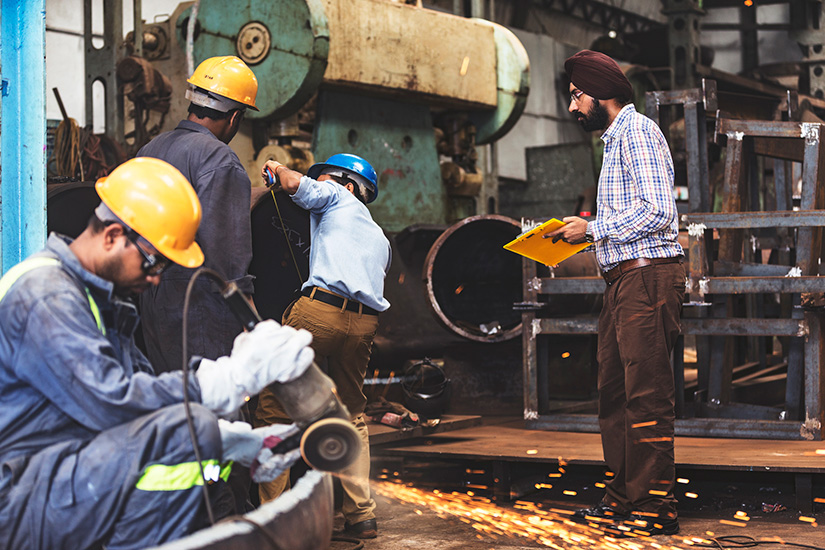
The memorandums signed were primarily concerned with economic and social cooperation, the most notable being a “labor mobility agreement,” which will allow skilled Indian workers in IT, construction, and engineering to work in Russia.[15] Given the unresolved issue of Indian nationals who traveled to Russia for study but were deceived into working for the Russian military,[16] such an agreement may seem surprising. Yet the Modi government concluded a similar arrangement with Israel after the start of the Gaza conflict, sending large numbers of workers there.[17] With Russia facing severe labor shortages due to the prolonged war and India struggling to provide sufficient domestic employment for its youth, the agreement likely appeared mutually beneficial.
The Future of Indo-Russia Relations
Why, then, were the concrete outcomes so limited? Analysts point to concerns that Trump might adopt an even tougher stance in trade and tariff negotiations—potentially applying the Countering America’s Adversaries Through Sanctions Act (CAATSA)—and that India wished to avoid jeopardizing the upcoming 2026 EU-India free trade agreement negotiations and the planned visits by European leaders.[18]
More fundamentally, however, India does not place unqualified trust in Russia. The Ukraine war has revealed that even previously contracted Russian weapons—including the S‑400—are facing delivery delays and that Russia’s dependence on China—India’s principal security threat—has deepened across diplomatic, economic, and military domains. Some in India now argue that Russia is not the answer.[19]
For India, the worst‑case scenario would be a US-China “G2” order in which Russia—its longstanding partner—becomes fully aligned with China. To avoid this, India must continue drawing Russia closer and maintaining the relationship, given Moscow’s geopolitical position on the far side of China. But if US engagement in the Indo‑Pacific continues to recede, India will increasingly emphasize ties not only with Russia but also with such “middle powers” as Britain, France, Germany, Australia, Canada, and Japan. Russia should thus be understood as one component of India’s broader multi‑alignment diplomacy.
(2025/12/30)
Notes
- 1 Examples of foreign leaders whom Prime Minister Modi has personally welcomed at the airport include US President Barack Obama in 2015; Bangladeshi Prime Minister Sheikh Hasina and Japanese Prime Minister Shinzo Abe in 2017; and US President Donald Trump in 2020.
- 2 Toru Ito, “Roshia Ukuraina senso ni okeru Indo no baransu gaiko: Puchin, Zerensuki soho to hoyo shita Modi” [India’s Balancing Diplomacy in the Russia–Ukraine War: Modi’s Embraces of Both Putin and Zelensky], International Information Network Analysis (IINA), August 30, 2024.
- 3 Toru Ito, “Rapidly Growing Distrust of the U.S. in India and the Crisis in India-U.S. Relations: The Limits of Trump-Modi Friendship,” International Information Network Analysis (IINA), September 12, 2025.
- 4 Toru Ito, “From Biden to Trump 2.0: Expectations and Concerns for the Modi Administration in India,” International Information Network Analysis (IINA), March 14, 2025.
- 5 Toru Ito, Shinko taikoku Indo no kodo genri: Dokuji riarizumu gaiko no yukue [The Behavioral Logic of Emerging Power India: The Future of Its Distinct Realist Diplomacy], (Tokyo: Keio University Press, 2020), 177–89.
- 6 In response to a question about whether Putin’s visit might negatively affect India’s trade negotiations with the United States, External Affairs Minister S. Jaishankar stated, “I think we have always made it very clear that we have multiple relationships. We have a freedom of choice,” adding that “strategic autonomy will continue.” Divya A, “India’s Freedom of Choice, Putin’s Visit Won’t Affect US Ties, Says Jaishankar,” The Indian Express, December 7, 2025.
- 7 Ministry of External Affairs, “Joint Statement Following the 23rd India–Russia Annual Summit (December 05, 2025),” December 5, 2025.
- 8 Devirupa Mitra, “Putin Vows ‘Uninterrupted’ Fuel Supplies as India, Russia Seek to Project Resilient Ties,” The Wire, December 5, 2025.
- 9 Shivam Patel and YP Rajesh, “Putin, Modi Agree to Expand and Widen India-Russia Trade, Strengthen Friendship,” Reuters, December 6, 2025.
- 10 T. C. A. Sharad Raghavan, “India’s Shift Away from Russian Oil Imports Predates Trump Tariffs,” The Hindu, November 20, 2025.
- 11 “Indian Oil Refiners Scale Back from Buying More Russian Oil: Report,” The Wire, November 12, 2025.
- 12 Snehesh Alex Philip, “India Eyes More S-400s with Upcoming Putin Visit, Su-57 Likely to Stay Off Radar,” The Print, November 26, 2025.
- 13 “India Finalizes $2 Billion Russia Sub Deal as Putin Visits,” Bloomberg, December 5, 2025.
- 14 Kallol Bhattacherjee, “Russia Focused on Increasing Trade with India Despite ‘Obstacles’ by Third Countries: Dmitry Peskov,” The Hindu, December 2, 2025.
- 15 Ministry of External Affairs, “List of Outcomes: State Visit of the President of the Russian Federation to India (December 04–05, 2025),” December 5, 2025.
- 16 “Number of Indians in Russian Army Rises Sharply to 44,” The Wire, November 8, 2025.
- 17 Suhasini Haidar, “First Batch of 64 Indian Workers from Haryana, Uttar Pradesh Leave for Israel,” The Hindu, April 3, 2024.
- 18 Suhasini Haidar, “What Did Putin’s Visit to India Achieve? Explained,” The Hindu, December 7, 2025.
- 19 Rajesh Rajagopalan, “Hugs, Car Rides, but No Deals—Modi–Putin Meet Exposes Weaknesses of Both Countries,” The Print, December 7, 2025.