




Renewed Fighting Along a Contentious Border
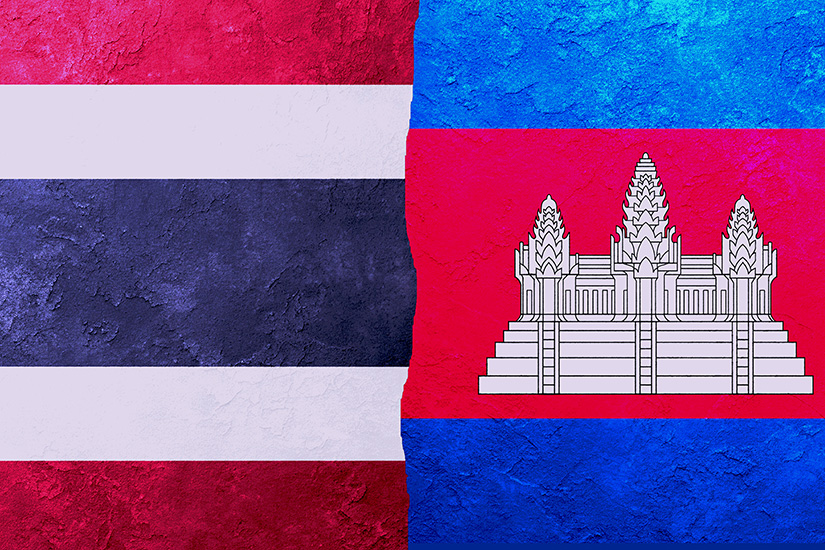
Since May 2025, Thailand and Cambodia have been locked in a cycle of armed clashes along their disputed border that have followed a familia pattern: military confrontation, a ceasefire agreement, renewed tensions in the border zone, and then another round of fighting. Major escalations occurred in July and December. What began as exchanges of gunfire flared into Thai airstrikes on Cambodian military facilities, while the militarily weaker Cambodia countered with drone attacks. The intensity of the clashes has grown, resulting in more than a hundred deaths—including civilians—and the displacement of roughly 800,000 people. Cross border economic and social activity has come to a halt.
This is not the first time the two countries have experienced large scale hostilities. Their border disputes have deep historical roots. One flashpoint, the Preah Vihear temple complex, was ruled Cambodian territory by the International Court of Justice (ICJ) in 1962. But when Cambodia sought World Heritage listing for the site in 2008, the move ignited political controversy in Thailand, fueling nationalism and heightening tensions along the border. Sporadic clashes followed, including exchanges involving heavy weaponry that resulted in troop deaths.
The trigger for the current crisis again lies in Thailand’s domestic politics. The opposition attacked a government backed agreement on joint development in the border region, claiming it would lead to a loss of Thai territory. Nationalist rhetoric intensified political polarization, prompting Cambodia to harden its stance as well.[1] Cambodian nationalism and anti Thai sentiment also rose, and the Hun Manet administration accelerated efforts to strengthen national defense.[2]
First ASEAN Mediation and US-China Involvement
The Association of Southeast Asian Nations (ASEAN) has several mechanisms for managing intra regional conflicts. The 1976 Treaty of Amity and Cooperation in Southeast Asia provides for a High Council to settle disputes.[3] The 2008 ASEAN Charter allows parties to a dispute to resort to the (1) good offices, (2) conciliation, or (3) mediation of the ASEAN chair or secretary general.[4] An April 2010 protocol further details these dispute-settlement mechanisms.[5]
Yet none of these formal tools have ever been activated. During the previous Thailand-Cambodia clash, Cambodia sought ASEAN mediation, but Thailand refused. This effectively disabled the mechanism, which requires the agreement of both parties. Indonesia, then ASEAN chair, stepped in informally and secured agreement on an ASEAN ceasefire monitoring mission, but the mission was never deployed. Tensions eventually eased due to a change of government in Thailand and a shift in the country’s public attention following severe flooding. The dispute was ultimately settled only when the ICJ reaffirmed Cambodia’s sovereignty over Preah Vihear in 2013 and ordered Thai troops to withdraw. The episode underscored ASEAN’s limited capacity to resolve intra regional conflicts.
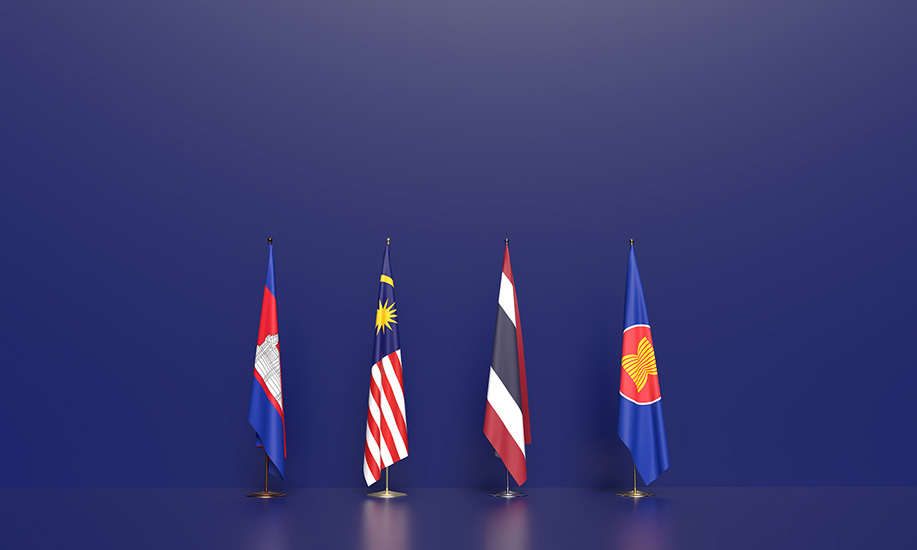
In the current crisis, ASEAN’s formal mechanisms again remained unused. The only meaningful intervention came from Malaysia, the 2025 ASEAN chair. When fighting intensified in July, Prime Minister Anwar Ibrahim urged both sides to accept an immediate ceasefire. Cambodia agreed, but Thailand rejected Malaysia’s mediation.[6]
At that point, US President Donald Trump intervened, linking ceasefire talks to ongoing bilateral tariff negotiations with each country. He declared that Washington would suspend tariff discussions with both countries until the fighting stopped. The pressure proved decisive: Thailand, which had rejected mediation offers from Malaysia and even China, agreed to enter ceasefire talks.[7]
On July 28, Malaysia convened a special meeting attended by the prime ministers of Malaysia, Cambodia, and Thailand. The United States joined as co host, and China also participated—both through embassy representatives. Thailand and Cambodia agreed to an immediate, unconditional ceasefire, informal meetings between local commanders, and the convening of a General Border Committee (GBC). Malaysia proposed dispatching an ASEAN ceasefire monitoring mission.[8] At a subsequent GBC meeting in Malaysia, the two sides agreed to accept a monitoring team composed of defense attachés from ASEAN member states.[9]
Progress continued in October during ASEAN related meetings in Malaysia. Thailand and Cambodia signed a peace agreement reaffirming acceptance of the ASEAN monitoring mission and pledging efforts to de escalate and rebuild trust. Trump attended the signing ceremony, highlighting his self proclaimed role as a peace broker.[10]
For Anwar, the ceremony demonstrated ASEAN’s ability—at least symbolically—to address regional conflicts. It also succeeded in drawing Trump, who had shown little interest in ASEAN multilateralism, to Kuala Lumpur. Domestic criticism in Malaysia over Trump’s Middle East policies meant the diplomatic victory was not unqualified, but Malaysia did secure a bilateral trade agreement with the United States soon afterward, giving the outreach tangible economic value.[11]
Second Mediation
The situation soon deteriorated again in late November when a Thai soldier was injured by a landmine in the border zone. Thailand accused Cambodia of laying the mine and suspended implementation of the peace agreement. Sporadic clashes resumed in December, and Thailand expanded its airstrikes inside Cambodia.
The United States and China urged both sides to de escalate, while Malaysia again stepped in. On December 22, Kuala Lumpur hosted a special ASEAN foreign ministers’ meeting, with Prime Minister Anwar in attendance. Both countries were pressed to halt hostilities.[12] Following the meeting, Thailand and Cambodia held a special GBC meeting on December 27 and agreed to de escalate.[13]
Can the Momentum Be Sustained?
Since the late December agreement, additional flare-ups have been narrowly avoided, but both sides continue to accuse the other of failing to honor the ceasefire. Thailand faces a general election in February 2026, and with nationalist sentiment running high, no party can afford to appear conciliatory toward Cambodia. Even after the election, Thailand’s entrenched political divide between conservative and reformist camps is unlikely to soften. Rising nationalism in Cambodia also makes a rapid improvement in bilateral relations improbable.
ASEAN’s formal dispute resolution mechanisms have gone utterly unused, but Malaysia, as chair, played the role of mediator to the fullest extent possible. Anwar’s persistent engagement ensured that each round of talks in Kuala Lumpur produced at least temporary de escalation. In that sense, ASEAN managed to preserve a minimal level of credibility as a security community through informal diplomacy. Still, it was US pressure—particularly Trump’s tariff linked intervention—that brought Thailand to the table, and China also engaged actively to protect its influence with both countries.
The ASEAN chairmanship passed to the Philippines in 2026. With Manila focused on rising tensions with China in the South China Sea and eager to advance negotiations on a Code of Conduct, there is speculation that it may prefer to leave the Thailand-Cambodia dispute largely to US and Chinese management.[14] For ASEAN, the immediate priority is to prevent another outbreak of fighting and maintain steady diplomatic engagement with both sides.
(The views expressed in this article are the author's own and do not represent the official views of the institution to which the author belongs.)
(2026/03/02)
Notes
- 1 Maki Aoki-Okabe, “Provoking “Elephant in the Room”: Thai-Cambodia Border Crush [sic] 2025,” IDE Square, Institute of Developing Economies, June 2025.
- 2 Naomi Hatsukano, “Thailand-Cambodia Border Dispute: Cambodia’s Impact and Response,” IDE Square, Institute of Developing Economies, September 2025.
- 3 ASEAN, “Treaty of Amity and Cooperation in Southeast Asia” p. 5.
- 4 ASEAN, “Charter of the Association of Southeast Asian Nations,” p. 23.
- 5 ASEAN, “Protocol to the ASEAN Charter on Dispute Settlement Mechanism,” April 8, 2010, pp. 5–7.
- 6 Panu Wongcha-um, “Exclusive: Thailand Favours Direct Talks to End Cambodia Conflict, Rather Than Mediation,” Reuters, July 25, 2025.
- 7 Panu Wongcha-um and Poppy McPherson, “Exclusive: Trump’s Call Broke Deadlock in Thailand-Cambodia Border Crisis,” Reuters, July 31, 2025.
- 8 Prime Minister’s Office of Malaysia, “Joint Press Conference on the Special Meeting Hosted by Malaysia to Address the Current Situation between Cambodia and Thailand,” July 28, 2025.
- 9 Ministry of Foreign Affairs, Kingdom of Thailand, “Joint Press Statement Extraordinary General Border Committee (GBC) Meeting Kuala Lumpur, Malaysia on 7 August 2025,” August 7, 2025.
- 10 Ministry of Foreign Affairs, Kingdom of Thailand, “Joint Declaration by the Prime Minister of the Kingdom of Cambodia and the Prime Minister of the Kingdom of Thailand on the Outcomes of Their Meeting in Kuala Lumpur, Malaysia,” October 26, 2025.
- 11 Tang Siew Mun, “Trump in Kuala Lumpur: Upstaging ASEAN?” Fulcrum, October 24, 2025.
- 12 ASEAN, “ASEAN Chair’s Statement Special ASEAN Foreign Ministers’ Meeting on the Current Situation between Cambodia and Thailand,” December 22, 2025.
- 13 ASEAN, “ASEAN Chair’s Statement on the Outcomes of the Third General Border Committee (GBC) between Cambodia and Thailand on 27 December 2025,” December 29, 2025.
- 14 Sam Beltran, “Why Philippines as ASEAN Chair May Leave Thai-Cambodian Peace Problem to US, China,” South China Morning Post, January 5, 2025.