




Introduction
Since his return to the White House, US President Donald Trump has identified the Western Hemisphere as a priority for US foreign and defense policy, and this shift appears to be reshaping political dynamics across Latin America. Some observers argue that Trump’s Big Stick diplomacy has contributed to a rightward shift in the region, with right-leaning candidates winning presidential elections in Ecuador, Bolivia, Chile, Honduras, Costa Rica, Colombia, and Peru since the beginning of his second term. Many of these candidates campaigned on improving relations with Washington—a message that Trump openly welcomed. The so-called Orange Wave sweeping the region would seem to suggest that his hemispheric strategy is gaining traction.[1]
Yet this reading risks missing a more important transformation. Given Brazil’s upcoming presidential election, I will set aside an analysis of recent election results for a future discussion. Here, I will focus instead on how the changing international environment—particularly intensifying US-China competition—is reshaping the region and expanding the range of diplomatic options available to Latin American states.
Deepening Chinese Engagement
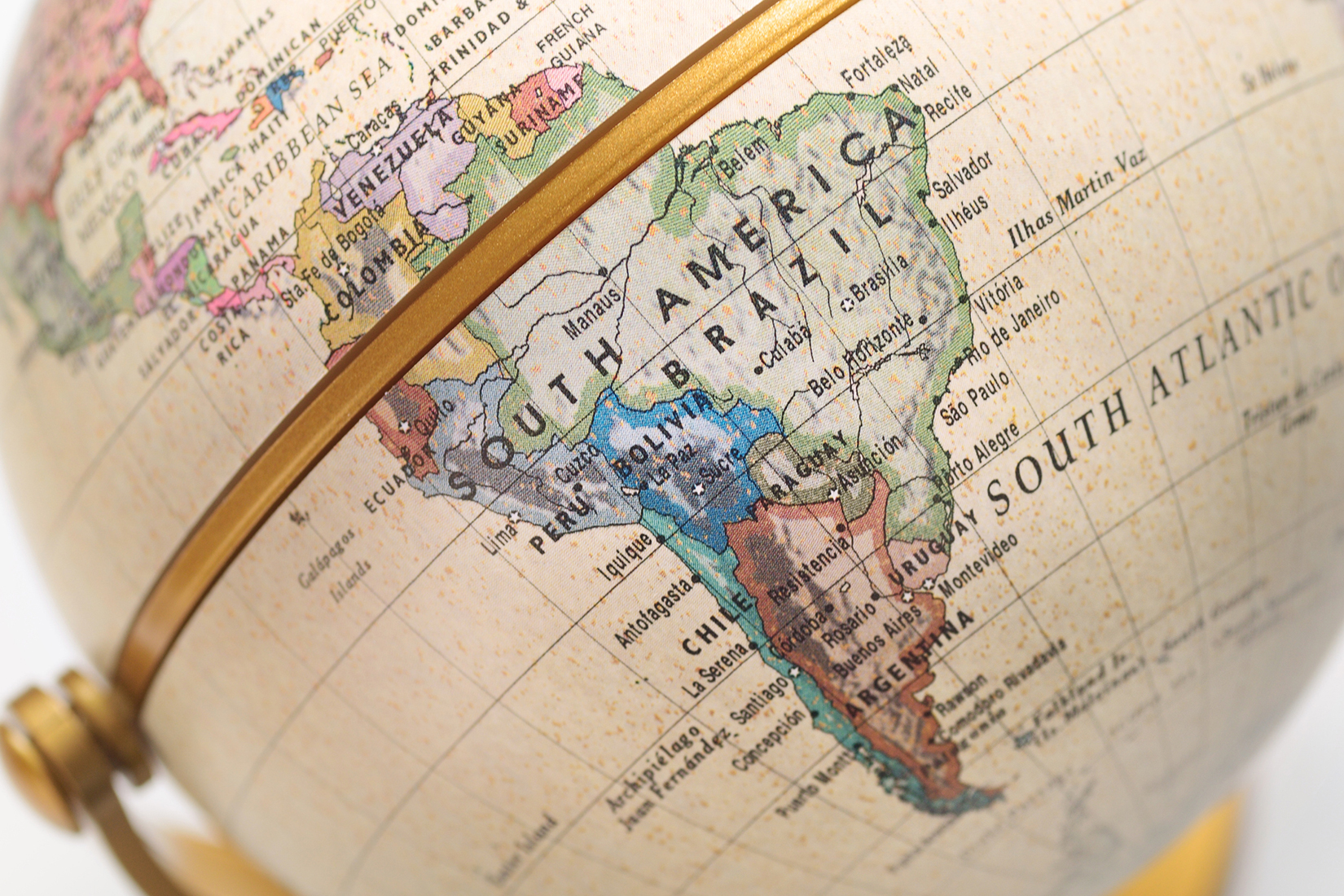
If any external factor has transformed Latin America’s international environment over the past two decades, it is China’s growing presence. Following its accession to the World Trade Organization in 2001, Beijing steadily expanded into the region, primarily through trade and investment. Yet the consequences extended beyond economics. China’s growing engagement coincided with the resurgence of left-leaning governments and contributed to Latin America’s gradual diversification away from its traditional dependence on the United States.[2]
Because this political shift was a broader movement toward the center-left—rather than a full embrace of communism—it became known as the Pink Tide. The period also saw the emergence of regional institutions designed to promote greater autonomy from Washington, including the Union of South American Nations (UNASUR) in 2008 and the Community of Latin American and Caribbean States (CELAC) in 2011.
Ordinarily, the rise of left-leaning governments would have heightened concerns in Washington. At the time, however, US strategic attention was focused elsewhere, particularly on the Middle East and Asia. That relative disengagement continued through the Barack Obama administration. Indeed, many US policymakers welcomed China’s expanding economic role in Latin America as a source of growth and stability rather than as a geopolitical challenge.
As China’s global influence grew, however, Washington’s perception began to change. Trump’s first term marked a renewed US interest in what was often described as a forgotten continent. Yet the administration’s priorities remained relatively narrow, centering largely on homeland security concerns and migration management.[3] The result was not a restoration of US influence but, in many cases, a further erosion of regional confidence in Washington. Today, China has overtaken the United States as a leading trading partner for much of Latin America and enjoys levels of support that often rival or exceed those of the United States.[4]
New Opportunities
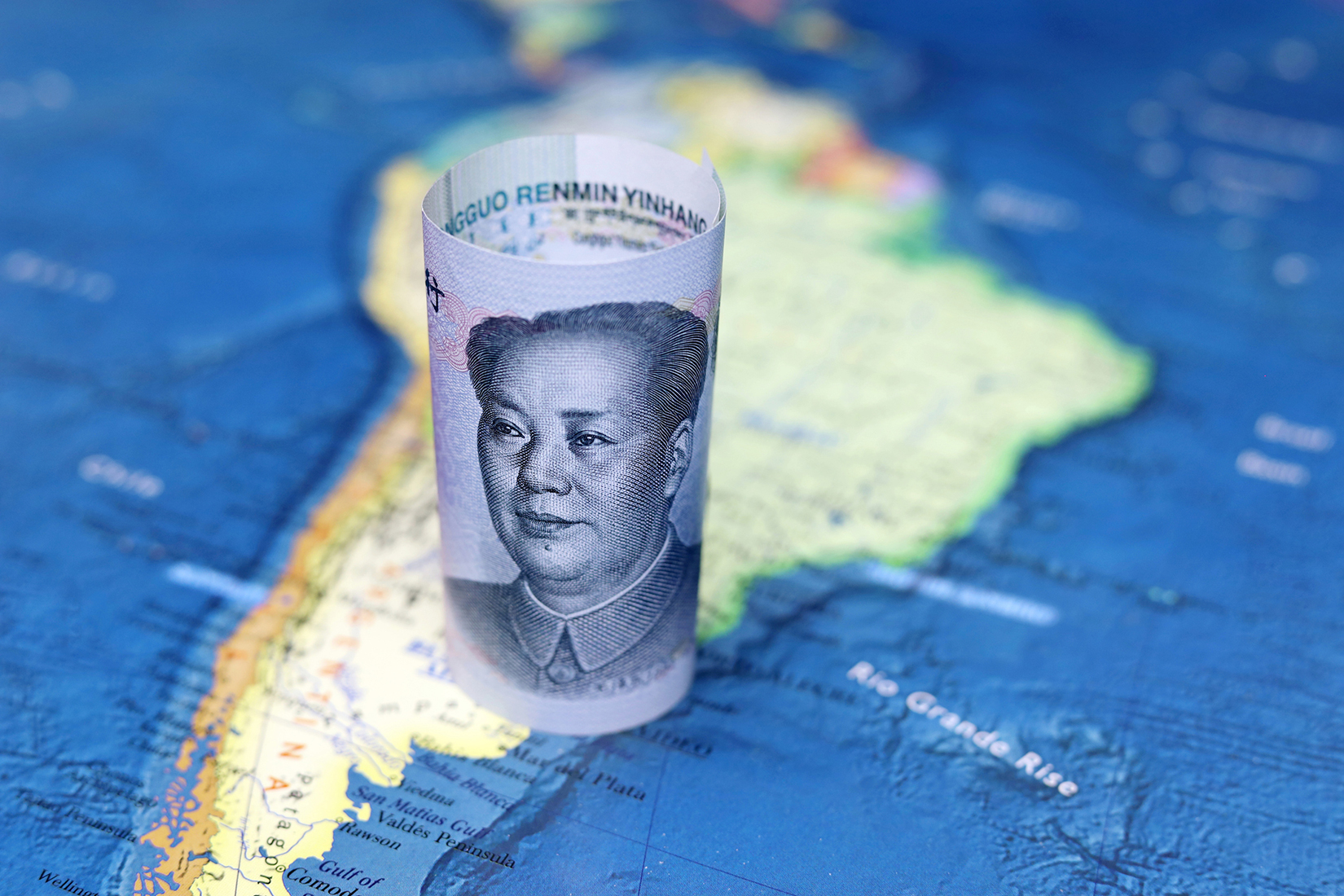
Paradoxically, intensifying competition between Washington and Beijing has also created new opportunities for Latin American countries. Most notably, it has expanded the prospects for pursuing a longstanding regional objective: greater autonomy in international affairs.
Since the Monroe Doctrine was articulated in 1823, Latin America has operated within a regional order dominated by the United States. For two centuries, governments across the region have navigated an enduring tension between dependence on Washington and the desire for greater autonomy.
The emergence of China as an alternative center of power is now altering that equation. Perhaps the most significant development is the growing willingness of Latin American countries to use US-China rivalry to their advantage. This impulse is reflected in the increasingly influential concept of Active Non-Alignment.
This strategy calls for developing countries to avoid aligning themselves exclusively with any major power while selectively engaging with different partners in pursuit of national interests. Rather than choosing sides, states seek to maximize their policy options in an increasingly competitive international system.[5]
Although the idea has its own intellectual origins, it closely resembles what international relations scholars describe as hedging: the practice—prevalent among Asian countries—of maintaining productive relations with competing great powers while minimizing vulnerabilities associated with dependence on any one of them. From this perspective, some Latin American countries now see an opportunity to pursue both economic prosperity and national security without relying exclusively on the United States.[6]
A New Era for Latin America?
These developments suggest that Trump’s efforts to implement a modern-day Monroe Doctrine by reasserting US dominance in the Western Hemisphere and limiting China’s presence may not proceed as smoothly as he envisions. Even in countries where right-leaning governments have come to power since Trump’s return, relations with China have largely remained intact. Argentina, Peru, Colombia, and Honduras, for example, have all maintained substantial ties with Beijing.[7] US influence has undoubtedly increased in parts of the region, but governments continue to pursue their national interests by balancing relations with both powers rather than choosing between them.
The same pattern can be observed in the region’s relationships with China. Brazil, which became the first country in the world to establish a strategic partnership with China in 1993, has notably declined to join the Belt and Road Initiative. Similarly, scholars have argued that many smaller Latin American states participating in the initiative do so less out of alignment with Beijing than out of a desire to enhance their international standing and expand their diplomatic options.[8]
To view Latin American countries simply as passive players in great-power competition is therefore misleading. The region is entering a markedly different era from the one in which the United States stood as the only external power capable of exercising sustained influence.
Conclusion
This article has argued that intensifying US-China rivalry has expanded the strategic space available to Latin American countries and enabled them to pursue new opportunities for advancing their own interests. As a result, neither Washington’s nor Beijing’s approach to the region is likely to unfold entirely according to plan.
At the same time, the viability of hedging strategies such as Active Non-Alignment is far from uniform across the region. A state’s ability to pursue such a strategy effectively depends on factors including its national capabilities, geographic location, and relationship with the United States.
Brazil is frequently cited as the clearest example of successful hedging in Latin America. Yet Brazil is also exceptional. It possesses greater economic and political weight than any other country in the region, and its national identity has long distinguished it from its Spanish-speaking neighbors.[9] To some extent, Brazil’s ability to practice Active Non-Alignment reflects these unique characteristics. What is feasible for Brazil may not be feasible for many of its regional counterparts.
The situation is markedly different for countries whose geographic proximity to the United States limits their room for maneuver. Mexico and the Northern Triangle countries of Guatemala, Honduras, and El Salvador, for example, remain particularly vulnerable to US influence. The Trump administration’s efforts to externalize border management demonstrate how difficult it can be for neighboring states to avoid the consequences of US domestic and security policies.
Panama provides another illustrative case. Faced with pressure from Washington, it moved to curtail China’s role in canal-related affairs, underscoring the constraints that smaller states continue to face. The ability to pursue an autonomous foreign policy in the shadow of both Washington and Beijing therefore varies considerably across the region.
Moreover, the pursuit of autonomy through Active Non-Alignment presents challenges of its own. One concern is that issue-based alignment with different major powers may weaken regional cohesion and diminish bargaining power.[10] Intensifying great-power competition could also shrink Latin America’s hedging room.[11]
Recent developments in Asia offer a cautionary example. As US-China rivalry has sharpened, many governments in the region have found themselves under growing pressure to move closer to one side or the other. If a similar dynamic emerges in Latin America, the opportunities currently associated with Active Non-Alignment could gradually narrow.
(2026/10/09)
Notes
- 1 ““Latin America Has Turned Trumpy. That Creates Opportunities,” The Economist, June 25, 2026.
- 2 Shigeo Osonoi, “Beishu kankei ni okeru Chugoku no taito” (China’s Rise in Inter-American Relations), in Beichu kankei to Beichu o meguru kokusai kankei (US-China Relations and the International Relations Surrounding the United States and China), ed. Japan Institute of International Affairs, 2017, p. 231.
- 3 Suguru Osawa, “[Research Report] Trump 2.0’s Vision for the Western Hemisphere,” Japan Institute of International Affairs, January 21, 2026.
- 4 Pew Research Center, “How Do Views of the US and China Compare in Latin America?” July 15, 2026.
- 5 Carlos Fortin, Jorge Heine, and Carlos Ominami, eds., Latin American Foreign Policies in the New, World Order: The Active Non-Alignment Option, London: Anthem Press, 2024.
- 6 Juan Pablo Sims and Brice Tseen Fu Lee, “Hedging under Hegemony: Domestic Pathways to Autonomy in Latin America,” Frontiers in Political Science, October 29, 2025.
- 7 Oliver Stuenkel and Adrian Feinberg, “Trump Can Play Kingmaker in Latin America. He Can’t Build Lasting Influence,” Emissary, June 25, 2026.
- 8 Zara Albright, Diego Telias, and Tom Long, “Latin American Small States in the Belt and Road Initiative: Narrating Status Amidst US-China Tensions,” Cambridge Review of International Affairs, March 2026, pp. 1–27.
- 9 Jorge Heine, “Brazil, the BRICS and Active Non-Alignment,” CEBRI-Revista, Vol. 4, No. 13, January–March 2025, pp. 40–57; Janina Onuki, Fernando Mouron, and Francisco Urdinez, “Latin American Perceptions of Regional Identity and Leadership in Comparative Perspective,” Contexto International, Vol. 38, No. 1, January–April 2016, pp. 433–465.
- 10 Mariano Aguirre Ernst, “Is Non-Alignment Possible for Latin America?” Chatham House, March 2, 2023.
- 11 Alexander Korolev, “Shrinking Room for Hedging: System-unit Dynamics and Behavior of Smaller Powers,” International Relations of the Asia-Pacific, Volume 19, No. 3, September 2019, pp. 419–452.