



Three years have passed since the military clash erupted in Sudan in April 2023 between the Sudan Armed Forces (SAF) and the paramilitary “Rapid Support Force (RSF)”, yet there is still no sign of a resolution to the conflict. Since April 2023, at the height of the crisis, approximately 14 million people have been displaced from their homes; more than 20 million—equivalent to half the population—have been exposed to severe food shortages and are at risk of starvation, sexual violence against women has been rampant, and there are reports that genocide may have occurred[1]. Such a severe humanitarian crisis is unprecedented in world history. Nevertheless, the conflict in Sudan—with no end in sight—is referred to as an “abandoned crisis.”[2] Why does it continue? Is there no way to resolve it? By analyzing the structure of the conflict in Sudan, I discuss the measures that must be taken moving forward.
Sudan as a Proxy War
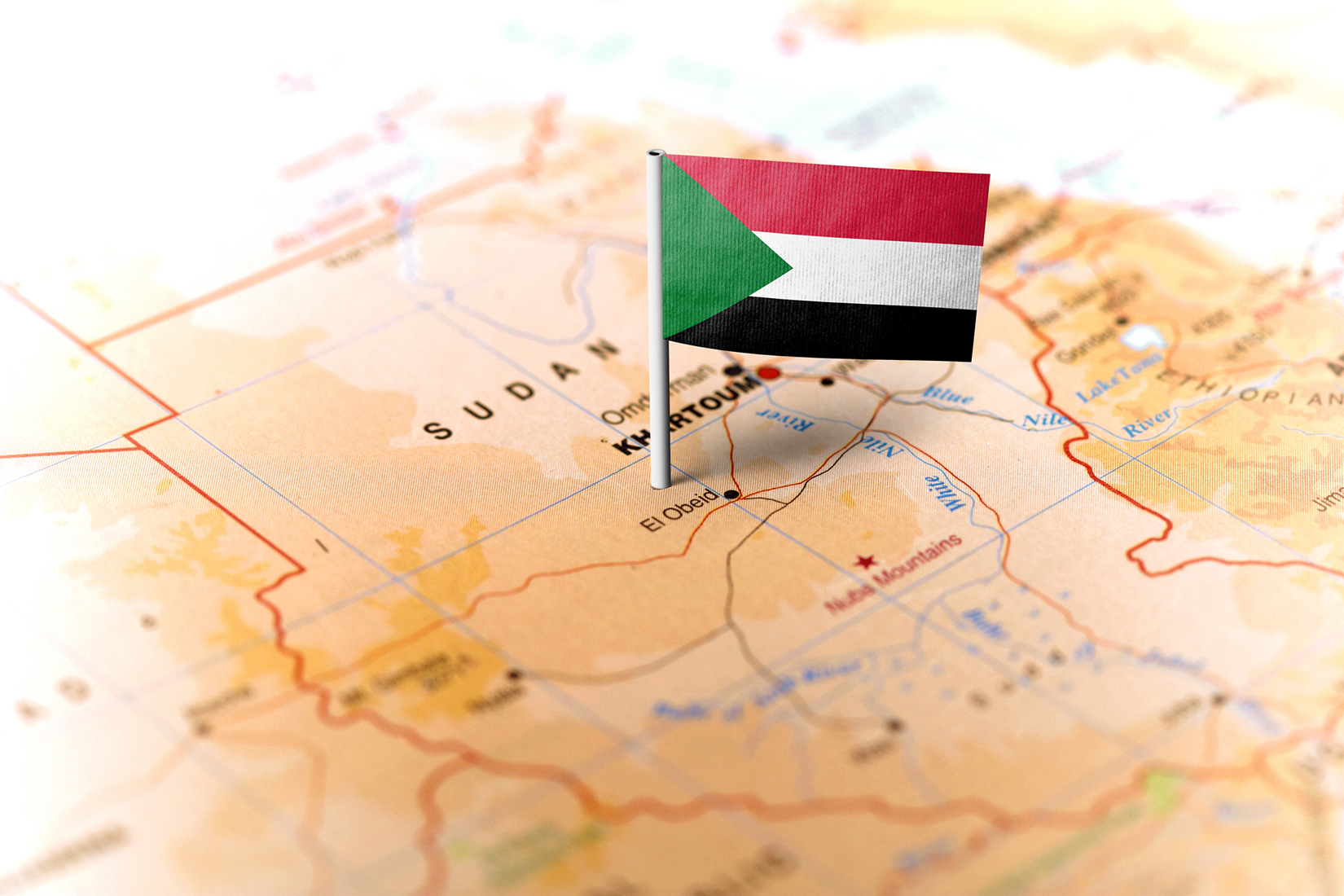
The primary reason the conflict in Sudan has not ended even after three years is the result of military and financial intervention, primarily by Middle Eastern countries. In the Sudanese context, the conflict is a military clash between the SAF and the RSF; however, from a broader perspective, Sudan has become a “playground” where external powers clash over their conflicting interests, and the financial and military support provided by these external forces to both sides remains the primary driver for the ongoing fighting.[3]
The SAF camp is supported by Egypt, Saudi Arabia, Turkey, Iran, and other actors. Previously, when Sudan was a British colony, Egypt acted as Britain’s proxy in governing the country; however, even after Sudan’s independence, SAF executive candidates were generally educated at Egyptian military academies, creating such a strong bond between the Egyptian Armed Forces and the SAF that could be described as a mentor-protege relationship. Saudi Arabia also supports the SAF, defending Sudan’s continuity and legitimacy as a nation, given its location across the Red Sea. While the SAF’s support base includes Islamist groups such as the Muslim Brotherhood, Turkey and Iran—which take a tolerant stance toward the Muslim Brotherhood—also support the SAF.
In contrast, the RSF camp includes the United Arab Emirates (UAE) as the leading supporter, along with Ethiopia, Chad, and other actors. The UAE, which does not border the Red Sea, has long shown strong interest in Sudan, driven by its desire to secure a foothold along the Red Sea coast and establish a base for expansion into Africa. It is also closely tied to the RSF for securing its gold business. Chad has joined this network to provide transport routes linking the UAE and the RSF, and Ethiopia—which has been in conflict with Egypt and Sudan over the waters of the Nile—is also supporting the RSF.
In the context of the civil war in Sudan, Saudi Arabia and the UAE have long been supporting opposition groups, but tensions between the two countries have recently escalated—as demonstrated by the UAE’s withdrawal from the Organization of the Petroleum Exporting Countries (OPEC) and OPEC+ in May 2026. The civil war in Sudan has effectively become a “proxy war between Saudi Arabia and the UAE.”[4]
The Red Sea has long been regarded as a key strategic location, but its importance has grown even more since the Strait of Hormuz was blockaded due to military tensions between Israel, the United States, and Iran. Consequently, the strategic importance of Sudan—which borders the Red Sea—has also increased, providing an incentive for countries surrounding the Red Sea and regional powers such as Turkey to strengthen their engagement with Sudan.[5] The conflict in Sudan continues as both the SAF and the RSF persist in combat, with an unending supply of weapons, including drones.[6] Sudan has become a hub where foreign powers vie to strengthen their influence, and the lives and livelihoods of the Sudanese people are being sacrificed in this game.
Fears of Division, the Potential Collapse of Sudan, and the Risk of Regional Conflict
In August 2023, the Sudanese civil war reached a turning point when the RSF took control of key strongholds in the capital, Khartoum, forcing SAF commanders to retreat from Khartoum to Port Sudan on the Red Sea coast. However, the SAF subsequently regained control of Khartoum, and since November 2025, the SAF controls the capital, the Nile River basin and the Eastern part of Sudan, while the RSF controls the Western part of Sudan, mainly the Darfur area. Both sides have consolidated their territories.[7]
In response to this change in the situation, many displaced persons are returning home. Nationwide, of the 11.6 million internally displaced persons (IDPs) recorded in January 2025, 3.67 million—approximately 30 percent—have returned home.[8] In Khartoum State, the capital, up to 3.77 million people were displaced, but 1.9 million—about half of that number—have returned; when combined with those who had fled abroad, a total of 2.1 million people have returned to Khartoum State. When surveyed, the vast majority of returnees (87%) responded “restored security” as the reason for their return; they have returned to their former homes and are working to rehabilitate them.
Furthermore, both the SAF and the RSF have established their own governments, creating a situation where two governments coexist within the country.[9] In May 2025, SAF Commander-in-Chief Burhan appointed former diplomat Kamil al-Taib Idris as Prime Minister, and Idris appointed 22 Cabinet Ministers. Meanwhile, in July 2025, in Nyala, the capital of South Darfur State, the RSF announced the establishment of a government (the Tasees Alliance) with RSF leader Hemedti as Chair of the Presidential Council and Mohammed Hassan al-Ta’ishi as Prime Minister. Although no country or international organization has recognized the government established by the RSF, Hemedti has been staging events, such as conducting exams at a middle school, in an area under the government’s control to give the impression that the administrative system is functioning.[10] He is also working to solidify the government’s status quo and strengthen its influence, including by appointing Osama Saeed, an influential figure in eastern Sudan, as the government’s Minister of Justice.[11]
Although both the SAF and the RSF are operating their “governments,” they are not providing adequate or effective public services. The implementation of robust administrative services requires organizations, systems, and the professional technocrats who support them.[12] In Sudan, infrastructure has been destroyed, and what remains is also being targeted, making it impossible to expect adequate public services. The number of people in need of assistance is projected to reach 33.7 million in 2026, an increase of 3.3 million from the previous year.[13] Currently, the extremely poor account for 60% of the population, and it is said that Sudan’s economy has been set back more than 30 years.[14] Sudan is currently on the brink of collapse.
Furthermore, the conflict in Sudan carries the risk of escalating into an inter-state conflict within the region that engages in combat with neighboring countries. The current concern is its relations with Ethiopia. Ethiopia, located upstream on the Nile River, and Egypt, located downstream, have long been at odds over the river’s water resources. The SAF, which is strongly influenced by Egypt, has taken a pro-Egypt stance and has thus been at odds with Ethiopia. In May 2026, Ethiopia provided support to the RSF, and attacks against the SAF were launched from within Ethiopian territory. In response, military tensions between the SAF and the Ethiopian military have escalated.[15] There is a growing likelihood that Sudan’s internal conflict will spill over to Ethiopia and further into Eritrea, dragging the “Horn of Africa” into a regional conflict.
What are the ways to break through the current deadlock?
Currently, international staff of aid organizations such as the United Nations are returning to Sudan to resume assistance.[16] This is good news for Sudan, as humanitarian aid, in particular, is crucial for alleviating the suffering brought on by the crisis. However, from a long-term perspective, it is necessary to go beyond emergent humanitarian aid and end the current conflict, resume full-scale development assistance, and enable Sudan to proceed its own growth and development path.
In principle, ending a conflict requires bringing the parties of the conflict to the negotiating table; however, in Sudan’s case, the SAF shows no signs of accepting such proposals. It is highly probable the RSF has committed large-scale massacres and sexual violence, and it is conceivable that they could be tried at the International Criminal Court for crimes against humanity. Given the current state of combat, the SAF and the RSF are fighting on equal footing; if peace negotiations were to take place under these circumstances, it would be essential to offer terms that the RSF could accept. If such terms cannot be offered, the peace negotiations will end in deadlock. Presenting terms that the RSF—which could otherwise face prosecution—can accept would be advantageous to them; however, the SAF, particularly the Islamist factions that wield immense influence within it, would likely not agree to or accept such terms.
Cameron Hudson, a former U.S. State Department official and an analyst on Sudan, argues that “the RSF should be designated as a terrorist organization, and the network of foreign support for the RSF should be severed.”[17] This is considered a realistic step toward breaking the current deadlock.
However, in the longer term, the goal should be to resume the democratization process that was derailed by the military clash in April 2023 or the military coup in October 2021. Implementing good governance and providing quality public services are not easy tasks. They require solid organizations, systems, and human resources, in addition to external support and capacity-building. To achieve this, the resumption of the democratization process is indispensable.
The military coup of October 2021 occurred just as the democratization process—which had been underway since the collapse of the Bashir regime in April 2019—was gaining momentum. Looking back at Sudan’s history, the country has repeatedly cycled between democratization movements and military coups leading to dictatorship. Furthermore, because of its rich resources—such as gold, oil, and water—and its strategic location, Sudan has been subject to continuous foreign interference. To overcome its history of “rule by force” and build a nation where the people can enjoy peace and development, we must not lose our interest in Sudan.
(2026/07/24)
Notes
- 1 International Crisis Group, “Divided Sudan, Elusive Peace,” April 13, 2026.
- 2 Samy Magdy and Sam Mednick, “Sudan enters a fourth year of war as officials lament an ‘abandoned crisis’,” AP News, April 16, 2026.
- 3 Mutasim Ali and Yonah Diamond, “Sudan Has Become a Transnational Marketplace of Violence: Effective Responses Require Targeting the Sources,” Just Security, June 15, 2026; Amnesty International, “Sudan: Constant flow of arms fuelling relentless civilian suffering in conflict,” July 25, 2024.
- 4 Kholood Khair, “Gulfs Apart: Can Sudan and the Red Sea Survive the Iran War?” The Tahrir Institute, June 11, 2026.
- 5 Ibid.
- 6 Sudan War Monitor, “Civilian Toll Mounts as Drone Warfare Expands Across Sudan,” June 13, 2026.
- 7 see End Note i.
- 8 IOM, “Sudan Displacement and Return Snapshot: update6,” June 15, 2026.
- 9 see End Note i.
- 10 Darfur 24, “Hemedti Launches First Sudanese Certificate Exams Under Tasis in Nyala,” June 7, 2026.
- 11 Africa Intelligence, “Tasis gambles on Osama Saeed to extend its influence in the East,” May 21, 2026.
- 12 Fawzi Ahmed, “Sudan’s War Beyond the Battlefield: Governance Collapse and the Struggle for Civil Authority,” Small Wars Journal, June 9, 2026.
- 13 OCHA, “Sudan Humanitarian Needs and Response Plan 2026,” February 2026, p.9.
- 14 see End Note IV.
- 15 Ladd Serwat et al, “Africa Overview: June 2026,” ACLED, June 5, 2026.
- 16 However, there is currently a severe funding shortfall, and the funding coverage rate for humanitarian aid to Sudan—the ratio of funds actually met to funding needs—has been declining year by year, standing at 71% in 2024, 40% in 2025, and 28% in 2026. Therefore, it is necessary to increase funding for humanitarian aid.OCHA/Financial Tracking Service, “Sudan Humanitarian Needs and Response Plan 2026,” accessed June 25, 2026.
- 17 Cameron Hudson, “Sudan’s Rapid Support Forces Are Terrorists,” Foreign Policy, June 11, 2026.