



The framework of the international order, built up over many years, is facing a crisis. The established "governance system based on internationally agreed-upon rules" is being supplanted by "rule by force," and the international institutions and systems that once played a vital role in maintaining the international order are no longer able to fulfill that function. How should we understand this situation, and shape the framework of the international order moving forward? In this article, I will analyze the current structure of "rule by force" and discuss the role that middle powers—and Japan in particular—should play.
The Era of "Rule by Force"
We are currently witnessing sporadic instances where superpowers exercise hard power—effectively "rule by force"—without regard for international norms. In January 2026, the United States invaded Venezuela and detained President Maduro. It has also repeatedly launched military strikes against Iran since February 2026. Furthermore, in August, the U.S. announced sanctions against officials of the International Criminal Court (ICC), including President Tomoko Akane, as well as other judges and prosecutors.
This disregard for international norms is not limited to the United States; Russia and China are engaging in similar behavior. Miles Kahler, Distinguished Professor Emeritus at American University, points out that "Nationalist Programs [responding to populist appeals], Strongman Regimes, and the Rise of Camarillas (inner circles supporting those leaders) are phenomena common to superpowers today."[1] Such actions by superpowers—disregarding international norms and pursuing "rule by force"—are the primary cause of the dysfunction within the framework of the international order.
"Rule by Force" as a "losing strategy"
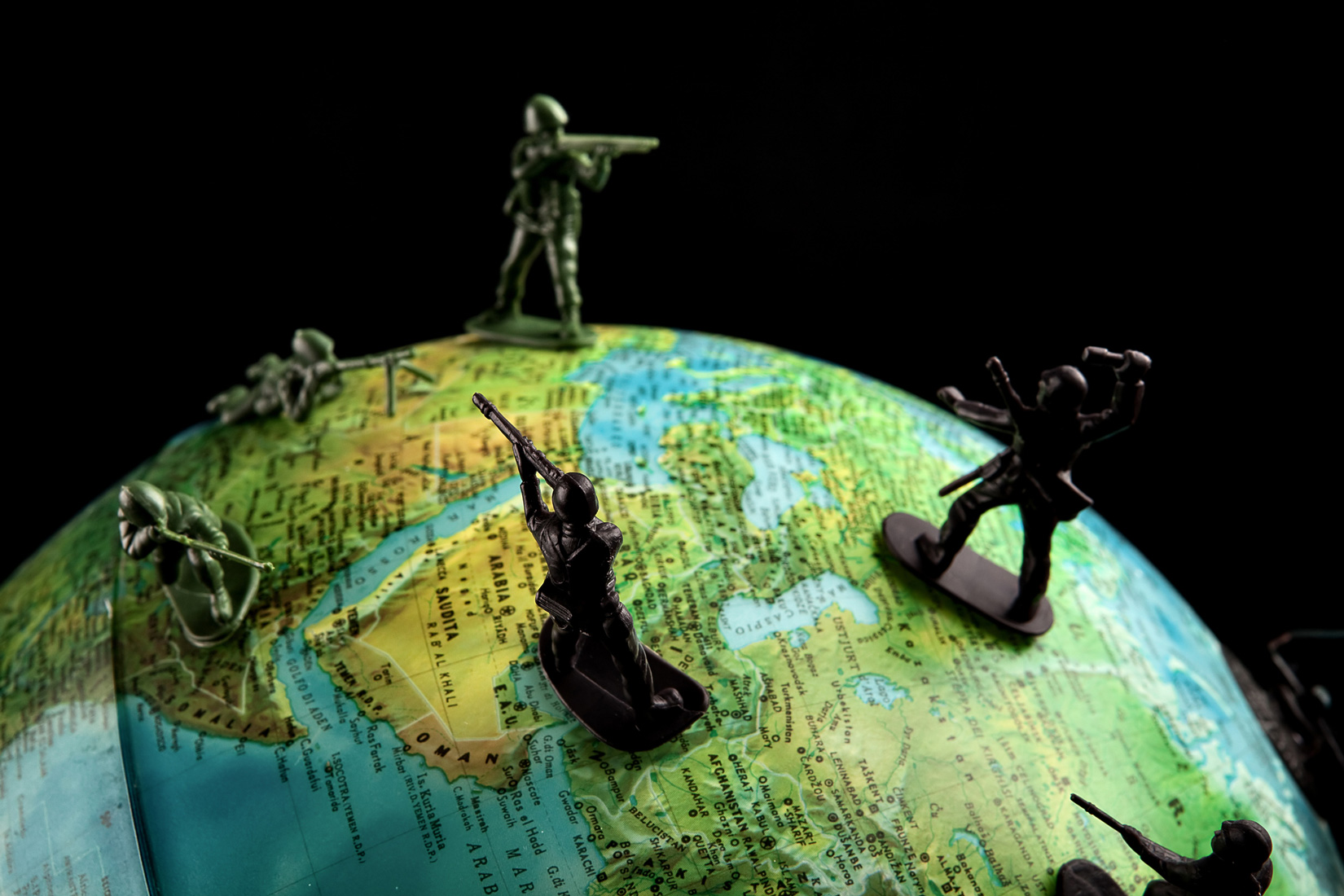
"Rule by force" is unlikely to be sustainable. International relations scholar Stephen Walt terms this approach "predatory hegemon," arguing that it is ultimately a "losing strategy" because it erodes the trust of allies and the international community while reducing other nations' dependency on the hegemon[2]. This is because "rule by force" escalates mutual tensions and drives up military spending, thereby squeezing budget allocations for programmes that foster social and economic stability and development, including education, infrastructure, and social welfare. Consequently, it leads to impoverishment and exhaustion within nations, fueling public discontent. In fact, as the trend toward "rule by force" intensifies, global military spending has reached record highs."[3] Rule by force" breeds anxiety and tension, not limited to superpowers, but also in other countries. It is not sustainable.
Current superpowers, however, lack the incentive to abandon "rule by force" and return to the international order of the past. It is thus difficult to expect them to take the lead in reconstructing the international order. Kahler points out that "the superpower-led order of 1945—which created the Bretton Woods moment—will not return."[4] Amidst the conflict between superpowers, there is little hope for rebuilding the framework of the international order by themselves. Furthermore, the United States appears to be rejecting the role of leader within the international system. Rebuilding the framework of the international order requires the support of many nations, yet there are numerous countries wary of the growing influence of both the United States and China.
The Expected Role of Middle Powers
While we cannot expect superpowers to reshape the framework of the international order, middle powers may well be capable of fulfilling this role. This is because middle powers—rather than superpowers—are the ones that truly understand the importance of shaping an international order based on internationally-agreed-upon rules and the significance of multilateral framework.
Canadian Prime Minister Carney has advocated for the ‘Middle Power’ strategy. Amidst the dysfunction of the traditional international order caused by great-power rivalry and "rule by force," this diplomatic strategy calls for middle powers to unite together. Rather than relying on security systems built by major powers,[5] they can reconstruct and maintain a fairer, more pragmatic multilateral framework[6].
Recently, European countries have also been characterized as middle powers[7]; however, certain Global South countries should be included as middle powers. Regarding conflicts among the United States, Israel, and Iran, it was not Japan or nations in Europe, but rather non-Western countries such as Pakistan, Turkey, Qatar, and Oman that played pivotal roles in diplomacy and peace mediation[8]. The presence of Global South nations has been growing in terms of both economic strength and diplomatic influence. When we rebuild the framework of international order, it is essential to broaden the definition of middle powers to include nations of the Global South and to collaborate with them as valued partners.
Expectations for Japan: Contributions to Peacebuilding
Since "rule by force" is unsustainable, it is essential to ease tensions through dialogue and to establish a framework for coexistence, for rebuilding the international order. In the Middle East, Israel has attempted to eliminate threats from neighboring countries through the use of force, yet the regional order Israel envisioned has failed to materialize. In fact, the use of force to eliminate political leaders appears to have weakened the governance capacity of Israel’s neighbors and the broader region, turning them into breeding grounds for terrorist groups.[9] What is needed is the strengthening of governance structures to enable dialogue and the establishment of a framework for coexistence.
Japan has long engaged in and accumulated expertise and experience regarding the establishment and strengthening of such governance system and the promotion of coexistence. For instance, Japan took the lead alongside other nations and international organizations in conferences supporting the reconstruction of Cambodia in the 1990s[10] and Afghanistan in the 2000s[11], managing the entire process from achieving peace to providing reconstruction assistance. The peace process in Mindanao, Philippines, serves as a prime example of successful mediation: peace was achieved because Japan had built strong bonds of trust with both parties to the conflict, earning their confidence as a mediator.[12] Furthermore, the Japan International Cooperation Agency (JICA) has accumulated extensive knowledge and experience through peacebuilding projects and programmes aimed at fostering coexistence in countries that previously experienced internal conflict. In Rwanda, Côte d'Ivoire, Sierra Leone, and Colombia, JICA facilitated trust-building between conflicting parties and supported social reintegration and self-reliance.[13]
Currently, Japan has taken several steps to advance peace mediation. In March 2026, the Ministry of Foreign Affairs announced the establishment of an International Peace Mediation Unit.[14] Additionally, the Sasakawa Peace Foundation established the Center for Mediation Support in April 2026.[15] These developments allow for the application of Japan’s accumulated knowledge and are therefore welcomed.
Japan is a unique nation that has earned the trust of many countries around the world.[16] This trust will serve as a significant advantage in advancing peace mediation efforts. Unlike approaches that seek to secure peace and stability through the expansion of military power, peace mediation achieves peace through dialogue and the building of trust; thus, it entails a lighter financial burden for the state and offers greater sustainability.
Unlike in the 1980s and 1990s, Japan currently faces a decline in economic power and a weakening international presence. As a resource-poor nation, Japan cannot survive unless the stability of the international community and good relationships of trust with other nations are guaranteed. Amidst the dysfunction of international systems, the reconstruction of a stable international order is a matter of vital importance to Japan. As Canadian Prime Minister Carney has argued, rather than leaving the task of building the international system to major powers, it is crucial for Japan to take the lead in building it. This is a responsibility Japan bears both as a member of the international community and as a beneficiary of trustworthy international systems. I have high expectations for Japan’s proactive engagement in reshaping the international order, with peace mediation serving as a key entry point.

(2026/11/04)
Notes
- 1 Miles Kahler, “Global Governance in the Twenty-First Century: Sustain, Reform, Transform,” Carnegie Endowment for International Peace, June 11, 2026.
- 2 Stephen M. Walt, “The Predatory Hegemon,” Foreign Affairs, March/April 2026, February 3, 2026.
- 3 Xiao Liang et al., “Trends in World Military Expenditure, 2025,” SIPRI, April 2026.
- 4 See End Note i.
- 5 Stephen Nagy, “The ‘Ugly American’ and the ‘Ugly Ally’,” Real Clear World, July 8, 2026.
- 6 Mark Carney, “’Principled and pragmatic: Canada’s path’ Prime Minister Carney addresses the World Economic Forum Annual Meeting,” January 20, 2026.
- 7 Galip Dalay, “Yes, Europe Is a Middle Power, Too,” Foreign Policy, July 30, 2026.
- 8 Ibid.
- 9 F. Gregory Gause III, “The New Old Middle East,” Foreign Affairs, September/October 2026, July 30, 2026.
- 10 Hiroki Koizumi, “DIPLOMATIC DOCUMENTS: All-out effort led to Cambodia peace conference in Tokyo in 1990,” The Asahi Shimbun, December 28, 2021.
- 11 MOFA, “The International Conference on Reconstruction Assistance to Afghanistan(Outline and Evaluation),” January 24, 2002.
- 12 JICA, “Comprehensive Review of JICA’s Assistance in Mindanao,” February 2021.
- 13 JICA, “JICA Global Agenda for Peacebuilding” October 3, 2026, accessed.
- 14 MOFA, “Establishment of the International Peace Mediation Unit,” March 17, 2026.
- 15 “Peaceful Ways Forward: Center for Mediation Support,” Nippon.com, April 2, 2026.
- 16 According to the “Opinion Poll on Japan” (Japanese Ministry of Foreign Affairs) below, Japan is viewed positively as a “trustworthy country” not only in Asia but also in other regions, including Africa, the Middle East, and Latin America. MOFA, “Opinion Poll on Japan,” October 3, 2026, accessed.